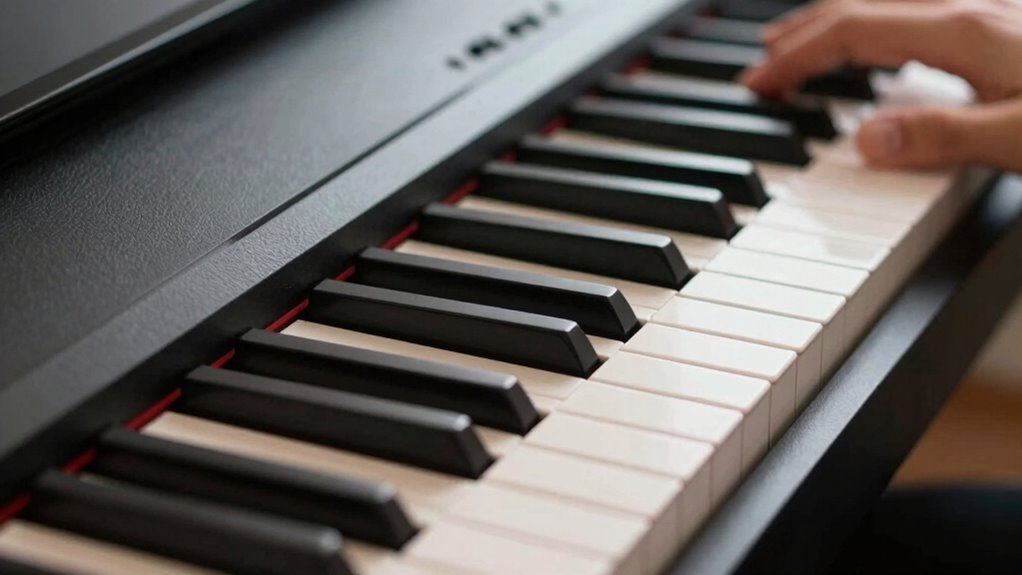

Weighted keys mimic the feel of an acoustic piano by providing resistance that helps you build finger strength and develop proper technique. They vary in weight and responsiveness, with many models offering graded hammer action that feels heavier in the low notes and lighter in the high. This makes playing more realistic and expressive. If you keep going, you’ll discover how different key features can support your playing style and long-term satisfaction.

Prime made for students and young adults
- Fast, free delivery for dorm and study essentials
- Prime Video and Amazon Music included
- Member-only deals
Key Takeaways
- Weighted keys mimic acoustic piano feel, providing resistance to help develop proper finger strength and technique.
- Digital pianos often feature graded hammer action, with heavier keys in the low register and lighter in the high.
- Not all weighted keys feel the same; sensitivity and response vary by model and craftsmanship.
- Mechanical action and key weighting influence responsiveness, long-term satisfaction, and suitability for your playing style.
- Understanding key weight helps first-time buyers choose an instrument that matches their skill level and future goals.
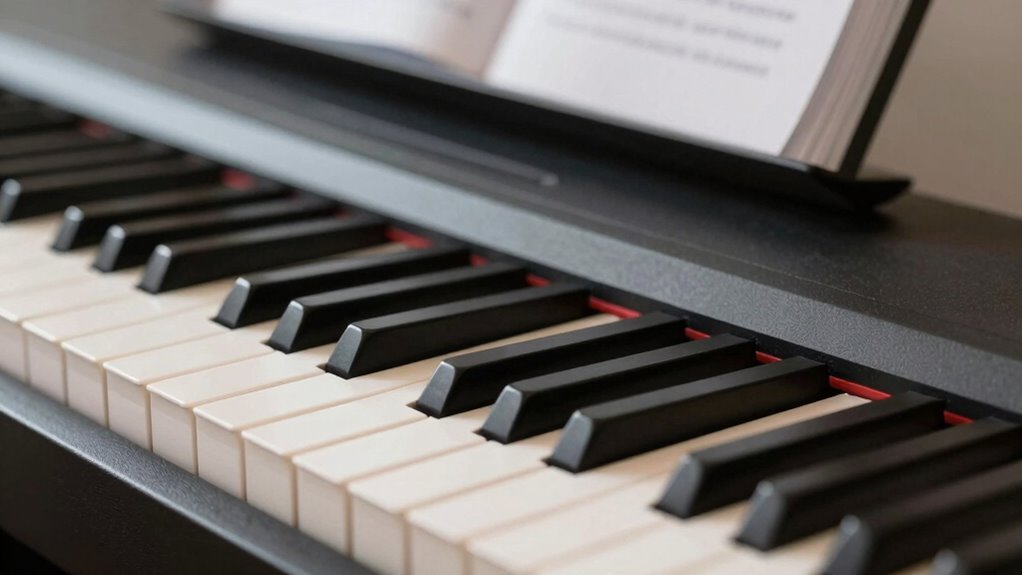
If you’re new to piano shopping, understanding weighted keys can seem confusing, but it’s an important factor in choosing the right instrument. When comparing digital and acoustic pianos, one key difference often comes down to how the keys feel and respond. Weighted keys are designed to mimic the feel of an acoustic piano, providing resistance that helps you develop proper finger strength and technique. However, not all weighted keys are created equal, and understanding the key sensitivity differences between digital and acoustic pianos can make a big difference in your playing experience.
Digital pianos with weighted keys aim to replicate the touch and feel of traditional acoustic pianos. Many models feature graded hammer action, where the keys are heavier in the lower register and lighter in the higher register, just like on a real piano. This gradation helps you develop dynamic control and expressive playing, making it easier to perform a wide range of musical styles. Some digital pianos also offer semi-weighted keys, which provide resistance but aren’t as authentic in feel. The key sensitivity, or how the keys respond to the force you apply, varies greatly among digital models. Some respond to lighter touches, making them ideal for beginners, while others require more force, better simulating the experience of an acoustic piano.
Acoustic pianos, on the other hand, inherently have weighted keys because of their mechanical action—strings, hammers, and soundboards all contribute to the tactile experience. The key sensitivity in an acoustic piano depends on the quality and craftsmanship of the instrument. A high-quality grand or upright piano offers a nuanced response to your touch, enabling you to control volume and emotion through subtle finger movements. Since acoustic pianos are naturally weighted, they require less adjustment to get used to, but the feel can vary depending on the instrument’s age and condition. Additionally, the mechanical action of an acoustic piano directly influences its responsiveness and overall feel. Understanding the touch and response of different pianos can help you choose an instrument that matches your playing style and goals. Moreover, considering the maintenance and tuning requirements of acoustic pianos can also impact your long-term satisfaction with the instrument. Recognizing the importance of key weighting can help you make an informed decision based on your preferences and commitment level.
Furthermore, being aware of the piano action type can significantly influence your playing experience, especially for advancing players.
Products Worth Considering

Logitech MX Mechanical Wireless Illuminated Keyboard, Clicky

Apple Watch SE 3 GPS Smartwatch, 40mm

Apple MacBook Air 15-inch with M5 chip, 16GB Memory, 512GB SSD, and Liquid Retina Display
As an affiliate, we earn on qualifying purchases.
Frequently Asked Questions
Do Weighted Keys Require Special Maintenance or Adjustments?
Weighted keys don’t require much special maintenance, but you should keep an eye on key sensitivity and perform maintenance as needed. Regularly dust and clean the keys with a soft cloth, and avoid spills. Maintenance frequency depends on how often you play; if you notice keys feeling less responsive or sticky, it’s time for a professional check. Proper upkeep guarantees your weighted keys stay responsive and in great condition.
Are Weighted Keys Suitable for Children or Beginners?
Weighted keys are great for children or beginners because they help build finger strength and encourage proper technique. As you play, you’ll develop better musical expression, making it easier to interpret dynamics and emotion. The realistic feel of weighted keys also keeps motivation high, giving you a more authentic playing experience. Overall, they support your growth as a musician while making learning more enjoyable and effective from the start.
How Do Weighted Keys Compare to Digital Piano Keys?
You’ll find that weighted keys offer greater keyboard realism and sound authenticity compared to standard digital piano keys; studies show that players prefer weighted keys for a more authentic feel. Unlike unweighted keys, weighted ones simulate the resistance of an acoustic piano, making practicing more natural. Digital piano keys can sometimes feel less responsive, but weighted keys enhance your experience, helping you develop better finger strength and technique from the start.
Can Weighted Keys Be Added to Existing Keyboard Setups?
Yes, you can add weighted keys to your existing keyboard setup through keyboard customization options. Many digital pianos and controllers offer replaceable or upgradeable keybeds to enhance your playing experience. This customization improves sound and feel, making your instrument more like an acoustic piano. Keep in mind, though, that compatibility and installation might require some technical skill or professional assistance. Upgrading can considerably enhance your sound and overall playing satisfaction.
Do All Digital Pianos Have Fully Weighted Keys?
Not all digital pianos have fully weighted keys, but many do to mimic real piano touch and key feel. Fully weighted keys provide a more authentic playing experience by simulating the resistance and movement of acoustic pianos. When shopping, check the specifications to guarantee the keyboard offers graded hammer action or similar weighted key features. This guarantees you get realistic touch and feel, especially important as you develop your skills.
Conclusion
Now that you understand weighted keys, you’re ready to pick the perfect piano that suits your needs. Remember, it’s a journey, not a sprint—taking your time to find the right feel will make your musical adventure more enjoyable. Don’t rush into a decision; instead, trust your ears and hands to guide you. With patience and practice, you’ll be hitting those keys like a pro in no time!