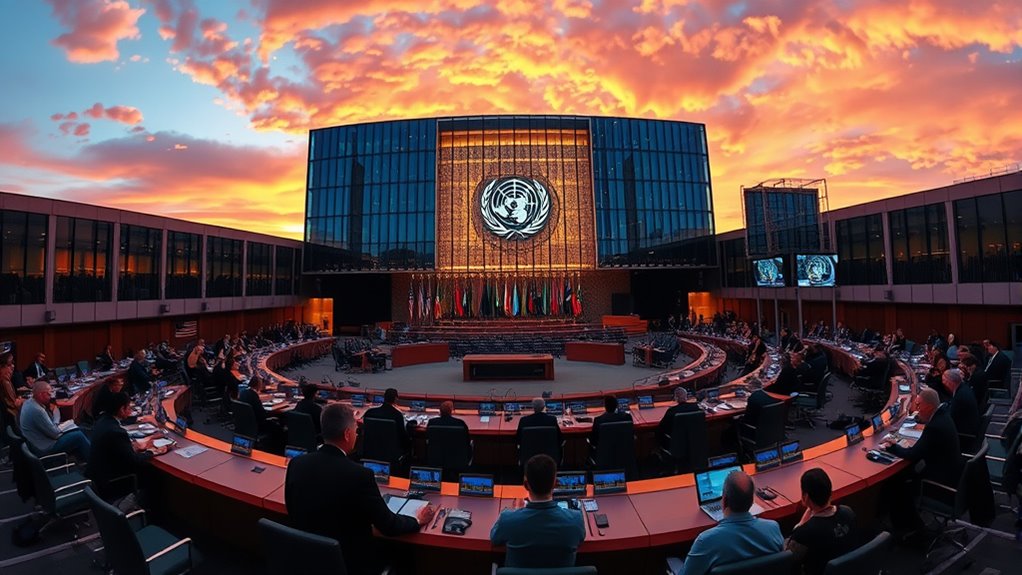

As you look at the UN’s 80-year journey, you’ll see how it evolved from simple peacekeeper to tackling global issues like climate change and sustainable development. Its peacekeeping missions now handle complex tasks, while climate diplomacy has become central. The organization continues adapting with technological advances and integrated strategies for peace and environmental stability. To understand its full impact and future challenges, exploring further reveals how it endeavors to shape a more secure, sustainable world for everyone.
Key Takeaways
- The UN has expanded its peacekeeping missions to include complex multidimensional efforts addressing conflicts, stability, and civilian protection.
- Climate diplomacy has become integral, linking environmental resilience with peacebuilding and regional stability initiatives.
- The organization faces challenges from geopolitical tensions, funding constraints, and adapting to rapid technological advancements like AI.
- Achievements include successful global climate accords, strengthening of peace operations, and increased focus on sustainable development goals.
- The UN continues evolving its strategies to address emerging issues, emphasizing innovation, integration, and resilience in global peace and security efforts.

Have you ever wondered how the United Nations has evolved over the past 80 years? It’s a story of adaptation, resilience, and ongoing effort to tackle the world’s most pressing issues. From its early days focused on rebuilding after World War II, the UN has expanded its roles considerably. Today, it’s not just about diplomacy and peacekeeping; it’s also about addressing complex global challenges like climate change and sustainable development. When you look at its peacekeeping missions, you see a clear evolution. In the early years, peacekeeping efforts were straightforward, often involving small observer missions to monitor ceasefires. Now, these missions are more complex and multidimensional, involving not only peace enforcement but also supporting political processes, protecting civilians, and helping rebuild communities. You can see how peacekeeping has become a crucial tool in managing conflicts around the world, often serving as a bridge toward long-term stability. At the same time, the UN has increasingly recognized that peace and security are intertwined with environmental issues. Climate diplomacy has become a central part of its agenda. You might notice how the United Nations now actively leads efforts to combat climate change, pushing for international agreements like the Paris Accord and advocating for policies that reduce emissions and promote resilience. Climate diplomacy isn’t just about environmental concerns; it’s about ensuring peace and stability in vulnerable regions where climate impacts exacerbate conflicts. The UN’s role has expanded into fostering cooperation between nations on these urgent issues, emphasizing that addressing climate change requires a united global effort. Over the decades, you’ve seen the UN grow into a platform where climate diplomacy is as pivotal as traditional peacekeeping. It’s also a reflection of how interconnected today’s global challenges are. To meet these challenges, the UN continually adapts its strategies, leveraging its diplomatic influence and operational capabilities. You notice how its peacekeeping missions now often incorporate climate resilience measures, recognizing that environmental stability underpins peace. This evolution shows a clear shift from a purely peace-focused organization to one that understands peace is sustainable only when environmental and social issues are managed holistically. The achievements are substantial, but the challenges remain formidable. You see, as the world becomes more interconnected, conflicts and climate crises grow more complex, demanding innovative solutions. The UN’s ability to evolve over these 80 years demonstrates its resilience and its crucial role in shaping a more peaceful, sustainable future. Additionally, advancements in AI security are increasingly being integrated into peacekeeping operations to improve threat detection and operational efficiency. When you reflect on its journey, it’s clear that the UN’s future depends on its capacity to adapt further, integrating peacekeeping, climate diplomacy, and development efforts into a cohesive strategy that can meet tomorrow’s challenges.

Preventing the Next Pandemic: Vaccine Diplomacy in a Time of Anti-science
As an affiliate, we earn on qualifying purchases.
As an affiliate, we earn on qualifying purchases.
Frequently Asked Questions
How Has the UN Adapted to Technological Advancements Since Its Founding?
Since its founding, you’ve seen the UN adapt by embracing digital diplomacy, using online platforms to engage global audiences and facilitate dialogue. AI integration has streamlined decision-making, improved crisis response, and enhanced data analysis. You’re part of a more connected organization that leverages technology to promote peace, development, and cooperation worldwide, ensuring the UN stays relevant and effective amid rapid digital advancements.
What Are the Un’s Plans for Future Global Health Crises?
You can expect the UN to strengthen global health initiatives by investing in pandemic preparedness and response strategies. They plan to enhance international cooperation, improve early warning systems, and support healthcare infrastructure worldwide. By fostering collaboration among member states, the UN aims to coordinate swift, effective actions to address future health crises, ensuring a more resilient global community capable of managing pandemics and safeguarding public health proactively.
How Does the UN Address Emerging Geopolitical Tensions Today?
You see the UN addressing emerging geopolitical tensions through diplomatic strategies that promote dialogue and cooperation. It actively mediates regional conflicts, encouraging peaceful resolutions and fostering international partnerships. The organization works to de-escalate tensions by engaging key stakeholders and supporting diplomatic initiatives. By emphasizing multilateralism and conflict prevention, the UN helps *guarantee* stability, aiming to reduce the risk of escalation and build a more secure global environment.
What Role Does the UN Play in Climate Change Mitigation Now?
You see the UN playing a crucial role in climate change mitigation today. It leads global climate policy discussions, fostering cooperation among nations. The UN promotes emission reduction targets, supports sustainable development, and funds climate adaptation projects. By uniting countries around shared goals, it helps accelerate action and accountability, ensuring that climate change remains a priority on the international agenda. Your involvement in supporting these initiatives can make a real difference.
How Has the UN Improved Its Effectiveness in Peacekeeping Operations?
You see the UN has improved its effectiveness in peacekeeping operations through peacekeeping reform and boosting operational efficiency. These changes streamline deployment, enhance training, and strengthen coordination with local actors. As a result, missions now respond faster, adapt better to complex conflicts, and reduce casualties. Your role involves supporting these efforts, ensuring that peacekeeping efforts are more sustainable and impactful, ultimately fostering lasting peace in conflict zones.
Conclusion
As you reflect on the UN’s 80-year journey, consider how it can tackle future challenges. Imagine a small island nation facing climate change, relying on the UN’s diplomatic efforts to secure aid and support. Your role in promoting global cooperation is essential. Together, you can help guarantee the UN continues to evolve, addressing crises and inspiring hope. The next chapter depends on your engagement—because a better world is within reach when we work united.