

Among these US history books for students, Everything You Need to Ace U.S. History in One Big Fat Notebook is my best overall pick for middle-school learners who want a clear, approachable study guide. A Student’s Guide to U.S. History offers a broader reference-style alternative, while American History: A Visual Encyclopedia of United States History is a strong fit for students who learn through images and timelines. The main tradeoff is between a structured course text, a focused workbook, and a more engaging reference book; no single format serves every grade or assignment equally well. Grade range, reading level, historical perspective, and whether a book includes practice activities all affect the fit. Read on for the full breakdown of all 15 options and guidance on choosing the right one.

Prime made for students and young adults
- Fast, free delivery for dorm and study essentials
- Prime Video and Amazon Music included
- Member-only deals
Key Takeaways
- The Big Fat Notebook leads for accessible middle-school review, while the high-school student editions are better suited to planned courses than quick, casual reading.
- The two Grades 5–8 workbooks split US history by period, so students can focus on beginnings through Reconstruction or the years from 1877 to modern America instead of buying practice for the wrong unit.
- Visual histories serve a different purpose from textbooks: they help readers connect dates, people, and events at a glance, but may not provide the sustained explanations needed for class assignments.
- A People’s History of the United States offers a distinct historical perspective, making it a supplement for discussion and comparison rather than a neutral replacement for a course text.
- The specialized options matter: the writing lesson book supports history-related writing, and the Constitution workbook is designed around accessible civics instruction for students with special learning needs.
| High School United States History 2016 Student Edition, Grade 10 |  | Best for Grade 10 Textbook Study | Edition: 2016 Student Edition | Grade: 10 | Subject: United States History | VIEW LATEST PRICE | See Our Full Breakdown |
| U.S. History Workbook for Middle School, Grades 5–8 |  | Best for Structured Middle-School Study | Subject: U.S. history | Grade range: Grades 5–8 | Activities: 450 | VIEW LATEST PRICE | See Our Full Breakdown |
| U.S. History Workbook for Grades 5-8: Beginnings through Reconstruction |  | Best for Early U.S. History Practice | Subject: U.S. history | Grade range: Grades 5–8 | Coverage start: Earliest settlements | VIEW LATEST PRICE | See Our Full Breakdown |
| A People’s History of the United States |  | Best for People-Centered Historical Perspectives | Subject: United States history | Historical perspective: Experiences and struggles of the people | Theme: Racial equality | VIEW LATEST PRICE | See Our Full Breakdown |
| U.S. History Writing Lesson – Student Book |  | Best for History-Based Writing Practice | Subject: United States history | Primary focus: Writing skills | Format: Student book / workbook | VIEW LATEST PRICE | See Our Full Breakdown |
| Everything You Need to Ace U.S. History in One Big Fat Notebook, 2nd Edition: The Complete Middle School Study Guide |  | Best for Middle School Review | Edition: 2nd Edition | Subject: U.S. history | Audience: Middle school students | VIEW LATEST PRICE | See Our Full Breakdown |
| A Student’s Guide to U.S. History |  | Best Concise Reference | Subject: U.S. history | Audience: High school and introductory college students | Organization: Chronological | VIEW LATEST PRICE | See Our Full Breakdown |
| Presidential Book Set – U.S. History Books on Washington, Lincoln, FDR, and Roosevelt |  | Best for Presidential Biography Study | Format: Four-book set | Subject: U.S. presidential history | Featured presidents: George Washington, Abraham Lincoln, Franklin D. Roosevelt, and Theodore Roosevelt | VIEW LATEST PRICE | See Our Full Breakdown |
| Discovering Our Past: A History of the United States – Early Years, Student Edition |  | Best for Early U.S. History Coursework | Edition: Student Edition | Series: Discovering Our Past: A History of the United States | Subject: United States history | VIEW LATEST PRICE | See Our Full Breakdown |
| U.S. History Workbook for Grades 5-8: 1877 to Modern America |  | Best for Practice on Modern U.S. History | Subject: U.S. history | Audience: Grades 5–8 | Period covered: 1877 to modern times | VIEW LATEST PRICE | See Our Full Breakdown |
| High School U.S. History: Student Edition (2018) | 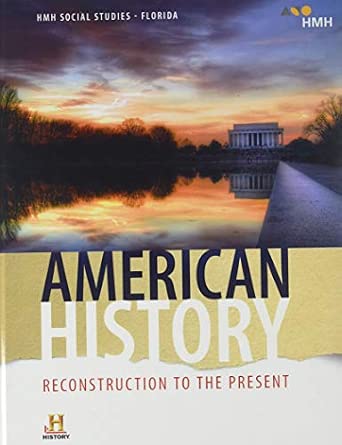 | Best for a Full-Course Overview | Edition: 2018 Student Edition | Subject: U.S. history | Audience: Secondary students | VIEW LATEST PRICE | See Our Full Breakdown |
| American History: A Visual Encyclopedia of United States History |  | Best for Younger Visual Learners | Subject: United States history | Format: Visual encyclopedia | Audience: Children | VIEW LATEST PRICE | See Our Full Breakdown |
| The Founding of America and the Constitution Workbook: Simple U.S. History and Civics for Students with Special Learning Needs |  | Best for Supported Civics Practice | Format: Workbook | Target audience: Students with special learning needs | Subject: U.S. history and civics | VIEW LATEST PRICE | See Our Full Breakdown |
| The American Story: A Visual History of the United States from 1776 to Today |  | Best Visual Overview from 1776 to Today | Subject: United States history | Coverage: 1776 to today | Format: Illustrated history | VIEW LATEST PRICE | See Our Full Breakdown |
| Discovering Our Past: A History of the United States – Early Years, Reading Essentials and Study Guide, Student Workbook (The American Journey to 1877) |  | Best for Early-History Workbook Review | Format: Student workbook | Subject: United States history | Coverage: Colonial period through 1877 | VIEW LATEST PRICE | See Our Full Breakdown |
| US history books for student | Subject | Format |
|---|---|---|
| High School United States Hist | United States History | Student edition textbook |
| U.S. History Workbook for Midd | U.S. history | Illustrated book |
| U.S. History Workbook for Grad | U.S. history | Print workbook |
| A People’s History of the Unit | United States history | Book |
| U.S. History Writing Lesson | United States history | Student book / workbook |
| Everything You Need to Ace U.S | U.S. history | Big Fat Notebook study guide |
| A Student’s Guide to U.S. Hist | U.S. history | — |
| Presidential Book Set | U.S. presidential history | Four-book set |
| Discovering Our Past: A Histor | United States history | Student edition textbook |
| U.S. History Workbook for Grad | U.S. history | Workbook |
| High School U.S. History: Stud | U.S. history | — |
| American History: A Visual Enc | United States history | Visual encyclopedia |
| The Founding of America and th | U.S. history and civics | Workbook |
| The American Story: A Visual H | United States history | Illustrated history |
| Discovering Our Past: A Histor | United States history | Student workbook |
More Details on Our Top Picks
High School United States History 2016 Student Edition, Grade 10
For students who need a grade 10 U.S. history textbook, this edition has a clear advantage over the workbooks in this roundup: it is identified as a student edition rather than a practice supplement. That makes it the more fitting choice when a class assigns a core text, while the U.S. History Workbook for Middle School, Grades 5–8 is aimed at younger learners and emphasizes activities and a study schedule. The available details confirm its 2016 edition and subject, but do not describe its chapters, sources, or learning supports, so I would not choose it based on a specific teaching feature. Its main tradeoff is that the dated edition may not match a course seeking newer materials. It is also less clearly suited to independent review than a workbook with a stated answer key.
Pros:- Identified as a student edition for grade 10
- Focused specifically on United States history
- A textbook format may suit courses that assign a core student text
Cons:- The 2016 edition may not suit courses seeking newer materials
- Available product details do not specify activities, answer keys, or study supports
Best for: Grade 10 students whose course specifically assigns a student edition of a U.S. history textbook
Not ideal for: Middle-school learners or students seeking a self-guided workbook with listed activities and an answer key
- Edition:2016 Student Edition
- Grade:10
- Subject:United States History
- Format:Student edition textbook
- Title:High School United States History
- ASIN:013330695X
Our verdict“Choose this edition when a grade 10 course calls for a U.S. history textbook and its 2016 edition fits the class.”
U.S. History Workbook for Middle School, Grades 5–8
The strongest reason to choose this workbook is its built-in 180-day, 36-week plan: it gives families a ready-made pace for a school year instead of leaving them to assemble lessons. Its 450 activities and answer key also make it more clearly suited to guided practice and independent checking than U.S. History Workbook for Grades 5-8: Beginnings through Reconstruction, whose supplied details describe a narrower historical span and no answer key. The stated coverage runs from the nation’s beginnings to modern times, giving it broader chronological reach. The tradeoff is that a large activity count and schedule may feel prescriptive to students who want a shorter review resource or to teachers who already have a course sequence. The description does not specify the activity types or depth of coverage.
Pros:- Provides a 180-day, 36-week study plan
- Includes 450 activities for ongoing practice
- Has an answer key for checking work
- Covers U.S. history from its beginnings to modern times
Cons:- The fixed yearlong schedule may not fit every class or homeschool pace
- The supplied description does not identify activity formats or topic-by-topic depth
Best for: Families or middle-school teachers who want a yearlong U.S. history workbook with a stated schedule and answer key
Not ideal for: Students looking for an unscheduled, concise refresher or teachers who need documented lesson details before choosing materials
- Subject:U.S. history
- Grade range:Grades 5–8
- Activities:450
- Study plan:180 days / 36 weeks
- Includes:Answer key
- Format:Illustrated book
- Coverage:Beginnings to modern times
- ASIN:B0HMM7DD1H
Our verdict“Pick this workbook for a middle-school year of planned practice when its stated schedule and answer key fit your teaching routine.”
U.S. History Workbook for Grades 5-8: Beginnings through Reconstruction
This workbook suits students who need practice on early U.S. history through Reconstruction, especially when a class is studying that portion of the curriculum. Its described exercises aim to reinforce concepts and support critical thinking, while the broader U.S. History Workbook for Middle School, Grades 5–8 reaches from the nation’s beginnings to modern times and specifies a full-year schedule and answer key. That makes this title the more focused fit by era, but the less documented choice for a complete year of independent study. The product information says it aligns with typical grades 5–8 social studies curricula, though it does not give a lesson count or list specific supports. The print-only format also means students seeking digital practice will need another resource.
Pros:- Covers U.S. history from earliest settlements through Reconstruction
- Includes practice questions and activities
- Designed to reinforce concepts and critical thinking
- Described as aligned with typical grades 5–8 social studies curricula
Cons:- Does not cover the full span to modern America in the supplied description
- Print-only, with no accompanying digital resources listed
- The supplied details do not specify an answer key or study plan
Best for: Grades 5–8 students or teachers focusing on U.S. history from early settlements through Reconstruction
Not ideal for: Students needing coverage through modern America, digital resources, or a stated answer key and study calendar
- Subject:U.S. history
- Grade range:Grades 5–8
- Coverage start:Earliest settlements
- Coverage end:Reconstruction
- Format:Print workbook
- Activities:Practice questions and activities
- Curriculum alignment:Typical middle-school social studies curricula
- ASIN:1647905206
Our verdict“Choose this focused workbook for grades 5–8 practice through Reconstruction, and pair it with another resource for later U.S. history.”
A People’s History of the United States
This title stands apart from the student workbooks because its defining approach is to present U.S. history through the experiences and struggles of ordinary people, including themes of racial equality. That perspective can broaden discussions alongside a course text such as High School United States History 2016 Student Edition, Grade 10, which is identified as a grade-level student textbook but has no supplied details about its historical framing. The distinction is useful for students comparing whose experiences a historical account emphasizes. The tradeoff is that the supplied product information does not identify a grade range, activity structure, or study aids, so it is less clearly a classroom workbook or a self-guided course. Students should use it when its people-centered lens complements their assigned curriculum, not assume it replaces one.
Pros:- Centers the experiences and struggles of ordinary people
- Addresses themes of racial equality
- Offers a distinct perspective alongside conventional student textbooks
Cons:- The supplied details do not specify a grade range or classroom supports
- No activities, answer key, or study schedule are listed
- Its described focus may not cover every topic a course requires
Best for: High-school students and teachers seeking a people-centered perspective to supplement U.S. history coursework
Not ideal for: Younger students or independent learners who need a specified grade level, exercises, answer key, or study plan
- Subject:United States history
- Historical perspective:Experiences and struggles of the people
- Theme:Racial equality
- Format:Book
- Grade range:Not specified in supplied product details
- ASIN:0062397346
Our verdict“Use this as a perspective-rich supplement for students ready to examine U.S. history through the experiences of its people.”
U.S. History Writing Lesson – Student Book
Students who know the material but need help putting historical ideas into clear prose may get more from this writing-focused student workbook than from a broad survey text. Its structured lessons and practice exercises connect composition work to U.S. history, giving it a different classroom role from U.S. History Workbook for Middle School, Grades 5–8, which emphasizes a large set of history activities and a yearlong plan. This book makes the most sense as a skills supplement within a history course, rather than as the sole source for learning the subject. The supplied description does not give a grade range or name an answer key, and it notes limited supplemental resources. That leaves teachers less information about independent use and makes it a weaker fit for students seeking a complete self-study package.
Pros:- Builds writing practice around U.S. history content
- Uses structured lessons and practice exercises
- Designed with classroom use in mind
- Can reinforce historical knowledge while developing composition skills
Cons:- The supplied details do not specify a grade range
- Limited supplemental resources are described
- No answer key or digital components are listed
Best for: Students in a U.S. history class who need structured practice writing about historical topics
Not ideal for: Independent learners seeking a complete history course with a stated grade range, answer key, and broad study plan
- Subject:United States history
- Primary focus:Writing skills
- Format:Student book / workbook
- Lesson structure:Structured lessons
- Practice:Writing exercises
- Use:Classroom use
- ASIN:1623413249
Our verdict“Choose this student book to pair history coursework with structured writing practice, not as a standalone U.S. history survey.”
Everything You Need to Ace U.S. History in One Big Fat Notebook, 2nd Edition: The Complete Middle School Study Guide
For middle school students who need a single guide to revisit U.S. history, this book pairs wide curriculum coverage with kid-friendly explanations. Timelines, quick facts, and review quizzes give students several ways to check what they remember, making it more useful for ongoing study than a narrative read-through. Compared with A Student’s Guide to U.S. History, its notebook style and practice features are more tailored to younger learners; the tradeoff is a less compact format for quick reference. Its large page count may also make it awkward to carry between classes. I’d choose it for a middle schooler who benefits from visual organization and regular review, while students seeking primary source material or a more advanced treatment should look elsewhere.
Pros:- Covers key U.S. history topics in one middle school study guide
- Kid-friendly language makes material approachable for younger students
- Timelines and quick facts support fast topic review
- Review quizzes provide opportunities to practice recall
Cons:- Large page count may be cumbersome to carry
- Notebook-style summaries may not provide the depth advanced students need
Best for: Middle school students who want one visually organized guide for reviewing major U.S. history topics and practicing recall
Not ideal for: Students who need a lightweight book for daily travel or advanced analysis of historical sources
- Edition:2nd Edition
- Subject:U.S. history
- Audience:Middle school students
- Format:Big Fat Notebook study guide
- Learning aids:Timelines, quick facts, and review quizzes
- Coverage:Key U.S. history topics for middle school
Our verdict“Choose this for a middle school student who wants broad coverage with visual review tools in one volume.”
A Student’s Guide to U.S. History
This guide suits students who want a chronological overview and chapter-end summaries they can revisit before class or an exam. Its straightforward format makes it a simpler reference choice than Everything You Need to Ace U.S. History in One Big Fat Notebook, which adds timelines and quizzes for middle school practice. That simplicity is also its main limit: the guide may feel too basic for advanced students, and its primary source excerpts are limited. I’d pick it for a high school or introductory college student who needs an accessible map of major events, figures, and themes rather than a workbook or source reader. Students who learn best by completing exercises may get more from the workbook options in this roundup.
Pros:- Organizes major events, figures, and themes chronologically
- Chapter summaries support quick review
- Student-friendly language suits introductory study
Cons:- May be too basic for advanced history students
- Includes limited primary source excerpts
- Provides less built-in practice than a workbook
Best for: High school or introductory college students who need a clear chronological review guide for coursework
Not ideal for: Advanced history students who need extensive primary sources, deeper analysis, or practice activities
- Subject:U.S. history
- Audience:High school and introductory college students
- Organization:Chronological
- Coverage:Major events, figures, and themes
- Primary sources:Limited excerpts
Our verdict“Choose this as a readable chronological reference when you need summaries more than exercises or source analysis.”
Presidential Book Set – U.S. History Books on Washington, Lincoln, FDR, and Roosevelt
This set approaches U.S. history through four presidential lives: George Washington, Abraham Lincoln, Franklin D. Roosevelt, and Theodore Roosevelt. That focused lens can help students connect leadership to pivotal moments, while offering a more narrative experience than the chronological summaries in A Student’s Guide to U.S. History. The limitation is scope: four presidents cannot provide a broad survey of the country’s history, and later leaders are absent. The set may also be bulky for on-the-go reading. I’d choose it as a supplement for students working on presidential history or biographies, not as the sole text for a course that requires coverage across eras, movements, and perspectives.
Pros:- Includes books on Washington, Lincoln, Franklin D. Roosevelt, and Theodore Roosevelt
- Connects individual presidential lives with pivotal historical moments
- Offers a narrative supplement to broad survey guides
Cons:- Limited to four presidents and omits later leaders
- Does not provide comprehensive coverage of U.S. history
- The four-book set may be bulky to carry
Best for: Students studying presidential biographies who want narrative accounts of four influential U.S. leaders
Not ideal for: Students who need a single textbook spanning the full U.S. history curriculum or coverage of later presidents
- Format:Four-book set
- Subject:U.S. presidential history
- Featured presidents:George Washington, Abraham Lincoln, Franklin D. Roosevelt, and Theodore Roosevelt
- Audience:Students, high schoolers, and adults
- Approach:Presidential lives and presidencies
- Coverage limit:Four presidents
Our verdict“Choose this set for a focused presidential biography unit, and pair it with a broader survey for course coverage.”
Discovering Our Past: A History of the United States – Early Years, Student Edition
For students assigned the early years of the United States, this student edition offers a textbook format aimed at structured academic study. Its period focus gives a class a dedicated resource for that portion of the curriculum, unlike U.S. History Workbook for Grades 5-8: 1877 to Modern America, which starts after Reconstruction and concentrates on later history. The gap is that this volume does not cover modern history, so it cannot stand alone for a full U.S. history course. Its textbook approach may also be less inviting for casual reading than the Big Fat Notebook. I’d choose it when a course needs an early-history student edition, and pair it with another resource if the assignment spans later periods.
Pros:- Student edition is designed for academic study
- Focuses on early U.S. history
- Textbook format can support structured classroom learning
Cons:- Excludes modern U.S. history
- Its period-specific coverage may not meet full-course needs
- Textbook format may not suit casual reading
Best for: Students in a class focused on the early years of U.S. history who need a student edition textbook
Not ideal for: Students seeking a complete U.S. history survey or a casual narrative read across multiple eras
- Edition:Student Edition
- Series:Discovering Our Past: A History of the United States
- Subject:United States history
- Period:Early Years
- Format:Student edition textbook
- Intended use:Academic study and classroom use
Our verdict“Choose this for coursework centered on early U.S. history, but add a later-period resource for a full survey.”
U.S. History Workbook for Grades 5-8: 1877 to Modern America
Students in grades 5–8 who need practice with modern U.S. history may benefit from this workbook’s lessons, questions, and activities. Its start date of 1877 makes it a useful counterpart to Discovering Our Past: A History of the United States – Early Years, Student Edition, which covers an earlier period. The division helps students target a specific part of a course, but neither book alone supplies a complete chronology. This workbook also depends on exercises and standards-aligned structure, so readers looking for a flowing historical narrative may prefer A Student’s Guide to U.S. History. I’d choose it for classroom reinforcement or independent practice after instruction, while students needing pre-1877 coverage should pair it with an earlier-history resource.
Pros:- Covers U.S. history from 1877 to modern times
- Designed for grades 5–8
- Includes structured lessons, review questions, and activities
- Aligned with social studies standards
Cons:- Excludes U.S. history before 1877
- Workbook exercises may not suit students seeking continuous narrative reading
- Requires a separate resource for a full chronological course
Best for: Grades 5–8 students who need structured practice on U.S. history from 1877 through modern times
Not ideal for: Students who need pre-1877 history or prefer a narrative book over lessons and exercises
- Subject:U.S. history
- Audience:Grades 5–8
- Period covered:1877 to modern times
- Format:Workbook
- Learning features:Structured lessons, review questions, and activities
- Curriculum alignment:Social studies standards
Our verdict“Choose this workbook for middle school practice on history after 1877, and pair it with an earlier-period book for full coverage.”
High School U.S. History: Student Edition (2018)
For students who need a single text to organize a broad high-school survey, High School U.S. History: Student Edition (2018) is the strongest fit in this group. Its chapter summaries and review questions give students a repeatable way to revisit material, while primary source excerpts create opportunities to work with historical evidence rather than rely only on narrative. Compared with The American Story, this edition puts more emphasis on structured study than on visual presentation; compared with the Constitution-focused workbook, it covers a much wider range of U.S. history. That breadth makes it useful as a core course text, but it may feel less approachable to younger readers seeking image-led introductions. The other practical tradeoff is its heavy textbook format, which is better suited to a desk or classroom than a daily carry.
Pros:- Broad coverage of key U.S. history events and themes suits a full-course survey.
- Chapter summaries provide clear checkpoints for review.
- Review questions help students practice recalling and applying material.
- Primary source excerpts support evidence-based historical study.
Cons:- The physical textbook can be heavy and cumbersome to carry.
- Its textbook structure may feel less inviting than the visual layout of American History: A Visual Encyclopedia of United States History.
- The supplied product information does not specify grade range or publication details beyond the 2018 edition.
Best for: High-school students following a broad U.S. history course who want chapter-based review and primary-source practice in one student edition.
Not ideal for: Younger readers who need a picture-led introduction, or students who want a lightweight workbook for carrying between classes.
- Edition:2018 Student Edition
- Subject:U.S. history
- Audience:Secondary students
- Coverage:American history overview
- Organization:Chapter-based
- Study features:Chapter summaries and review questions
- Primary sources:Includes primary source excerpts
- Format note:Physical textbook; described as heavy and cumbersome
Our verdict“Choose this edition for a structured, broad high-school survey, especially if chapter review and primary sources matter more than portability.”
American History: A Visual Encyclopedia of United States History
American History: A Visual Encyclopedia of United States History is the most accessible starting point here for children who follow events more easily through images and a clear timeline than through dense textbook chapters. Its full-color illustrations and chronological organization can help younger students connect events and keep the sequence of U.S. history in view. Compared with the more text-focused High School U.S. History: Student Edition (2018), this book favors quick visual orientation over sustained analysis; compared with The American Story, its child-focused language makes the audience younger and the detail more introductory. That is a useful distinction for families choosing a first reference book, but it also sets a firm ceiling: older students who need substantial explanation, source analysis, or course-level depth may outgrow it quickly.
Pros:- Full-color illustrations make events easier for young readers to approach.
- Child-focused language keeps explanations accessible.
- Chronological layout helps students follow historical sequence.
- Visual reference format can complement a more detailed course textbook.
Cons:- Limited depth may not meet older students’ needs.
- Visual emphasis offers less room for sustained analysis than High School U.S. History: Student Edition (2018).
- The supplied product information does not specify a date range or detailed study features.
Best for: Elementary and younger middle-school students who benefit from clear, age-appropriate language, illustrations, and a chronological introduction.
Not ideal for: High-school students preparing for detailed coursework or readers seeking extended historical analysis and primary-source work.
- Subject:United States history
- Format:Visual encyclopedia
- Audience:Children
- Organization:Chronological
- Visual content:Full-color illustrations
- Reading level approach:Clear, age-appropriate language
Our verdict“Pick this as an illustrated first overview for children, not as a stand-alone text for advanced schoolwork.”
The Founding of America and the Constitution Workbook: Simple U.S. History and Civics for Students with Special Learning Needs
This workbook serves a more focused purpose than the broad survey texts: it breaks the founding of America and the Constitution into straightforward sections with guided activities and printable worksheets. That structure can give students who need extra learning support a manageable way to practice essential civics concepts, and it also gives parents or teachers material that is easy to use in short sessions. Compared with High School U.S. History: Student Edition (2018), it covers far less history and offers less explanatory text, but its simpler language and guided practice are more tailored to supported learning. It is not a substitute for a full-year U.S. history text, and advanced students may want more context, debate, and source analysis. Choose it for focused reinforcement, not broad coverage.
Pros:- Simple language supports students who need accessible explanations.
- Guided activities and worksheets reinforce concepts through practice.
- Focus on the founding and Constitution keeps the subject scope clear.
- Organized sections make it practical for teacher- or parent-led use.
Cons:- Narrow subject coverage does not provide a full U.S. history survey.
- Limited explanatory text may leave students needing additional instruction.
- The workbook format does not include extensive multimedia resources.
Best for: Students with special learning needs, and the parents or teachers supporting them, who want structured practice on early American history and basic civics.
Not ideal for: Advanced learners or students seeking a complete U.S. history course, extensive explanatory chapters, or multimedia resources.
- Format:Workbook
- Target audience:Students with special learning needs
- Subject:U.S. history and civics
- Coverage:Founding of America and the Constitution
- Learning approach:Step-by-step overview in straightforward language
- Activities:Guided activities and review questions
- Worksheets:Printable worksheets
- Organization:Clear sections
Our verdict“Choose this workbook for supported, hands-on practice with founding-era history and civics, rather than as a complete course text.”
The American Story: A Visual History of the United States from 1776 to Today
The American Story offers students a visually led route through U.S. history from 1776 to the present, pairing concise narrative with photographs, maps, and artwork. That mix makes it a better choice than a workbook for readers who want to browse and build a broad sense of events and cultural moments, while the stated timeline gives it wider later-period coverage than Discovering Our Past: A History of the United States – Early Years, Reading Essentials and Study Guide, Student Workbook, which stops at 1877. Its visual balance is also distinct from the more study-centered 2018 high-school edition. The tradeoff is analytical depth: concise text and strong imagery can make history inviting, but may not provide enough argument, detail, or practice for students using it as their main course resource. It works best alongside a deeper textbook or class materials.
Pros:- Photographs, maps, and artwork make historical subjects visually accessible.
- Coverage runs from 1776 to the present in one volume.
- Concise narrative pairs with visuals for browsing and review.
- Includes cultural moments alongside major historical events.
Cons:- Visual emphasis limits space for detailed analysis.
- Concise narrative may not provide enough depth for course assignments.
- The supplied product information does not specify grade level or formal study aids.
Best for: Middle- and high-school students who want an engaging visual reference spanning the founding era through modern U.S. history.
Not ideal for: Students who need detailed chapter instruction, extensive primary-source analysis, or workbook exercises as their main study method.
- Subject:United States history
- Coverage:1776 to today
- Format:Illustrated history
- Visual materials:Photographs, maps, and artwork
- Text style:Concise narrative
- Topics:Historical events and cultural moments
Our verdict“Choose this for a visually engaging, broad timeline from 1776 onward, and pair it with a more detailed course text for analysis.”
Discovering Our Past: A History of the United States – Early Years, Reading Essentials and Study Guide, Student Workbook (The American Journey to 1877)
For students working through U.S. history up to Reconstruction, this workbook pairs reading essentials with study guides and practice exercises, making it more suited to active review than to independent, extended reading. Its classroom-oriented organization can help students revisit material in a familiar curriculum sequence. Compared with The Founding of America and the Constitution Workbook, it reaches across a much longer span—from colonial history through 1877—rather than concentrating on founding-era civics. It also serves a different need from The American Story: the visual history reaches the present, while this workbook offers structured exercises for its earlier-period scope. The limit is equally clear: 1877 is the endpoint, so students studying later U.S. history will need another resource, and the workbook format may not supply enough narrative on its own.
Pros:- Covers colonial history through 1877 in a single workbook.
- Reading essentials and study guides support review of course material.
- Practice exercises encourage active recall.
- Organization is designed to match typical middle- and high-school curricula.
Cons:- Coverage ends in 1877 and does not address later U.S. history.
- Workbook activities may not provide enough narrative for independent learning.
- Less visually oriented than The American Story.
Best for: Middle- or high-school students using a classroom curriculum on U.S. history through 1877 who need reading support and structured review exercises.
Not ideal for: Students studying post-Reconstruction history or readers who want a richly illustrated, self-contained narrative rather than workbook activities.
- Format:Student workbook
- Subject:United States history
- Coverage:Colonial period through 1877
- Series:The American Journey
- Study features:Reading essentials and study guides
- Practice:Workbook exercises
- Audience:Middle- and high-school students
- Curriculum fit:Organized for classroom use and typical curricula
Our verdict“Choose this for structured classroom review of U.S. history through 1877, but pair it with a later-period resource for a complete timeline.”

How We Picked
I ranked these books by how well their stated format and audience match common student needs: learning a course, reviewing material, practicing skills, or exploring history independently. I weighed grade suitability, time-period coverage, clarity of purpose, and whether the book appears to support active learning through exercises, writing, or visual organization. A book aimed at one unit should not outrank a flexible study aid for a broad student audience, but it can still be the better choice for a student working on that unit.
The ranking favors resources with a clear student use case and broad usefulness, then distinguishes course texts, period-specific workbooks, visual references, and specialized supplements. I also considered tradeoffs: an older edition may not match a current class, a workbook may not teach a complete course on its own, and a visually rich reference may offer less depth than a textbook. Titles with a narrower audience rank for that specific need rather than general use.
| US history books for student | Subject |
|---|---|
| High School United States Hist | United States History |
| U.S. History Workbook for Midd | U.S. history |
| U.S. History Workbook for Grad | U.S. history |
| A People’s History of the Unit | United States history |
| U.S. History Writing Lesson | United States history |
| Everything You Need to Ace U.S | U.S. history |
| A Student’s Guide to U.S. Hist | U.S. history |
| Presidential Book Set | U.S. presidential history |
| Discovering Our Past: A Histor | United States history |
| U.S. History Workbook for Grad | U.S. history |
| High School U.S. History: Stud | U.S. history |
| American History: A Visual Enc | United States history |
| The Founding of America and th | U.S. history and civics |
| The American Story: A Visual H | United States history |
| Discovering Our Past: A Histor | United States history |
Factors to Consider When Choosing US History Books For Students
Before choosing a book, match it to the student’s actual task. A course text, review guide, workbook, and visual reference can all cover US history while supporting very different kinds of learning.
Match the Book to the Student’s Grade and Reading Level
Grade labels provide a starting point, not a guarantee that the language or workload will fit every student. A middle-school study guide may make concepts approachable but leave a high-school student wanting more depth; a high-school textbook can feel like a steep jump for a younger reader. Check whether the book is meant for independent reading, classroom instruction, or guided practice. If a student reads below the listed grade level, accessible explanations and short sections may matter more than the nominal grade. For advanced students, look for room to compare causes, perspectives, and evidence rather than only recall names and dates. A mismatch can turn a useful resource into an unused one, even when the subject coverage looks right.
Choose Full-Course Coverage or a Focused Period
US history books vary in how much of the timeline they cover, and a title’s scope can be easy to overlook. A book focused on early history will not help much with a unit on modern America, while a broad survey may not give enough practice on a specific era. Match the contents to the class syllabus or assignment before buying, especially when a workbook divides the subject into separate volumes. If the student needs year-round support, a general reference or course text may be more practical than several narrow books. If the goal is to prepare for one unit, a focused resource can reduce distractions. Avoid treating a volume’s title as proof that it covers every topic required by a course.
Decide Whether the Student Needs Instruction, Practice, or Review
A textbook usually builds a sequence of lessons, while a workbook asks students to apply or recall material. A study guide can compress information for review, and a visual encyclopedia may help organize people, events, and chronology. These formats are not interchangeable: practice pages cannot always replace explanations, and a concise review guide may not teach unfamiliar material from the ground up. Consider what the student will do with the book each week, not just what topics it lists. For a class, ask whether the teacher expects a particular text or format. When the purpose is unclear, pair one main learning resource with one targeted supplement rather than expecting a single book to do every job.
Check Edition and Classroom Compatibility
Edition year can affect more than how current a book feels; it can also determine whether page references, assignments, and chapter order match the class. Older textbooks may still cover foundational events well, but they may not align with a teacher’s current materials or standards. Ask for the assigned title, edition, and any required volume before choosing a substitute. A different book can support learning without serving as the official course text. For independent study, compare the table of contents and the treatment of later history rather than relying on publication year alone. This quick check can prevent the common mistake of buying a suitable book that does not fit the student’s actual course.
Consider Perspective and How Sources Are Presented
History books differ in whose experiences they foreground and how they explain disputes or change. A focused interpretive work can broaden discussion, but students may need a survey text alongside it to place its arguments within a wider timeline. For school assignments, check whether the book distinguishes evidence, interpretation, and primary sources. Younger learners may benefit from clear context before comparing contrasting accounts. Parents and teachers can use different perspectives to prompt questions rather than treating one volume as the whole story. The useful choice depends on the task: foundational coverage, source analysis, or a more critical discussion of familiar events.
Account for Learning Needs and Study Habits
The best format is one a student can use consistently. A visually organized book may help readers who benefit from diagrams and timelines, while short workbook tasks can support students who prefer doing over extended reading. Students with specific learning needs may benefit from materials designed around accessible language and focused civics concepts, but adults should still check the format against the student’s individual support plan. Also consider whether the book requires written responses, independent reading, or adult guidance. A resource that looks engaging may still be a poor fit if its activities do not match the student’s attention span or writing comfort. Choose for the learner’s working habits, not only the subject label.
Frequently Asked Questions
Can a middle-school study guide replace a US history textbook?
It can support review, but it may not replace a full course text if the student needs sustained explanations, assigned readings, or detailed coverage across the timeline. A compact guide is most useful when the student already has classroom instruction or needs a clear refresher. Check the syllabus for required topics and source work before using it as the main resource. If it leaves gaps, add a textbook or teacher-approved readings rather than expecting a short guide to provide the same depth. For independent study, make sure the book’s scope matches the intended course.
How do I choose between a textbook and a workbook?
Start with the student’s immediate need: learning new material usually calls for explanations and a coherent sequence, while practicing or reviewing known material calls for exercises. A workbook can reveal gaps, but students may struggle if it assumes knowledge they have not yet learned. A textbook can provide context but may not offer enough opportunities to check understanding. If the class already supplies instruction, a workbook may be a useful companion; if the student is studying independently, a text or study guide with explanations is a safer starting point. Check sample pages when available to see how much teaching each book actually provides.
Should I buy both volumes of the Grades 5–8 history workbook set?
Only if the student needs practice across both periods or is following a course that uses the complete span. One volume focuses on beginnings through Reconstruction, while the other covers 1877 to modern America, so a student studying a single unit may need just one. Confirm the class’s timeline before purchasing, since school pacing can vary. A workbook for the wrong period may offer little immediate help even if its grade range matches. If the goal is broad review, compare the combined coverage with a more general study guide before deciding.
Is a visual history book enough for a school assignment?
A visual history can help students grasp chronology, connect events, and identify major people, but the format may not provide the depth an essay or research project requires. Check whether the assignment asks for evidence, explanations of causes, or discussion of differing interpretations. If so, use the visual book as an orientation tool and add class readings or a more detailed reference. For quick review or a student who benefits from images, it can be a strong learning aid. The key is matching the book’s level of detail to the assignment, not assuming that a broad timeline covers every question.
Can A People’s History of the United States serve as a student’s only history book?
It is better treated as a perspective-rich supplement than as the sole resource for a typical course. Students may gain a useful basis for discussing whose experiences appear in historical narratives, but they still need broad chronological context and coverage aligned with class requirements. Pairing it with a course text gives students a way to compare interpretations and examine how historians frame events. For younger readers, check the reading level and discuss difficult passages together. Its strongest role is encouraging analysis, not replacing all other instruction.
Conclusion
For the broadest middle-school fit, I recommend Everything You Need to Ace U.S. History in One Big Fat Notebook as the best overall choice; its study-guide approach is more approachable than a full high-school textbook. For best value in targeted practice, choose the Grades 5–8 workbook that matches the student’s current period rather than buying an unrelated volume. For a premium-feeling reference experience, my pick is The American Story: A Visual History of the United States from 1776 to Today, while the Big Fat Notebook is also my best choice for beginners who want a friendlier entry point. Students needing course-aligned instruction should look first at the appropriate high-school student edition, and those with specific needs can consider the Founding of America and the Constitution Workbook or the writing lesson book. Choose by grade, assignment, and learning style; the best title is the one that fills the student’s actual gap.