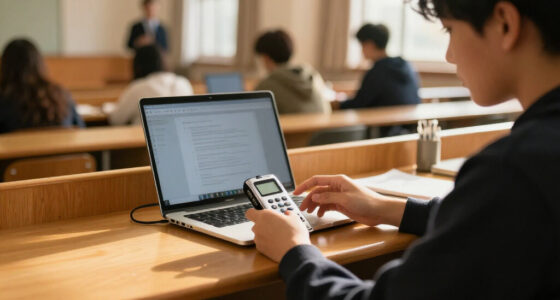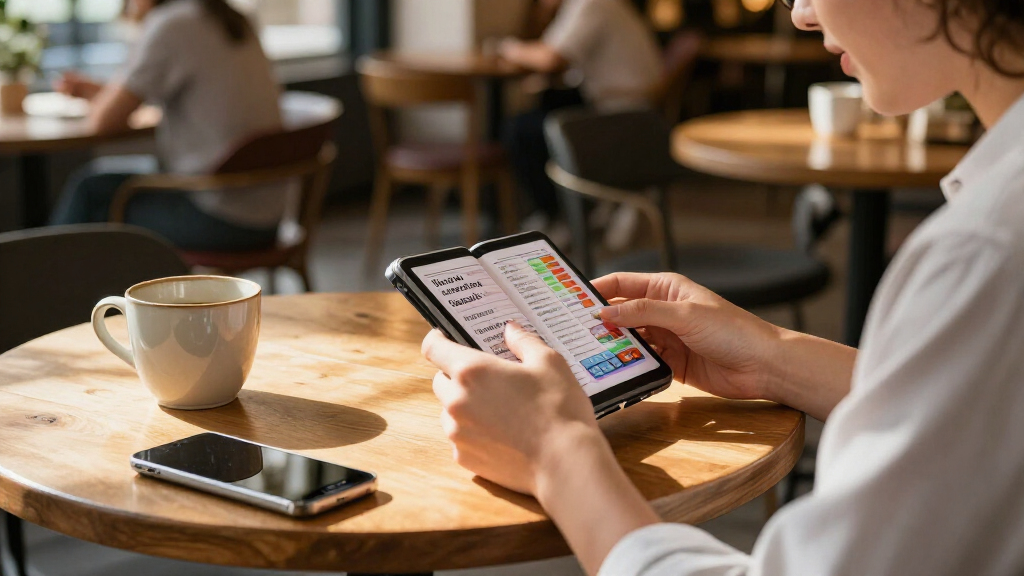
Electronic dictionaries for language learners range from focused English-Spanish translators to English reference tools with spelling and thesaurus support. My best overall pick is the Franklin BES-2100 Spanish-English Electronic Speaking Dictionary for learners who want bilingual lookups with spoken language support. The Franklin MDE-1200 stands out for English vocabulary and thesaurus use, while the Franklin MES-2400 suits learners seeking broader multilingual tools. The main tradeoff is between a device focused on one language pair and a wider reference feature set that may be less tailored to a specific course. Read on for the full breakdown and guidance on matching a dictionary to your learning goals.

Prime made for students and young adults
- Fast, free delivery for dorm and study essentials
- Prime Video and Amazon Music included
- Member-only deals
Key Takeaways
- Spanish-English learners have the most targeted choices: several Franklin models focus on this pair, so compare speech, translation, and lookup features rather than choosing by brand alone.
- The BES-2100 is my overall pick for combining Spanish-English support with spoken output, while the BES-1890 and BES-2400 offer alternatives with different feature emphasis.
- English-focused devices serve a different job: the MDE-1200 and Franklin Collins Express add vocabulary, thesaurus, or spelling tools instead of centering bilingual translation.
- Multilingual breadth is not the same as language-learning depth: the MES-2400 offers a wider translator-oriented approach, but learners should confirm that its supported languages fit their actual study needs.
- Simple, focused models can be a better fit than feature-heavy ones: devices such as the Lexibook D650EN may suit basic English lookup, while broader tools make more sense for learners who will use their extra functions regularly.
| Franklin MDE-1200 Electronic Dictionary and Thesaurus |  | Best for English Vocabulary Study | Headwords: 80,000 | Definitions: 250,000 | Synonyms: 15,000 | VIEW LATEST PRICE | See Our Full Breakdown |
| Franklin BES-1890 Speaking Spanish-English Dictionary |  | Best for Spanish Pronunciation Practice | Translations: Over 5 million Spanish-English translations | Example phrases: 4,800 | English dictionary: Merriam-Webster dictionary with 274,000 definitions | VIEW LATEST PRICE | See Our Full Breakdown |
| Franklin BES2100 Spanish-English Electronic Speaking Dictionary |  | Best for Spanish Study with Exam Vocabulary | Translations: Over 5 million Spanish-English translations | English definitions: 240,000 | Travel phrases: 4,800 with recorded human-voice audio | VIEW LATEST PRICE | See Our Full Breakdown |
| Lexibook Collins English Dictionary, 13th Edition, Electronic Dictionary with Thesaurus and Spellchecker, Blue/White |  | Best for English Learners Who Need Conjugation Tools | Dictionary: Collins English Dictionary, 13th Edition | Word entries: 725,000 words, meanings, and phrases | Verb coverage: 8,000 dictionary verbs; conjugation for more than 7,000 verbs | VIEW LATEST PRICE | See Our Full Breakdown |
| Merriam-Webster’s Essential Learner’s English Dictionary |  | Best for ESL Classroom Study | Intended use: ESL, EFL, ELL, and TEFL study and instruction | Format: Not specified in the supplied product data | Dictionary language: English | VIEW LATEST PRICE | See Our Full Breakdown |
| Franklin BES-2400 Talking English-Spanish Bilingual Dictionary |  | Best for English-Spanish Pronunciation Practice | Languages: English and Spanish | Voice: Native human voice | Learning features: Proficiency exercises | VIEW LATEST PRICE | See Our Full Breakdown |
| Electronic Speaking Merriam-Webster Dictionary | 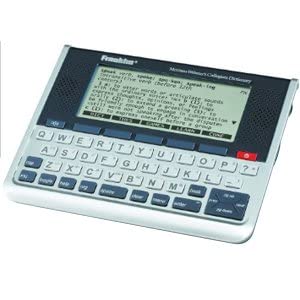 | Best for Spoken English Lookup | Product type: Electronic speaking dictionary | Publisher: Merriam-Webster | Language coverage: Not specified | VIEW LATEST PRICE | See Our Full Breakdown |
| Franklin Collins English Digital Dictionary Express Edition |  | Best for English Vocabulary Building | Model: DMQ-221 | Dictionary content: Over 118,000 words, definitions, and phrases | Thesaurus: 500,000 synonyms and antonyms | VIEW LATEST PRICE | See Our Full Breakdown |
| Lexibook D650EN English Dictionary |  | Best for English Grammar and Word Games | Model: D650EN | Dictionary entries: 380,000 words | Synonyms: 78,000 | VIEW LATEST PRICE | See Our Full Breakdown |
| Franklin MES-2400 Digital Talking Dictionary and Multilingual Translator |  | Best for Offline Multilingual Practice | Languages: English, Spanish, Italian, German, and French | Translation: Offline | Voice: Native human voice | VIEW LATEST PRICE | See Our Full Breakdown |
| Franklin Electronics Speaking Language Master Special Edition (LM-6000SEV) |  | Best for Accessible Text-to-Speech Communication | Model: LM-6000SEV | Dimensions: 6 x 1 x 6 inches | Weight: 2.35 pounds | VIEW LATEST PRICE | See Our Full Breakdown |
| Franklin DBE-1200 Spanish-English Electronic Dictionary and Translator |  | Best Dedicated English-Spanish Study Tool | Model: DBE-1200 | Languages: English and Spanish | Translations: 1,000,000 | VIEW LATEST PRICE | See Our Full Breakdown |
| electronic dictionaries for language learner | Model |
|---|---|
| Franklin MDE-1200 Electronic D | MDE1200 |
| Franklin BES-1890 Speaking Spa | — |
| Franklin BES2100 Spanish-Engli | — |
| Lexibook Collins English Dicti | D850EN |
| Merriam-Webster’s Essential Le | — |
| Franklin BES-2400 Talking Engl | — |
| Electronic Speaking Merriam-We | — |
| Franklin Collins English Digit | DMQ-221 |
| Lexibook D650EN English Dictio | D650EN |
| Franklin MES-2400 Digital Talk | — |
| Franklin Electronics Speaking | LM-6000SEV |
| Franklin DBE-1200 Spanish-Engl | DBE-1200 |
More Details on Our Top Picks
Franklin MDE-1200 Electronic Dictionary and Thesaurus
The MDE-1200 is the strongest fit here for learners building English vocabulary rather than translating between languages. Its 80,000 headwords, definitions, synonyms, and antonyms make it useful for checking meaning and exploring word choice, while grammar lessons and exam vocabulary banks add a study path beyond lookup. Compared with the bilingual Franklin BES-1890, it gives up Spanish-English translation and spoken pronunciation in favor of English-focused reference and test preparation. Word solvers and games offer extra practice, but they are a supplement, not a substitute for lessons or conversation. The small zoomable screen suits quick checks, though extended reading is less comfortable, and the two-AA battery requirement means this is not a rechargeable option.
Pros:- Combines definitions, synonyms, antonyms, and spell correction in one English reference device.
- Includes grammar lessons and vocabulary banks for several major exams.
- Word solvers and educational games add ways to practise spelling and word relationships.
- Portable design has adjustable contrast and a zoomable display.
Cons:- Does not provide bilingual translation or the human-voice pronunciation offered by the Franklin BES-1890.
- The 3-inch screen is better for short lookups than extended reading.
- Requires two AA batteries.
Best for: English learners preparing for vocabulary-heavy exams such as TOEFL, GRE, SAT, GMAT, or TOEIC who want offline definitions and word practice.
Not ideal for: Spanish-English learners or students who need audible pronunciation, spoken phrase practice, or a larger display for long study sessions.
- Headwords:80,000
- Definitions:250,000
- Synonyms:15,000
- Antonyms:12,000
- Screen:3-inch zoomable LCD
- Weight:5 ounces
- Power:2 AA batteries required
- Model:MDE1200
Our verdict“Choose the MDE-1200 for portable English vocabulary and exam practice, but pick a bilingual model if translation or spoken language support matters more.”
Franklin BES-1890 Speaking Spanish-English Dictionary
For Spanish-English learners, the BES-1890 puts spoken practice closer at hand than the English-only Franklin MDE-1200. Its human-voice pronunciation can help learners connect written entries with spoken Spanish or English, while example phrases, verb conjugations, and grammar guides support practical study. The large translation database makes it a more focused bilingual aid than an English-only thesaurus, and phonetic spelling correction can help when a learner knows how a word sounds but not how to spell it. The tradeoff is its handheld screen: it is suited to checking words and phrases, not reading long passages. It also relies on two AAA batteries, and its feature set centers on Spanish and English rather than broad multilingual study.
Pros:- Provides more than 5 million Spanish-English translations and 4,800 example phrases.
- Human-voice pronunciation supports listening and speaking practice.
- Phonetic spelling correction helps with words learners can say but cannot spell.
- Grammar guides and verb conjugations support more than basic translation.
Cons:- The handheld display is limited for reading extended explanations or passages.
- Its language coverage is focused on Spanish and English.
- Requires two AAA batteries.
Best for: Spanish learners and English speakers studying Spanish who want portable translation, spoken pronunciation, and help with verbs and everyday phrases.
Not ideal for: Learners studying languages other than Spanish and English, or anyone who wants a large screen for sustained reading and note-taking.
- Translations:Over 5 million Spanish-English translations
- Example phrases:4,800
- English dictionary:Merriam-Webster dictionary with 274,000 definitions
- Pronunciation:Human-voice pronunciation
- Learning tools:Phonetic spelling correction, grammar guides, and verb conjugations
- Dimensions:6 x 4 x 1 inches
- Weight:5.8 ounces
- Power:2 AAA batteries required
Our verdict“Pick the BES-1890 for Spanish-English study with spoken pronunciation; choose the MDE-1200 instead for English vocabulary and exam preparation.”
Franklin BES2100 Spanish-English Electronic Speaking Dictionary
The BES2100 pairs Spanish-English lookup with a broader English-learning toolkit, giving it a different emphasis from the phrase-led Franklin BES-1890. It includes 4,000 example sentences, advanced verb conjugations, phonetic spell correction, and SAT and TOEFL word lists, so learners can move from translation to grammar and academic vocabulary. Recorded human-voice audio covers 4,800 travel phrases, a useful speaking aid, though the supplied information does not describe audio for every dictionary entry. Compared with the English-focused MDE-1200, this model better serves bilingual study but gives less attention to English synonyms and antonyms. Its listed weight of 2.2 pounds is a substantial portability tradeoff for a handheld reference, and it requires two AAA batteries.
Pros:- Combines more than 5 million translations with 240,000 English definitions.
- Includes 4,000 example sentences and advanced verb conjugations.
- Recorded human-voice audio for 4,800 travel phrases supports practical speaking practice.
- SAT and TOEFL word lists extend its use beyond travel translation.
Cons:- The listed 2.2-pound weight makes it less convenient to carry than the 5.8-ounce BES-1890.
- Audio is specified for travel phrases, not for every dictionary entry.
- Requires two AAA batteries.
Best for: Spanish-English learners who want sentence examples and verb practice alongside travel audio and SAT or TOEFL vocabulary support.
Not ideal for: Learners who prioritize a lightweight pocket device, English-only thesaurus study, or pronunciation audio across all dictionary entries.
- Translations:Over 5 million Spanish-English translations
- English definitions:240,000
- Travel phrases:4,800 with recorded human-voice audio
- Example sentences:4,000
- Learning tools:Advanced verb conjugations, phonetic spell correction, SAT and TOEFL word lists
- Dimensions:3 x 7.5 x 4 inches
- Weight:2.2 pounds
- Power:2 AAA batteries required
Our verdict“Choose the BES2100 if Spanish-English study, example sentences, and academic word lists matter more than a lightweight carry-around design.”
Lexibook Collins English Dictionary, 13th Edition, Electronic Dictionary with Thesaurus and Spellchecker, Blue/White
The Lexibook D850EN makes sense for learners who want an English reference with visible support for spelling and verb forms. Its 725,000 words, meanings, and phrases are paired with conjugation for more than 7,000 verbs, a thesaurus, and phonetic spell correction. That makes it a more extensive English lookup tool than the Franklin MDE-1200 by listed entry count, while the MDE-1200 offers explicit exam vocabulary banks and grammar lessons. The Lexibook’s four-line display, magnification, and large buttons favor short, direct searches, but the screen remains restrictive for reading longer definitions. Its conjugation covers four tenses, so learners seeking detailed treatment across a wider range of verb forms may need another resource. Games and conversion tools are helpful extras, not core language instruction.
Pros:- Includes 725,000 words, meanings, and phrases in the Collins English Dictionary.
- Conjugates more than 7,000 verbs and includes phonetic spell correction.
- Thesaurus and crossword-solving functions support vocabulary work.
- Magnification and large buttons can make quick lookups easier.
Cons:- The four-line display limits how much definition text is visible at once.
- Conjugation covers four tenses, restricting deeper verb study.
- It is an English reference rather than a bilingual translation device.
Best for: English learners, especially students aged 10 and up, who want spelling support, a large reference database, and quick verb-conjugation checks.
Not ideal for: Learners who need bilingual translation, spoken pronunciation, a full-screen reading experience, or conjugation across many tenses.
- Dictionary:Collins English Dictionary, 13th Edition
- Word entries:725,000 words, meanings, and phrases
- Verb coverage:8,000 dictionary verbs; conjugation for more than 7,000 verbs
- Conjugation tenses:Simple present, simple past, present participle, past participle
- Display:Four-line screen with magnification
- Word games:Hangman, Word Jumble, Anagram
- Additional functions:Calculator, currency and unit converters, user list
- Model:D850EN
Our verdict“Choose the Lexibook for broad English lookup and quick conjugation support, but choose the MDE-1200 for dedicated exam word lists and grammar lessons.”
Merriam-Webster’s Essential Learner’s English Dictionary
This title stands apart from the electronic devices in this roundup: the supplied product information identifies it as a learner-focused English dictionary, but does not specify electronic functions or technical hardware details. Its stated audience—ESL, EFL, ELL, and TEFL learners and instructors—makes it the most directly classroom-oriented option here. Compared with the Lexibook Collins D850EN, it has no listed screen, spell correction, games, or conjugation tools; its appeal is its explicit focus on English learners and instruction. That focus may suit guided study, but buyers seeking an electronic dictionary for portable, fast lookups should favor one of the Franklin or Lexibook devices instead. The available data also does not provide entry counts, audio features, or other specifications, so I would not assume those capabilities.
Pros:- Explicitly intended for English language learners.
- Suitable for ESL, EFL, ELL, and TEFL study and instruction.
- Offers a learner-focused alternative to general electronic references such as the Lexibook Collins D850EN.
Cons:- The supplied product information does not establish that this is an electronic device.
- No entry count, audio, display, or interactive study tools are specified.
- Does not have listed bilingual translation or electronic spell-correction functions.
Best for: ESL, EFL, and ELL students or TEFL instructors looking for a learner-oriented English dictionary for structured study and teaching.
Not ideal for: Buyers specifically seeking an electronic handheld device, audio pronunciation, bilingual translation, or stated technical features and entry counts.
- Intended use:ESL, EFL, ELL, and TEFL study and instruction
- Format:Not specified in the supplied product data
- Dictionary language:English
- ASIN:0877798567
- Entry count:Not specified
- Pronunciation features:Not specified
Our verdict“Choose this title for learner-focused English study or instruction, but select a specified electronic model if you need device features or spoken support.”
Franklin BES-2400 Talking English-Spanish Bilingual Dictionary
The BES-2400 is the clearest fit for learners who want to hear English and Spanish words and phrases, not just read translations. Its native human voice and talking phrase book can support pronunciation practice during study or travel, while spelling correction helps when a learner is unsure how a word is written. Compared with the multilingual Franklin MES-2400, this model focuses on English and Spanish and adds medical and drug dictionary content plus proficiency exercises. That narrower language scope is a drawback for anyone studying several languages, but it gives this pick a more specific role for bilingual study. It works offline, so it does not offer online resources or connected lookup tools; its value is as a portable, self-contained practice aid.
Pros:- Native human voice speaks words and phrases for pronunciation practice
- Phonetic and typographical spelling correction can help identify uncertain words
- Includes proficiency exercises for learners and teachers
- Adds medical and drug dictionary content to general bilingual reference
Cons:- Limited to English and Spanish
- Offline operation excludes online language resources
- The medical and drug content may add little value for learners seeking only everyday vocabulary
Best for: English and Spanish learners who want spoken pronunciation, phrase practice, and study exercises in a portable offline device
Not ideal for: Learners studying more than English and Spanish or buyers who want web-based lessons and online reference material
- Languages:English and Spanish
- Voice:Native human voice
- Learning features:Proficiency exercises
- Reference content:Talking phrase book; medical and drug dictionary
- Spelling support:Phonetic and typographical spelling correction
- Model number:BES2400
- Item weight:10.5 ounces
- Package dimensions:6.69 × 6.38 × 1.26 inches
Our verdict“Choose the BES-2400 if English-Spanish pronunciation and structured offline practice matter more than wider language coverage.”
Electronic Speaking Merriam-Webster Dictionary
This Merriam-Webster electronic dictionary may suit learners whose main need is hearing English words spoken, but the available product information is sparse. It identifies the device as a speaking dictionary from a familiar English reference publisher; it does not specify language coverage, entry count, voice type, spelling tools, or learning exercises. That makes it a less clearly defined language-learning choice than the Franklin BES-2400, which explicitly pairs English-Spanish translations with pronunciation and study features. I would treat this as a possible fit for English pronunciation lookup only if its actual functions match the buyer’s needs. Without confirmed details on translation or practice tools, it is difficult to recommend for learners who need structured bilingual study, and the missing specifications make comparisons on portability and usability uncertain.
Pros:- Provides a speaking-dictionary format for spoken English lookup
- Carries the Merriam-Webster name
- A focused English reference may appeal to learners who do not need a multilingual translator
Cons:- Product information does not specify language coverage or translation support
- Voice type, entry count, and learning tools are not provided
- No supplied dimensions, weight, or power details to judge portability and upkeep
Best for: English learners who want a dedicated speaking dictionary and can verify that its vocabulary and playback functions meet their needs
Not ideal for: Bilingual learners who need confirmed translation, spelling correction, language coverage, or clearly documented study tools
- Product type:Electronic speaking dictionary
- Publisher:Merriam-Webster
- Language coverage:Not specified
- Voice details:Not specified
- Dictionary entry count:Not specified
- Learning features:Not specified
Our verdict“Consider this model only for spoken English lookup after confirming its functions, since the available details do not establish it as a full language-learning tool.”
Franklin Collins English Digital Dictionary Express Edition
For learners focused on English vocabulary rather than translation between languages, the Collins Express Edition packs a substantial reference set into a compact electronic format. Its 118,000-plus words, definitions, and phrases are backed by a thesaurus listing 500,000 synonyms and antonyms, giving writers and readers ways to compare word choices. Phonetic spell correction and custom word lists add more learning value than the calculator and world clock, while six games offer optional practice. Unlike the Franklin BES-2400, this device is not a talking bilingual dictionary; it is better suited to building English vocabulary through reading and word relationships. The 3-inch LCD limits how much text appears at once, and its CR2 battery requirement is a practical dependency for continued use.
Pros:- Over 118,000 words, definitions, and phrases support broad English lookup
- Thesaurus includes 500,000 synonyms and antonyms for vocabulary comparison
- Phonetic spell correction and custom word lists support study
- Six word games provide extra practice at four difficulty levels
Cons:- Does not provide the spoken bilingual pronunciation offered by the Franklin BES-2400
- Three-inch LCD offers limited room for definitions and lists
- Requires one CR2 battery
Best for: English learners and students who want broad definitions, synonym practice, spelling help, and custom vocabulary lists
Not ideal for: Learners who need spoken pronunciation, bilingual translation, or a rechargeable device with a larger screen
- Model:DMQ-221
- Dictionary content:Over 118,000 words, definitions, and phrases
- Thesaurus:500,000 synonyms and antonyms
- Word games:6 games with 4 difficulty levels
- Display:3-inch LCD
- Battery:1 CR2 battery, included
- Weight:180 g
- Dimensions:5.55 × 8.07 inches
Our verdict“Pick this Collins model for English vocabulary and synonym work, but choose a talking bilingual device if pronunciation or translation is central.”
Lexibook D650EN English Dictionary
The D650EN brings together more English-study functions than the Collins Express Edition: alongside 380,000 words and 78,000 synonyms, it offers conjugations for more than 8,000 verbs, grammar tools, and a spellchecker. That mix makes it a stronger match for learners who need help with word forms and written English, not just definitions. Its crossword solver and word games add practice, though they are less central to language study than the verb and spelling tools. The three-line screen with magnification and large buttons should make basic lookup approachable, but the display remains small for longer definitions. Unlike the Franklin MES-2400, this is an English-only reference rather than a spoken multilingual translator, and it requires batteries.
Pros:- Lists 380,000 words and 78,000 synonyms
- Provides conjugations for more than 8,000 verbs across four tenses or forms
- Combines spellchecking, grammar tools, and a thesaurus
- Includes word games, converters, a calculator, and a memo list
Cons:- English-only functions do not replace a bilingual translator such as the Franklin MES-2400
- Three-line screen restricts the amount of text visible at one time
- Requires batteries, with no rechargeable power source specified
Best for: English learners who want verb conjugation, spelling, grammar support, and vocabulary games in one handheld reference
Not ideal for: Learners who need spoken pronunciation, translation into other languages, or a larger display for extended reading
- Model:D650EN
- Dictionary entries:380,000 words
- Synonyms:78,000
- Verb conjugations:More than 8,000 verbs across four tenses or forms
- Display:Three-line screen with magnifying function
- Functions:Thesaurus, spellchecker, crossword solver, grammar tools, calculator, memo list, converters, clock, and date display
- Word games:Hangman, Jumble, and Anagram solver
- Power source:Battery powered; requires batteries
- Weight and dimensions:0.11 kg; 4.72 × 0.55 × 2.99 inches
Our verdict“Choose the D650EN for a broad set of English grammar and vocabulary aids, not for spoken translation or spacious reading.”
Franklin MES-2400 Digital Talking Dictionary and Multilingual Translator
The MES-2400 is the broadest translation choice in this group, supporting English, Spanish, Italian, German, and French without an internet connection. A native human voice speaks words and common phrases, while phonetic and typographical spelling correction can help when learners know how a word sounds but not how to spell it. Compared with the English-Spanish-only Franklin BES-2400, the MES-2400 suits learners switching among more languages, though the BES-2400 lists proficiency exercises and medical and drug reference content that this model does not. Its tactile keypad gives lookup a physical, direct feel, but it remains limited to five listed languages and the power source is unspecified. I’d choose it for portable translation and listening practice, not as a substitute for online lessons or broader language resources.
Pros:- Translates offline among five specified languages
- Native human voice speaks words and common phrases
- Phonetic and typographical spelling correction supports uncertain-word lookup
- Portable 10.5-ounce design with a tactile keypad
Cons:- Language coverage is limited to English, Spanish, Italian, German, and French
- Power source and rechargeable capability are not specified
- Does not list the proficiency exercises or medical and drug content offered by the BES-2400
Best for: Travelers and language learners who need offline spoken translation among English, Spanish, Italian, German, and French
Not ideal for: Learners studying languages outside its five-language set or buyers who need a confirmed rechargeable power setup
- Languages:English, Spanish, Italian, German, and French
- Translation:Offline
- Voice:Native human voice
- Features:Talking dictionary, phrase book, phonetic and typographical spell correction
- Keypad:Tactile
- Model number:MES2400
- Item weight:10.5 ounces
- Package dimensions:6.61 × 6.38 × 1.14 inches
Our verdict“Choose the MES-2400 for offline spoken translation across five European languages, provided its language set and unspecified power setup fit your needs.”
Franklin Electronics Speaking Language Master Special Edition (LM-6000SEV)
The LM-6000SEV is a communication aid, not a conventional bilingual dictionary, so I’d rank it for learners who need spoken output and accessible controls rather than broad vocabulary lookup. Users can type, save, and replay messages, adjust speech speed, and use orientation keys and audible cues to operate the device. That makes it more purpose-built for communication support than the Franklin DBE-1200, which offers extensive English-Spanish reference tools but is focused on two-way language study. The tradeoff is a narrow fit: the listed features do not provide the translation, dictionary, or grammar resources a typical language learner may expect. Its AC adaptor, locator dots, and carrying case add practical accessibility support, though four AA batteries are needed when using battery power. I’d choose it for accessible spoken communication, not as a general-purpose study dictionary.
Pros:- Adjustable voice speed supports different listening and comprehension needs.
- Can type, save, and replay text-to-speech messages.
- Orientation keys and audible cues support users with visual impairments.
- Includes an AC adaptor, locator dots, carrying case, and instructional CD.
Cons:- Does not offer the bilingual dictionary and translation toolkit found on the Franklin DBE-1200.
- Its communication-focused design suits a narrower group than a general language-learning device.
- Battery operation requires four AA batteries.
Best for: Learners with visual or speech impairments, dyslexia, or other communication needs who benefit from audible cues and saved text-to-speech messages.
Not ideal for: Learners seeking English-Spanish translation, definitions, grammar practice, or a broad study dictionary; this device is designed around accessible communication instead.
- Model:LM-6000SEV
- Dimensions:6 x 1 x 6 inches
- Weight:2.35 pounds
- Battery type:4 AA batteries (included)
- Voice feature:Adjustable text-to-speech speed
- Message functions:Type, save, and play back messages
- Included accessories:AC adaptor, press-on locator dots, carrying case, instructional CD
Our verdict“Choose the LM-6000SEV for accessible spoken communication and message playback, not for conventional vocabulary study or translation.”
Franklin DBE-1200 Spanish-English Electronic Dictionary and Translator
For learners focused on English and Spanish, the DBE-1200 is the clearest fit in this pair: it combines offline translation with definitions, a thesaurus, spell checking, and grammar tools. Its 7,000-entry phrasebook, test-prep vocabulary, games, and word solvers add study options beyond quick word lookup. Compared with the LM-6000SEV, this is a conventional language-learning device; the LM-6000SEV is better suited to accessible text-to-speech communication and does not serve the same reference role. The DBE-1200’s zoomable 3-inch LCD and full keyboard support handheld lookup, while offline operation means it does not depend on Wi-Fi. Its main limitation is equally clear: the tools cover only English and Spanish, so learners studying another language will need a different device. It also runs on two AA batteries rather than offering a rechargeable setup in the listed specifications.
Pros:- Provides English-Spanish and Spanish-English translation offline, without Wi-Fi.
- Combines definitions, a thesaurus, spell checking, and grammar tools.
- Adds a 7,000-entry phrasebook, test-prep vocabulary, games, and word solvers.
- Compact handheld format includes a full keyboard and zoomable LCD.
Cons:- Reference and translation functions are limited to English and Spanish.
- Requires two AA batteries.
- Its language-study focus does not provide the accessible message playback features of the LM-6000SEV.
Best for: English- and Spanish-speaking students or travelers who want offline translation alongside dictionary, grammar, and vocabulary practice tools.
Not ideal for: Learners studying languages other than English or Spanish, or buyers who need a rechargeable device rather than AA-battery power.
- Model:DBE-1200
- Languages:English and Spanish
- Translations:1,000,000
- Words:150,000+
- Definitions:250,000
- Phrasebook:7,000 entries
- Display:3-inch zoomable LCD
- Power:2 AA batteries
- Connectivity:Offline; no Wi-Fi required
Our verdict“Pick the DBE-1200 if your study or travel centers on English and Spanish and you want offline reference tools in one handheld device.”
How We Picked
I ranked these electronic dictionaries by how well their stated functions support everyday language learning: bilingual lookup, spoken output where offered, English vocabulary support, spelling and thesaurus tools, and the breadth of language coverage. I also considered whether each product appears aimed at a specific learner task or serves as a more general reference device. A focused language pair can be more useful than a longer feature list when it matches a learner’s coursework and practice routine.
The ranking gives priority to practical fit, not feature count alone. The BES-2100 leads because its Spanish-English focus and speaking function offer a clear learning use case; the MDE-1200 ranks well for English vocabulary work, while the MES-2400 is a better match for buyers who value multilingual scope. Products with narrower functions or less clearly differentiated learning support rank lower. Since the lineup includes different language pairs and device styles, buyers should verify the exact language coverage and functions of the specific model before choosing.
| electronic dictionaries for language learner | Model |
|---|---|
| Franklin MDE-1200 Electronic D | MDE1200 |
| Franklin BES-1890 Speaking Spa | — |
| Franklin BES2100 Spanish-Engli | — |
| Lexibook Collins English Dicti | D850EN |
| Merriam-Webster’s Essential Le | — |
| Franklin BES-2400 Talking Engl | — |
| Electronic Speaking Merriam-We | — |
| Franklin Collins English Digit | DMQ-221 |
| Lexibook D650EN English Dictio | D650EN |
| Franklin MES-2400 Digital Talk | — |
| Franklin Electronics Speaking | LM-6000SEV |
| Franklin DBE-1200 Spanish-Engl | DBE-1200 |
Factors to Consider When Choosing Electronic Dictionaries For Language Learners
Choosing an electronic dictionary is less about finding the device with the longest feature list and more about matching it to the way you study. I would start with your target languages and daily lookup habits, then weigh speech, reference tools, portability, and how much you will use functions beyond translation.
Match the Language Pair to Your Actual Study
Start with the language you are learning and the direction in which you need to translate. A Spanish-English device may be useful for class exercises, but it will not replace a tool built for another language pair. Check whether lookups work in both directions, since recognizing a word in your study language and producing its translation are different tasks. A common mistake is choosing a broadly described translator without confirming which languages it supports. If you study more than one language, compare the added coverage against whether the device gives enough depth for your main pair. A focused dictionary can be the more useful choice when it matches your course exactly.
Decide Whether Spoken Output Will Change How You Study
Speech features can help connect written vocabulary with pronunciation, especially when you are studying alone. They are most useful when you can replay words during regular practice, rather than treating speech as an occasional extra. Do not assume that a speaking label means every entry has equally helpful pronunciation support; check how the feature is described for the model. Speech also does not replace listening to natural conversation, where pace and context vary. If pronunciation is a main goal, prioritize a device that makes audio easy to access and pair it with listening practice. If your main need is spelling or quick translation, paying extra attention to speech may not improve your routine.
Choose Between a Translator and an English Reference Tool
Translation helps with moving between languages, while a learner’s dictionary, thesaurus, or spellchecker helps you build vocabulary and write more accurately. These functions solve different problems, so a device that is strong in one area may not cover the other. Before buying, think about your most common lookup: finding a translation, checking an English definition, spelling a word, or exploring synonyms. Buyers sometimes choose a bilingual tool when they actually need help understanding English usage. Conversely, an English reference device may not serve someone who needs rapid bilingual support. Let your usual study task guide the choice, not the number of features listed.
Treat Language Breadth as a Tradeoff, Not an Automatic Upgrade
A multilingual device can make sense for learners who regularly move between several languages, but broader coverage is only useful if it includes the languages they need. More language options do not automatically mean deeper explanations or better support for a particular course. Compare the advertised language scope with your current studies and likely near-term plans. If one language pair accounts for nearly all your use, a dedicated model may be easier to choose and more directly suited to that routine. If you do need several languages, verify the exact combinations and translation directions rather than relying on a general multilingual label. This check can prevent paying for breadth that stays unused.
Check the Everyday Interface Before You Prioritize Extra Functions
A dictionary is most helpful when you can look up a word quickly without interrupting your reading or practice. Consider how you will enter words, move through results, and use the device during lessons or travel. A compact feature set can be a benefit if it keeps common tasks straightforward, while additional tools matter only when they are easy to reach and relevant. Look for clear product information about the display, controls, and power needs before buying. Do not assume that a longer list of functions makes a device easier to use. For frequent study, a simple, predictable lookup routine may matter more than occasional extras.
Frequently Asked Questions
Which of these dictionaries is best if I mainly study Spanish?
I would begin with the Spanish-English Franklin models, then compare their stated functions against your study routine. The BES-2100 is my overall choice in this group because it pairs Spanish-English support with speaking functionality. The BES-1890 and BES-2400 are also relevant options, but their names and feature emphasis point to different configurations, so check the exact functions before deciding. If you mainly need English definitions rather than translation, the English-focused models may be a better match. Your course language pair and most frequent lookup should settle the choice.
Should I choose a speaking dictionary or a translation-focused one?
Choose a speaking model if hearing word pronunciation is part of your regular practice, especially when you study without a teacher nearby. A translation-focused option may be a better fit when your priority is quickly finding equivalents between languages. Speech can support pronunciation, but it does not teach natural conversation or replace listening to varied speakers. Check whether spoken output applies to the entries you expect to use, rather than relying on the product name alone. If both tasks matter, compare the specific models’ functions and decide which one you would use more often.
Is a multilingual translator a better buy than a Spanish-English dictionary?
Not automatically. The Franklin MES-2400 is the lineup’s broader multilingual option, while several other Franklin devices focus more directly on Spanish-English use. Broader coverage is useful if you genuinely study or travel among multiple supported languages. For a single language pair, a focused dictionary may better match your daily work and avoid paying attention to functions you rarely use. Confirm the exact languages and translation directions before choosing, since a general multilingual description may not answer those details. Pick breadth only when it solves a real need.
Can an English dictionary replace a bilingual dictionary while I am learning?
An English reference device can help you build vocabulary, check spelling, and explore synonyms, but it does not serve the same role as a bilingual dictionary. The MDE-1200 and Franklin Collins Express are more relevant to English lookup tasks than to a learner who primarily needs translation between two languages. If you are still relying on translations to understand new words, a bilingual model may be the more practical first device. As your English comprehension grows, an English dictionary can help you learn definitions and word relationships directly. Some learners may benefit from both approaches, but the main purpose should guide the first purchase.
What should I verify before buying one of these older-style handheld devices?
Confirm the exact language coverage, translation direction, and whether speech or spelling tools work as you expect. Check the product listing for power requirements, included accessories, and any details about screen and keyboard operation. These points matter because model names can sound similar even when their functions differ. Also consider whether the device fits your study setting: a classroom, a desk, or travel may call for different levels of portability and ease of use. If product information leaves a key function unclear, do not assume a related model has the same feature.
Conclusion
For most Spanish-English learners, I recommend the Franklin BES-2100 as the best overall because it brings bilingual lookup and spoken support together. The Franklin MDE-1200 is my best value-style choice for English vocabulary work, particularly for learners who want dictionary and thesaurus tools rather than a dedicated translator. Beginners who want a focused Spanish-English device should compare the BES-1890 and BES-2100, choosing based on the functions they will use most. For broader language needs, the Franklin MES-2400 is the best premium-style fit in this lineup, provided its supported languages match your plans. For specific English reference needs, consider the Lexibook Collins or Franklin Collins models; for a simple English lookup device, the Lexibook D650EN may suit a more limited routine. Choose by language pair and learning task first, then narrow the field by speech and extra tools.