The best educational science reference book for most readers is The Science Book: Everything You Need to Know About the World and How It Works, because it balances visual clarity with genuine depth across every major discipline. Two other standouts are The Usborne Science Encyclopedia, which pairs its pages with over 180 video clips and 1,000 vetted websites, and A Dictionary of Science (Oxford Quick Reference), the strongest choice for older students and adults who need precise definitions rather than illustrations. The core tradeoff in this category is visual appeal versus rigor: heavily illustrated encyclopedias engage younger readers but can oversimplify, while denser references like Oxford’s dictionary and Scientific American’s desk reference reward patience with accuracy. Price also clusters oddly here — some premium hardcovers cost less than thinner kids’ encyclopedias, so cover price is a poor guide to value. Continue reading for the full breakdown of all 12 books, including who each one suits and who should skip it.

Prime made for students and young adults
- Fast, free delivery for dorm and study essentials
- Prime Video and Amazon Music included
- Member-only deals
Key Takeaways
- Visual encyclopedias (The Science Book, Knowledge Encyclopedia Science!, Usborne) deliver far more usable content per page than text-heavy alternatives for readers under 14, which is why they dominate the top of the ranking.
- A Dictionary of Science (Oxford Quick Reference) is the only pick that serves high school and adult readers well — buying an illustrated kids’ encyclopedia for a 16-year-old is the most common mistake in this category.
- The Usborne Science Encyclopedia’s QR-linked video clips and website directory give it the longest shelf life of any pick, since the print content stays current through its digital companion.
- Sciencia stands alone as a compact, illustration-driven reference for curious adults; it’s beautiful but too condensed to serve as a primary study resource.
- Several similarly titled children’s encyclopedias (Encyclopedia of Science, Children’s Encyclopedia of Science) overlap heavily in content — choosing between them comes down to reading level and illustration style, not substance.
| The Way Things Work: Newly Revised Edition |  | Best Overall | Format: Hardcover | Edition: Newly Revised Edition | Reading Level: Ages 8 and up | VIEW LATEST PRICE | See Our Full Breakdown |
| Physical Science (Early Science Encyclopedias) | 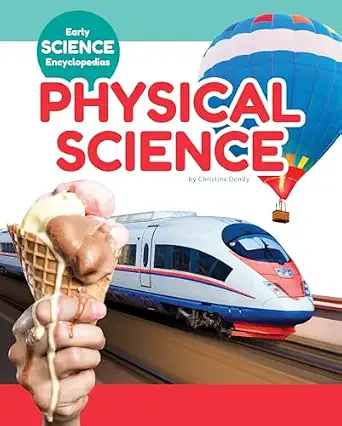 | Best for Youngest Readers | Format: Print edition | Reading Level: Early elementary (ages 4-8) | Focus Area: Physical science fundamentals | VIEW LATEST PRICE | See Our Full Breakdown |
| Science Book: Everything You Need to Know About the World and How It Works |  | Best Broad-Range Reference | Format: Print edition | Reading Level: Ages 10 through adult | Coverage: Physics, chemistry, biology, Earth and space science | VIEW LATEST PRICE | See Our Full Breakdown |
| Knowledge Encyclopedia Science! 2nd Edition |  | Best Visual Learner Pick | Format: Hardcover | Edition: 2nd Edition | Reading Level: Ages 8-14 | VIEW LATEST PRICE | See Our Full Breakdown |
| National Geographic Kids Science Encyclopedia: Atom Smashing, Food Chemistry, Animals, Space, and More! |  | Best for Fact-Hungry Kids | Format: Hardcover | Reading Level: Ages 7-12 | Coverage: Chemistry, biology, space, animals, and more | VIEW LATEST PRICE | See Our Full Breakdown |
| A Dictionary of Science (Oxford Quick Reference) |  | Best Quick-Lookup Reference | Format: Paperback reference dictionary | Publisher: Oxford University Press | Series: Oxford Quick Reference | VIEW LATEST PRICE | See Our Full Breakdown |
| Children’s Encyclopedia of Science |  | Best Value Intro for Young Readers | Format: Illustrated children’s encyclopedia | Target age: Roughly 6–10 years | Coverage: General science overview across major topics | VIEW LATEST PRICE | See Our Full Breakdown |
| Children’s Encyclopedia of Science Experiments |  | Best for Hands-On Learners | Format: Experiment-based children’s science book | Target age: Not stated; best suited to roughly 7–12 with supervision | Content type: Step-by-step science experiments | VIEW LATEST PRICE | See Our Full Breakdown |
| The Usborne Science Encyclopedia |  | Best Interactive Learning Pick | Format: Illustrated encyclopedia with digital companion content | Target age: Roughly 9–14 years | Coverage: Gravity, flight, genes, DNA, and broad science topics | VIEW LATEST PRICE | See Our Full Breakdown |
| Sciencia: Mathematics, Physics, Chemistry, Biology, and Astronomy for All (Wooden Books, 37) |  | Best Compact Deep-Thinker’s Companion | Format: Compact illustrated hardcover/paperback | Series: Wooden Books, No. 37 | Disciplines covered: Mathematics, physics, chemistry, biology, astronomy | VIEW LATEST PRICE | See Our Full Breakdown |
| Scientific American Science Desk Reference |  | Best for Quick Fact-Checking | Publisher: Scientific American / Wiley | Format: Hardcover reference | Coverage: Cross-disciplinary (physical, life, and earth sciences) | VIEW LATEST PRICE | See Our Full Breakdown |
| Encyclopedia of Science |  | Best Visual Reference | Format: Illustrated encyclopedia (hardcover) | Coverage: Multiple scientific disciplines, discoveries, and key figures | Intended audience: Students and science enthusiasts | VIEW LATEST PRICE | See Our Full Breakdown |
| educational science reference book | Format | Coverage | Reading Level |
|---|---|---|---|
| The Way Things Work: Newly Rev | Hardcover | — | Ages 8 and up |
| Physical Science | Print edition | — | Early elementary (ages 4-8) |
| Science Book: Everything You N | Print edition | Physics, chemistry, biology, Earth and space science | Ages 10 through adult |
| Knowledge Encyclopedia Science | Hardcover | Comprehensive multi-discipline science | Ages 8-14 |
| National Geographic Kids Scien | Hardcover | Chemistry, biology, space, animals, and more | Ages 7-12 |
| A Dictionary of Science | Paperback reference dictionary | Physics, chemistry, biology, earth science, and more | — |
| Children’s Encyclopedia of Sci | Illustrated children’s encyclopedia | General science overview across major topics | — |
| Children’s Encyclopedia of Sci | Experiment-based children’s science book | — | — |
| The Usborne Science Encycloped | Illustrated encyclopedia with digital companion content | Gravity, flight, genes, DNA, and broad science topics | — |
| Sciencia: Mathematics | Compact illustrated hardcover/paperback | — | — |
| Scientific American Science De | Hardcover reference | Cross-disciplinary (physical, life, and earth sciences) | — |
| Encyclopedia of Science | Illustrated encyclopedia (hardcover) | Multiple scientific disciplines, discoveries, and key figures | Intermediate — more detailed than entry-level children’s references |
More Details on Our Top Picks
The Way Things Work: Newly Revised Edition
The Way Things Work earns the top spot because it does something none of the general encyclopedias in this roundup attempt: it explains the mechanics behind everyday technology with genuine charm. Where National Geographic Kids Science Encyclopedia surveys many topics briefly, this book goes deep on how machines actually function, from levers to microchips, using whimsical illustrations that make abstract principles tangible. The newly revised edition brings the content up to date with modern technology, which matters if your shelf copy predates smartphones. The tradeoff is scope — this is not a life-sciences or chemistry reference, so a student needing space or biology coverage will still want a broader encyclopedia alongside it.
Pros:- Explains mechanics and technology with unusual clarity and humor
- Accessible to a wide age range, from elementary readers to adults
- Updated edition includes modern technology
- Illustrations genuinely aid understanding rather than just decorating
Cons:- Narrow focus on machines and technology rather than all sciences
- Too basic for advanced students or professionals
Best for: Curious kids ages 8-14 and families who want a single engaging reference that explains mechanical and technological principles
Not ideal for: Buyers seeking a broad all-in-one science reference covering biology, chemistry, and astronomy — this stays focused on how things work
- Format:Hardcover
- Edition:Newly Revised Edition
- Reading Level:Ages 8 and up
- Focus Area:Machines, technology, and physical principles
- Illustrations:Extensive, integrated diagrams
- Type:Mechanics and technology reference
Our verdict“If you buy one science reference for a curious household, this is the one — it teaches how the world’s machinery works better than anything else here.”
Physical Science (Early Science Encyclopedias)
Most books in this lineup — including The Science Book and Knowledge Encyclopedia Science! — aim at readers who already have some reading stamina. Physical Science stands apart by targeting early learners with simple vocabulary and short entries designed for emerging readers. Compared with the National Geographic Kids encyclopedia, which packs dense pages with facts, this keeps the pace gentle so young children aren’t overwhelmed. The obvious tradeoff is depth and shelf life: kids past second or third grade will outgrow it quickly, and it covers only physical science, leaving out life sciences and space entirely.
Pros:- Written specifically for early readers
- Introduces physical science fundamentals at the right level
- Engaging presentation that builds curiosity rather than intimidation
Cons:- Coverage limited to physical science only
- Short usable lifespan as children’s reading advances
Best for: Parents and teachers of children ages 4-8 who need a first science reference with readable, entry-level text
Not ideal for: Families wanting a book that stays useful for years — older elementary students will find it too simple too fast
- Format:Print edition
- Reading Level:Early elementary (ages 4-8)
- Focus Area:Physical science fundamentals
- Series:Early Science Encyclopedias
- Entry Style:Short, simple passages
- Type:Introductory children’s reference
Our verdict“This is a first science book, not a lasting reference — buy it for a young beginner, not a household library.”
Science Book: Everything You Need to Know About the World and How It Works
The Science Book is the pick for buyers who want one volume spanning all major sciences in accessible language. Compared with The Way Things Work, which drills into mechanics, this spreads across physics, biology, Earth science, and more, making it the better choice for homework help and general browsing. Its explanations are clear enough for a middle-schooler yet substantial enough that adults won’t feel talked down to. The compromise is breadth over depth — complex topics get compressed into digestible summaries, so students needing rigorous technical treatment will hit a ceiling, and it lacks the visual density that makes Knowledge Encyclopedia Science! so appealing to younger browsers.
Pros:- Covers all major scientific disciplines in one volume
- Clear, accessible explanations for a wide age range
- Well-organized for quick lookups and homework help
- Substantial enough for adult readers
Cons:- Breadth comes at the cost of technical depth
- Less visually rich than competing illustrated encyclopedias
Best for: Middle-school students, homeschool families, and adults who want a single readable reference across every major science
Not ideal for: High school or college students who need detailed technical depth for coursework
- Format:Print edition
- Reading Level:Ages 10 through adult
- Coverage:Physics, chemistry, biology, Earth and space science
- Entry Style:Concise topic explanations
- Audience:General readers and students
- Type:All-science reference
Our verdict“The best all-purpose family science reference here if you value written clarity and total coverage over flashy visuals.”
Knowledge Encyclopedia Science! 2nd Edition
Where The Science Book leads with text, Knowledge Encyclopedia Science! leads with striking visual presentation — cutaway diagrams, rendered illustrations, and page layouts that explain concepts almost before you read a word. This makes it the strongest choice in the lineup for visual learners and reluctant readers, since the imagery does real explanatory work rather than decoration. The second edition updates its coverage of contemporary science topics. Compared with the National Geographic Kids encyclopedia, it skews slightly older and more structured, feeling more like a genuine reference than a fact treasury. The drawback: visually driven entries sometimes simplify nuanced science, and the heavy format is better at a desk than in a backpack.
Pros:- Exceptional diagrams and rendered illustrations that genuinely teach
- Broad, well-organized coverage of scientific topics
- Updated second edition content
- Engaging enough for browsing without an assignment
Cons:- Visual-first approach sacrifices some explanatory depth
- Large, heavy format is less portable than text-based references
Best for: Visual learners, reluctant readers ages 8-14, and families who prefer diagram-driven explanations over dense text
Not ideal for: Readers who want rigorous written depth — the visual emphasis means some topics stay surface-level
- Format:Hardcover
- Edition:2nd Edition
- Reading Level:Ages 8-14
- Coverage:Comprehensive multi-discipline science
- Illustrations:Full-color 3D-style cutaway visuals
- Type:Illustrated science encyclopedia
Our verdict“The best pick for kids (and adults) who understand what they can see — its illustrations carry the teaching load better than any competitor here.”
National Geographic Kids Science Encyclopedia: Atom Smashing, Food Chemistry, Animals, Space, and More!
This encyclopedia plays a different role than Knowledge Encyclopedia Science! — it’s less a structured reference and more a fact-forward playground, packed with the kind of bite-size science trivia National Geographic Kids is known for. Topics jump from food chemistry to space to animals, which keeps young browsers turning pages voluntarily rather than only opening it for homework. Compared with Physical Science (Early Science Encyclopedias), it serves a slightly older and more independent reader who can absorb rapid topic changes. The tradeoff is coherence: it’s excellent for sparking curiosity but weaker as a study tool, since topics are covered in quick hits rather than connected explanations.
Pros:- Highly engaging format that kids pick up voluntarily
- Wide-ranging topics from chemistry to space to animals
- Colorful photography and kid-friendly visuals
- Strong brand pedigree for accuracy and appeal
Cons:- Fragmented fact-bite structure limits deeper understanding
- Less useful as an academic study reference
Best for: Kids ages 7-12 who love facts and trivia and need a science book they’ll read for fun
Not ideal for: Students needing systematic subject coverage for schoolwork — the trivia format doesn’t build concepts sequentially
- Format:Hardcover
- Reading Level:Ages 7-12
- Coverage:Chemistry, biology, space, animals, and more
- Entry Style:Bite-size facts with photos
- Publisher:National Geographic Kids
- Type:Children’s fact-based encyclopedia
Our verdict“Buy this to make a child <em>excited</em> about science, not to help them pass a test — it’s the fun-first entry in this lineup.”
A Dictionary of Science (Oxford Quick Reference)
Most books in this roundup explain science at length; this one does the opposite, and that is exactly its value. Oxford’s dictionary format delivers clean, authoritative definitions across every major discipline, making it the fastest way to settle a terminology question while reading something heavier like The Science Book: Everything You Need to Know About the World. Compared with the Scientific American Science Desk Reference, it sacrifices depth and tables for sheer speed and portability, which is a reasonable trade for students mid-assignment. The tradeoff is real, though: there are no illustrations and no extended explanations, so it cannot teach a concept from scratch — it assumes you mostly understand the topic and just need the vocabulary pinned down.
Pros:- Covers terminology across all major scientific disciplines
- Definitions are concise, accurate, and easy to parse quickly
- Compact format fits easily on a desk or in a bag
- Trusted academic pedigree from Oxford
Cons:- No illustrations, diagrams, or worked examples to support the definitions
- Definitions are too brief to teach a concept from scratch
- No digital or searchable companion version
Best for: High school and undergraduate students, educators, and adult readers who need fast, authoritative definitions while studying or reading other science material
Not ideal for: Visual learners and younger students — the lack of diagrams and depth makes definitions feel dry and hard to anchor without imagery
- Format:Paperback reference dictionary
- Publisher:Oxford University Press
- Series:Oxford Quick Reference
- Coverage:Physics, chemistry, biology, earth science, and more
- Entry style:Conise A-to-Z definitions
- Audience:Students, educators, and general science readers
- Illustrations:None
Our verdict“Buy this as a companion lookup tool, not a teacher — it pairs perfectly with any narrative science book in this roundup but cannot stand alone.”
Children’s Encyclopedia of Science
Where the National Geographic Kids Science Encyclopedia leans on bold photography, this encyclopedia leans on colorful illustration and friendly explanation, covering the whole landscape of science at an accessible level for a lower typical price point. It works well as a first science book — the kind a child browses independently rather than studies. Compared with the Usborne Science Encyclopedia, the scope is similar but the delivery is simpler, which suits younger or reluctant readers better. The catch is ceiling: advanced topics get only surface treatment, so a curious ten-year-old will outgrow it quickly. It also lacks clear edition and publication details, which makes it harder to judge freshness before ordering — a genuine annoyance for homeschool parents building a curriculum.
Pros:- Bright illustrations that help visual learners grasp concepts
- Broad coverage that introduces every major science topic
- Language simple enough for independent browsing
- Affordable compared with premium encyclopedias in this roundup
Cons:- Explanations stay shallow on advanced topics
- Vague edition and publication details make freshness hard to verify
- No multimedia or online companion content
Best for: Parents and grandparents buying a first science encyclopedia for children roughly ages 6–10 who want broad, colorful coverage at a budget-friendly price
Not ideal for: Families with older or advanced kids — the shallow treatment of complex topics will leave strong readers wanting more within months
- Format:Illustrated children’s encyclopedia
- Target age:Roughly 6–10 years
- Coverage:General science overview across major topics
- Visual style:Full-color illustrations
- Reading support:Simple, child-friendly language
- Multimedia:None
Our verdict“A low-risk, low-cost first science encyclopedia that excels at sparking curiosity but won’t carry a child past the basics.”
Children’s Encyclopedia of Science Experiments
Every other book on this list is about reading science; this one is about doing science. That difference makes it the pick for kids who learn through their hands rather than through pages — a complement to, not a replacement for, the Children’s Encyclopedia of Science, which covers the theory this book skips. The step-by-step experiment instructions turn abstract concepts into kitchen-table demonstrations, and that engagement is worth a lot for STEM curiosity. The tradeoffs are practical: no age guidance is provided, so parents must judge safety and difficulty themselves, and materials are not specified, meaning some experiments will require a shopping trip. Compared with Usborne’s encyclopedia, it is narrower in scope but deeper in involvement.
Pros:- Step-by-step instructions that children can follow with guidance
- Turns passive reading into active experimentation
- Strongly encourages curiosity about the natural world
- Works well alongside a theory-focused encyclopedia
Cons:- No stated age suitability, forcing parents to self-assess difficulty
- Required materials are not clearly listed upfront
- Thin on the underlying scientific explanation behind each activity
Best for: Parents and educators of hands-on learners, roughly ages 7–12, who want supervised experiments that make textbook concepts tangible
Not ideal for: Families without time or tolerance for mess — many experiments need adult supervision, prep, and materials that aren’t included
- Format:Experiment-based children’s science book
- Target age:Not stated; best suited to roughly 7–12 with supervision
- Content type:Step-by-step science experiments
- Materials:Not included; sourcing left to the buyer
- Learning style:Hands-on and activity-driven
- Illustrations:Instructional visuals for experiments
Our verdict“Choose this when you want science to happen at the kitchen table rather than on the page — just plan for supervision and supplies.”
The Usborne Science Encyclopedia
This is the only book in the lineup that treats print as a launchpad rather than a destination. With over 180 video clips and 1,000 recommended websites, the Usborne encyclopedia extends well beyond its pages, letting motivated kids watch a concept in motion after reading about it. Compared with the Children’s Encyclopedia of Science, it reaches noticeably harder material — genes, DNA, flight mechanics — making it the stronger choice for upper-elementary and middle-school readers ready to stretch. Those same multimedia links are the tradeoff: they depend on Usborne’s online infrastructure staying live, and they assume the child has supervised internet access, which not every household wants to provide. The reading level can also run ahead of very young children, so it is not a starter encyclopedia.
Pros:- Multimedia links turn static reference into interactive learning
- Ambitious topic range including genetics and physics
- Encourages self-directed exploration beyond the page
- Trusted Usborne pedagogy and layout
Cons:- Value depends on external websites and video links remaining available
- Reading level may exceed the age group attracted by the format
- Sparse third-party ratings make comparison shopping harder
Best for: Confident readers around ages 9–14 with internet access who will actually follow the video links and dive deeper on their own
Not ideal for: Very young children and screen-limited households — the advanced text and reliance on online content defeat the purpose without web access
- Format:Illustrated encyclopedia with digital companion content
- Target age:Roughly 9–14 years
- Coverage:Gravity, flight, genes, DNA, and broad science topics
- Multimedia:180+ video clips and 1,000 recommended websites
- Publisher:Usborne
- Internet requirement:Needed to access supplementary content
Our verdict“The best pick for a self-driven young scientist with internet access — skip it if you want a self-contained, screen-free reference.”
Sciencia: Mathematics, Physics, Chemistry, Biology, and Astronomy for All (Wooden Books, 37)
Where the Knowledge Encyclopedia Science! goes big and visual, Sciencia goes small and contemplative — a pocket-sized volume that distills five disciplines into elegant, illustration-driven explanations. It is the rare science reference an adult genuinely enjoys reading cover to cover, and its cross-disciplinary sweep makes it a lovely primer for a returning student or a curious teen. Compared with The Way Things Work, it explains underlying principles rather than mechanisms, which suits conceptual learners over tinkerers. The tradeoff is that it trades depth for breadth and charm: each topic gets a beautiful sketch and a few paragraphs, not a rigorous treatment, and the sparse review footprint makes it hard to gauge difficulty sight unseen. It complements rather than replaces a full encyclopedia.
Pros:- Five disciplines covered in one slim, portable volume
- Distinctive illustrations that clarify ideas economically
- Engaging prose that rewards straight-through reading
- Attractive design that works as a gift book
Cons:- Each discipline gets only introductory treatment
- No index-style reference structure for looking things up quickly
- Limited review base makes it a somewhat blind purchase
Best for: Adults, teens, and lifelong learners who want a beautiful, portable cross-discipline primer to read for pleasure rather than consult for homework
Not ideal for: Students needing curriculum-grade depth or detailed indexing — this is a browsing book, not a study reference
- Format:Compact illustrated hardcover/paperback
- Series:Wooden Books, No. 37
- Disciplines covered:Mathematics, physics, chemistry, biology, astronomy
- Audience:Teens and adult general readers
- Visual style:Hand-drawn illustrations and diagrams
- Depth:Introductory, breadth-first
Our verdict“A charming one-evening-per-chapter primer for the intellectually curious — buy it for enjoyment, and keep a proper encyclopedia alongside it for study.”
Scientific American Science Desk Reference
Where The Science Book leans on visual spreads and narrative explanations, this desk reference is built for the moment you need a fact fast — a date, a definition, a unit conversion, a scientist’s key contribution. Its broad cross-disciplinary coverage makes it a natural companion to A Dictionary of Science from Oxford, but with more room to explain concepts in a few paragraphs rather than a single entry. That said, the tradeoff is depth: compared with Sciencia, which develops fewer topics with real rigor, this one skims advanced material and won’t satisfy a university student working through physics or biochemistry. The absence of a recent updated edition also means cutting-edge fields like genomics and climate science feel dated. This pick makes the most sense for quick lookup rather than deep study.
Pros:- Broad coverage spanning physics, chemistry, biology, earth science, and mathematics in one volume
- Fast lookup format ideal for homework help and quick fact verification
- Trusted Scientific American editorial pedigree for accuracy
- Accessible language that doesn’t assume a technical background
Cons:- Explanations stay surface-level, frustrating readers who want depth
- No recent edition, so newer discoveries and evolving fields are missing
Best for: Students, teachers, and science-curious adults who want a single volume for fast, reliable answers across all major scientific disciplines
Not ideal for: University students or researchers needing current, detailed treatment of advanced topics — the depth and currency fall short
- Publisher:Scientific American / Wiley
- Format:Hardcover reference
- Coverage:Cross-disciplinary (physical, life, and earth sciences)
- Intended audience:Students, educators, and general science readers
- Reference style:Concise entries for quick lookup
- Illustrations:Limited diagrams and tables
Our verdict“Buy this if you want a dependable one-stop lookup volume for general science questions; skip it if your coursework demands current, detailed coverage.”
Encyclopedia of Science
This encyclopedia earns its spot on the strength of its illustrations and diagrams, which do explanatory work that text alone can’t. Compared with the Scientific American Science Desk Reference, which reads like a dense fact repository, this volume is organized around visual spreads that make concepts like plate tectonics or the periodic table immediately graspable — closer in spirit to Knowledge Encyclopedia Science! but pitched at a slightly older, more serious reader. The tradeoff cuts both ways: denser detail means casual browsers may find it overwhelming, and unlike the lighter National Geographic Kids Science Encyclopedia, it isn’t designed for flip-and-skim reading. Ambiguity around edition information also makes it harder to confirm you’re getting the current printing. This option stands out for visual learners who still want substance behind the pictures.
Pros:- Rich illustrations and diagrams that clarify complex concepts visually
- Covers key discoveries, concepts, and scientific figures across disciplines
- Works for a wide age range, from motivated students to adult enthusiasts
- More substantive than typical children’s visual encyclopedias
Cons:- Detail level can be excessive for casual or young readers
- Unclear edition and publication details make version verification difficult
Best for: Visual learners and middle-school-through-adult readers who understand concepts best through detailed diagrams and illustrated spreads
Not ideal for: Casual browsers or very young children — the density of information can overwhelm readers who want light, playful science content
- Format:Illustrated encyclopedia (hardcover)
- Coverage:Multiple scientific disciplines, discoveries, and key figures
- Intended audience:Students and science enthusiasts
- Visual content:Detailed illustrations and explanatory diagrams
- Reading level:Intermediate — more detailed than entry-level children’s references
- Reference style:Visual spreads with substantive supporting text
Our verdict“Choose this if you learn through visuals and want an encyclopedia that pairs serious content with strong diagrams; pass if you prefer quick, light browsing.”

How We Picked
I evaluated each book against four criteria that actually determine satisfaction in this category: depth and accuracy of content, age-appropriate readability, navigability (index quality, organization, and how easily a reader can find a specific answer), and value relative to price. A reference book lives or dies on whether a student can look up a topic in under a minute and understand the explanation, so I weighted structure and indexing almost as heavily as content quality. Illustration quality counted only when it genuinely aided comprehension — diagrams that explain circuits or DNA replication — not decoration.
The ranking reflects a simple logic: books that serve their intended reader best rank highest, and books whose intended reader is unclear rank lower. That’s why broad-audience visual encyclopedias with strong indexes lead the list, specialty picks like the Oxford dictionary and Sciencia occupy defined niches, and the generic children’s encyclopedias fall toward the bottom despite being perfectly serviceable — they duplicate what higher-ranked picks do better.
| educational science reference book | Reading Level |
|---|---|
| The Way Things Work: Newly Rev | Ages 8 and up |
| Physical Science | Early elementary (ages 4-8) |
| Science Book: Everything You N | Ages 10 through adult |
| Knowledge Encyclopedia Science | Ages 8-14 |
| National Geographic Kids Scien | Ages 7-12 |
| A Dictionary of Science | — |
| Children’s Encyclopedia of Sci | — |
| Children’s Encyclopedia of Sci | — |
| The Usborne Science Encycloped | — |
| Sciencia: Mathematics | — |
| Scientific American Science De | — |
| Encyclopedia of Science | Intermediate — more detailed than entry-level children’s references |
Factors to Consider When Choosing Educational Science Reference Books
Before choosing, it helps to understand what actually separates a useful science reference from an expensive shelf ornament. These are the factors I’d weigh first, plus the mistakes that lead to disappointing purchases.
Match the Reading Level Before Anything Else
The single most common mistake is buying by topic rather than by reading level. A dazzling encyclopedia aimed at 8- to 12-year-olds will sit untouched by a 15-year-old, while an adult-level reference will frustrate a middle schooler and quietly teach them to avoid looking things up. Check the publisher’s stated age range, but also sample a random page — if the vocabulary and sentence length feel a full grade above your reader, the book will fail regardless of how good the content is. Reference books are consulted, not read cover to cover, so every consultation needs to feel achievable. When in doubt, buy slightly below the reader’s level for engagement, or slightly above only if an adult will be reading alongside. The spread in this category runs from picture-heavy early encyclopedias to the Oxford Quick Reference, which assumes high school chemistry and physics vocabulary.
One-Volume Breadth vs. Single-Subject Depth
General science encyclopedias trade depth for coverage, and that trade is steeper than most buyers expect. A single volume covering physics, chemistry, biology, and astronomy can only spare a few pages per topic — enough for a definition and an illustration, not enough for genuine understanding of anything complex. If the reader is studying for exams or has one deep interest (space, for example, or genetics), a subject-specific book will always outperform a general encyclopedia on that topic. The general reference earns its keep as a first-stop lookup tool: the place you check before deciding whether a topic deserves deeper research. Families usually get the best results pairing one broad encyclopedia with one or two subject books driven by the child’s current obsession. Buying three overlapping general encyclopedias, as tempting as boxed sets are, just triples the same shallow coverage.
Indexes, Glossaries, and the Test of Findability
A reference book nobody can search is a failure, and publishers are uneven on this. Look for a real index — not just a table of contents — plus a glossary and, ideally, cross-references between related entries. Illustrated encyclopedias sometimes hide excellent content behind vague section titles, so a student looking up “static electricity” has to guess whether it lives under physics, energy, or forces. Before buying, test the book against three topics the reader actually cares about and see how quickly each can be located. Digital companions help here: the Usborne encyclopedia’s linked website directory effectively extends its index, while purely print books cap out at whatever their back matter offers. For homework-heavy households, findability matters more than illustration quality, because the book’s job is answering a specific question before frustration sets in.
Currency and the Edition Problem
Science moves, and older editions carry quietly outdated material — especially in astronomy, climate science, and genetics, where textbook facts have shifted within a decade. Check the publication or revision date and prefer revised editions over reprints; a reprint fixes typos but keeps stale content. Newly revised editions of classics, like the updated Way Things Work, typically refresh statistics and diagrams while keeping the structure that made the original good. One caveat: fundamentals like Newtonian mechanics, the periodic table, and cell biology change slowly, so an older book is not automatically a bad buy — the risk concentrates in fast-moving fields. If currency is a priority, books with digital tie-ins hold their value longest, since websites can be updated in ways print cannot. Avoid unmarked remainders and library discards of pre-2010 science encyclopedias for anything beyond the basics.
Durability and Format Trade-offs
Reference books get pulled off shelves daily, and binding quality varies wildly. Hardcover sewn bindings survive a decade of student use; cheap glued paperbacks often shed pages within two years of regular consultation, which erases any upfront savings. Large-format encyclopedias are wonderful for browsing but awkward for a backpack, so if the book will travel between home and school, a mid-size edition beats a coffee-table giant. Weight matters for younger readers too — a five-pound tome is physically hard for an eight-year-old to use at a desk. Some families split the difference: a big home encyclopedia plus an inexpensive paperback dictionary for the backpack. Also check whether the print size is comfortable; a few densely packed adult references use type small enough to discourage casual use entirely.
When Paying More Actually Buys Something
Price in this category correlates poorly with quality. Some of the best visual encyclopedias sit in the $20–$35 range, while thinner celebrity-branded children’s science books can cost more and teach less. Where spending more genuinely pays off: multi-author academic references like the Oxford dictionary or Scientific American’s desk reference, where the premium buys expert contributors and tighter accuracy; and revised flagship editions with updated digital portals. Where it doesn’t: novelty formats, sticker-laden activity books masquerading as references, and “encyclopedia” titles that are really slim topic samplers. A good heuristic is cost per usable topic — estimate how many distinct subjects the book covers substantively and compare. Used copies of non-time-sensitive references are also a smart buy, since physical condition matters far more than edition recency for foundational science content.
Frequently Asked Questions
Is a general science encyclopedia enough for school, or does my child need subject-specific books too?
For elementary and early middle school, a good general encyclopedia like the Usborne Science Encyclopedia or The Science Book covers most homework questions comfortably. Around grade 8 or 9, the gap widens — a general reference can define photosynthesis but can’t walk a student through the biochemical stages, so subject-specific books become the better tool for actual coursework. The smart pattern is one strong general encyclopedia as the household’s first-stop lookup, plus one or two subject books matched to whatever the student is studying that year. What doesn’t work is buying multiple general encyclopedias in hopes that quantity adds depth; they mostly repeat each other at the same surface level. Watch how the encyclopedia gets used: once a child consistently needs more than a page on a topic, it’s time for a subject book.
What’s the difference between the similarly titled children’s science encyclopedias on this list?
Several titles here sound interchangeable but target different reading levels. The Children’s Encyclopedia of Science and Children’s Encyclopedia of Science Experiments skew younger and lean activity-heavy, while the Encyclopedia of Science sits a notch above in vocabulary and density. The Usborne Science Encyclopedia is the most advanced of the youth-oriented picks and the only one with a substantial digital companion, which is why it ranks higher. In practice, choosing between the younger encyclopedias comes down to whether your reader wants experiments to do or facts to look up — the experiments volume is a activity book in reference clothing. If you’re buying one book to last several years, pick the highest reading level your child can handle with light adult support, since they grow into it faster than most parents expect.
At what age should I switch from an illustrated encyclopedia to something like the Oxford Dictionary of Science?
The switch usually makes sense around ages 14 to 16, when coursework starts demanding precise terminology rather than visual explanations. The Oxford Quick Reference assumes familiarity with scientific vocabulary and offers no illustrations to cushion dense definitions, so handing it to a middle schooler tends to backfire — they simply stop consulting it. A good intermediate step is The Science Book or the Scientific American desk reference, which keep visual support while using adult-level organization. Keep the illustrated encyclopedia even after the switch, though, because diagrams remain the fastest way to grasp spatial topics like anatomy or orbital mechanics. The reference shelf works best as a ladder, not a replacement — each book serves the reader at a different stage of the same question.
Do the digital extras on books like the Usborne encyclopedia actually work, and are they worth paying for?
The digital extras are the most durable feature of any book on this list, precisely because print content ages faster than linked websites do. Usborne’s model directs readers to a curated portal of recommended sites and video clips rather than embedding links that die, which is the failure mode that killed most early QR-code books. The practical value is strongest for visual and dynamic topics — plate tectonics, weather, and physics demonstrations — where a 30-second clip explains what a static diagram cannot. That said, the extras supplement rather than replace the print content, so don’t buy the book primarily for the links if your household limits screen time. For families doing regular homework lookup, the digital companion effectively doubles the book’s useful lifespan.
Is Sciencia a good choice for a teenager interested in science, or is it more of a gift book?
Sciencia sits in an unusual middle ground: it’s visually beautiful and genuinely informative, but its one-page-per-concept format makes it a browser’s book rather than a study tool. For a curious 14-and-up reader who enjoys dipping into ideas — sacred geometry, the physics of waves, astronomical scale — it’s a wonderful gift that sparks interest without demanding sequential reading. For schoolwork, though, it’s too condensed to answer a specific question thoroughly, and its mathematical content assumes comfort with equations that younger teens may not have. Compared with The Science Book, which covers more ground at a similar visual level, Sciencia trades breadth for elegance and quirk. Buy it as a companion to a real encyclopedia, not a substitute for one.
Conclusion
Best overall: The Science Book: Everything You Need to Know About the World and How It Works earns the top spot for the broadest usefulness — deep enough for serious lookup, visual enough for younger readers, and organized so answers are actually findable. Best value: The Way Things Work: Newly Revised Edition delivers timeless explanatory content at a mid-range price and stays engaging for years, making it the smartest spend per dollar. Best premium pick: A Dictionary of Science (Oxford Quick Reference) justifies its price for older students and adults who need precise, authoritative definitions that kids’ encyclopedias simply can’t provide. Best for beginners: Physical Science (Early Science Encyclopedias) and the Children’s Encyclopedia of Science suit elementary readers building the lookup habit, while the Children’s Encyclopedia of Science Experiments fits kids who learn by doing. Best for specific needs: choose the Usborne Science Encyclopedia if digital companions and long-term relevance matter most, Sciencia for a curious adult who browses rather than studies, and the Scientific American Science Desk Reference for a household that wants one serious adult-level volume. Whichever you pick, match it to the reader’s age first — that single decision predicts satisfaction more than any other.
Halloween Picks
halloween
As an affiliate, we earn on qualifying purchases.