
📊 Full opportunity report: How to Reduce Heat and Noise in a High-Power AI Workstation on ThorstenMeyerAI.com — validation score, market gap, and execution plan.
TL;DR
High-power AI workstations generate significant heat and noise due to sustained GPU loads. Key solutions include undervolting GPUs, improving airflow, and optimizing component cooling. This article explains confirmed methods and what remains uncertain.
High-power AI workstations produce excessive heat and noise due to sustained GPU loads, often exceeding typical gaming PC levels. This matters because it affects workspace comfort, hardware longevity, and operational efficiency, especially in continuous inference tasks.
Unlike gaming PCs, AI workstations operate under constant, high load, with GPUs running near full capacity for hours, generating significant heat and noise. The main sources are GPU fans, CPU, power supplies, VRMs, and case airflow. Effective cooling strategies include undervolting GPUs to reduce power consumption, improving case ventilation, and managing component placement.
Undervolting can lower GPU power draw by 20-30%, significantly reducing heat and fan noise without sacrificing performance. Upgrading to better case fans, optimizing airflow paths, and ensuring proper component spacing help prevent recirculation of heat inside the case. Additionally, high-quality power supplies and quiet cooling solutions for CPU and GPU further diminish noise levels.
It is important to note that these measures vary in effectiveness depending on the specific hardware configuration and workload. While some solutions are straightforward, others require technical expertise and careful tuning, especially undervolting and custom cooling setups.
An AI workstation isn’t a gaming PC —
and that’s why it runs hot.
Local inference is a sustained load: the GPU sits near full power for hours with no loading screens, so the heat never dissipates and the fans never get a break. Here’s where the heat comes from — and the five levers that reduce it.
Why Cooling Strategies Impact AI Workflow Efficiency
Effective heat and noise management directly improves the operational stability and lifespan of high-power AI workstations. Reduced fan noise enhances workspace comfort and productivity, especially in environments where quiet operation is valued. Additionally, lowering operating temperatures can prevent thermal throttling, ensuring consistent inference performance. As AI workloads grow more demanding, these cooling improvements become essential for maintaining hardware reliability and cost efficiency.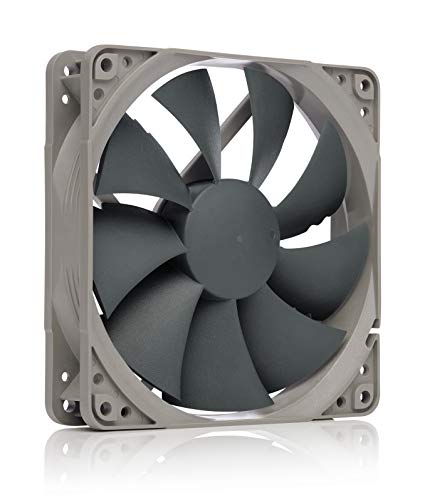
Noctua NF-P12 redux-1700 PWM, Quiet Fan 120mm
- Size: 120x120x25 mm
- Voltage: 12V
- PWM Control: 4-pin PWM
As an affiliate, we earn on qualifying purchases.
As an affiliate, we earn on qualifying purchases.
High-Power AI Workstation Heat Sources and Challenges
AI workstations differ from gaming PCs because they run continuously at high GPU utilization, often near 100%, over extended periods. This sustained load leads to higher thermal output, with GPUs contributing over 70% of heat. Unlike gaming scenarios, where load spikes are brief, inference workloads keep components at peak temperatures, stressing cooling systems. Historically, cooling solutions designed for gaming are insufficient for these continuous loads, leading to throttling and loud fans. Recent developments emphasize undervolting, airflow optimization, and high-quality cooling components as effective methods to address these challenges.“Undervolting GPUs is one of the most effective ways to cut heat and noise without sacrificing inference performance.”
— Thorsten Meyer, AI hardware expert
Uncertainties in Long-Term Cooling Effectiveness
While undervolting and airflow improvements are proven methods, the long-term stability of aggressive undervolting across different GPU models remains uncertain. Compatibility issues or performance trade-offs might arise in some configurations. Additionally, the effectiveness of liquid cooling solutions versus high-quality air coolers depends on specific hardware and user expertise, and some noise sources like coil whine or vibrations are less predictable and harder to mitigate fully.
Next Steps for Optimizing AI Workstation Cooling
Future developments may include more advanced thermal management software that dynamically adjusts power and fan profiles based on workload. Hardware manufacturers are also expected to release more efficient cooling solutions tailored for continuous AI workloads. Users should stay informed about updates to undervolting techniques and cooling hardware, and consider professional tuning for optimal results. Testing and benchmarking remain critical to verify improvements and avoid unintended performance impacts.
Key Questions
Can undervolting GPU affect inference performance?
In most cases, undervolting reduces power consumption and heat without impacting inference speed, especially since many workloads are memory-bound. However, aggressive undervolting should be tested carefully to ensure stability.
What are the best cooling options for high-power AI workstations?
High-quality air coolers and case fans, along with custom liquid cooling solutions, can effectively manage heat. Proper case airflow and component spacing are equally important to prevent heat recirculation.
How much can I reduce noise by optimizing cooling?
Significant noise reduction—up to 50%—is possible by undervolting GPUs and improving airflow, but results depend on hardware specifics and setup quality.
Is liquid cooling necessary for AI workstations?
Not necessarily. High-performance air coolers can suffice if paired with good airflow. Liquid cooling offers lower noise and better thermal headroom but involves higher cost and complexity.
What should I consider when upgrading my workstation’s cooling system?
Focus on case airflow, component placement, quality of fans, and compatibility with existing hardware. Consulting expert guides on undervolting and cooling can help optimize performance and noise levels.
Source: ThorstenMeyerAI.com