📊 Full opportunity report: An AI Citation Gap Tracker For SaaS Product Pages on IdeaNavigator AI — validation score, market gap, and execution plan.

Prime made for students and young adults
- Fast, free delivery for dorm and study essentials
- Prime Video and Amazon Music included
- Member-only deals
TL;DR

IdeaNavigator AI has proposed testing a focused tracker that checks AI assistants’ claims about SaaS pricing, plans and product features against vendors’ own pages. The concept is a proposed workflow, not a launched or validated product; its first test would measure errors for 10 SaaS companies and ask product marketers whether they would pay for ongoing monitoring.
IdeaNavigator AI has proposed an AI citation gap tracker for B2B SaaS pricing and documentation pages, designed to identify when AI assistants repeat outdated prices, retired plans or incorrect feature claims. The concept is aimed at product marketing teams, but no launch, customer results or completed market test are reported.
The proposed tool would let a company connect its pricing page, plan matrix and documentation sitemap. Each week, it would run a fixed set of buyer questions across ChatGPT, Gemini, Perplexity, Claude and Google AI Mode. Example prompts include asking for the cheapest product with SAML, comparing two products’ prices, or checking whether a product supports a particular API use case.
The tracker would extract prices, plan names and feature statements from the answers, compare them with the company’s own records, and show the URLs cited by each assistant. It would flag discrepancies linked to third-party review listings or competitor comparison pages, then produce a claim-by-claim error log with possible fixes. Suggested actions include updating a pricing table, publishing a changelog, adding llms.txt entries or correcting review-site profiles.
IdeaNavigator AI suggests charging a monthly subscription based on tracked prompts and AI engines, with a higher tier for companies monitoring several products or competitor pricing. Those are proposed commercial terms, not evidence of established demand or a product already available for purchase.
Track AI citation gaps on SaaS product pages
IdeaNavigator AI proposes checking AI assistants’ claims about SaaS pricing, plans and features against vendors’ own pages. The concept has not launched or been validated.
What the tracker would check
The proposed workflow compares generated answers with vendor information and records the cited URLs.
Prices and plans
Flag outdated prices or retired plan names that could distort a buyer’s comparison.
Product capabilities
Check feature claims against vendor pages and documentation.
Sources behind claims
Show which URLs assistants cite, including review or comparison pages.
Proposed weekly workflow
Add pricing pages, plan matrices and documentation sitemaps.
Check prompts across ChatGPT, Gemini, Perplexity, Claude and Google AI Mode.
Log claim errors and cited URLs, then suggest possible page or profile fixes.
How the idea would be tested
The proposed manual test would explore whether errors are actionable and whether teams want ongoing monitoring.
- Check 10 SaaS companies across two categories.
- Count incorrect prices, outdated plan names and false feature claims.
- Send each product marketing lead a one-page error report.
- Track how many recipients book a call.
- Ask whether they would pay for monthly monitoring.
- Report results; none are available yet.
What remains unknown
| Question | Current status |
|---|---|
| How often do these errors occur? | Not established |
| Can cited URLs be captured consistently? | Unreported |
| Will teams pay for monitoring? | Untested |
When AI Gets SaaS Pricing Wrong
The concept addresses a practical problem for software buyers and vendors: an AI-generated answer can shape a shortlist before a prospect reaches a company’s own website. If an assistant presents a retired plan, an incorrect per-seat price or a missing capability, a buyer may compare products using inaccurate information. The vendor may not know which page informed the answer or even see the misunderstanding until a sales conversation.
For product marketing, documentation and developer-relations teams, a claim-level record could make an otherwise diffuse problem actionable. Rather than simply tracking whether a brand appears in AI answers, the proposed workflow asks which product fact was wrong and which URL was cited. That distinction could help teams decide whether to correct their own pages, update third-party profiles or address competitor comparisons. It remains a proposed benefit; no evidence is provided that the tracker has already reduced buyer confusion or improved sales outcomes.
The proposal cites G2 research as a reason to investigate the issue. According to the figures provided, a March 2026 survey of 1,076 B2B software buyers found that 51% started software research with an AI chatbot more often than with Google, compared with 29% in April 2025. The same survey reportedly found that 64% often or very often encountered inaccurate chatbot recommendations. These findings are attributed to G2’s research, not to testing of this tracker, and describe survey responses rather than independently measured rates of incorrect answers.
Products Worth Considering

Bose TV Speaker (2nd Gen) Compact Soundbar

Apple Watch SE 3 GPS 44mm Smartwatch
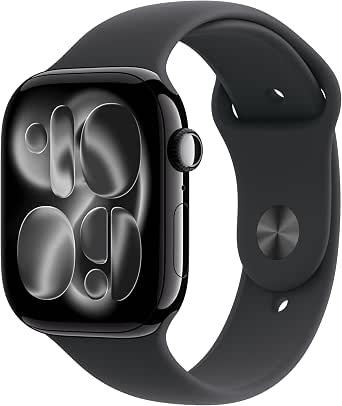
Apple Watch Series 11 GPS + Cellular, 46mm Jet Black Aluminum Case with Black Sport Band (M/L)
As an affiliate, we earn on qualifying purchases.
A Narrower Test Than Brand Visibility
IdeaNavigator AI frames the tracker as a narrow first workflow for a head of product marketing at a B2B SaaS company with self-serve or tiered plans, working alongside documentation and developer-relations teams. Its focus is limited to factual claims about pricing, plans and capabilities, and the pages behind those claims.
That makes it different from broader AI-visibility monitoring, which generally asks whether a company or brand is mentioned in generated responses. This proposal instead emphasizes factual accuracy and citations: the exact price or feature statement, the vendor’s authoritative information, and the URL an assistant relied on. IdeaNavigator AI also distinguishes it from a separate brand-citation tracker concept dated Aug. 8, 2026, describing this idea as a different buyer, set of pages and type of failure.
The suggested validation is deliberately small: manually run the prompt set for 10 SaaS companies across two categories, count incorrect prices, outdated plan names and false feature claims, then send each product marketing lead a one-page error report. The test would track how many recipients book a call and how many say they would pay for a monthly service. No completion date, participating companies or results are provided.
Demand and Error Rates Unproven
The proposal does not establish how often AI assistants make these specific errors, which engines or product categories are most affected, or whether cited URLs can be captured consistently across changing responses. It also gives no results from the suggested 10-company manual test, so customer interest, willingness to pay and the value of a recurring subscription remain unknown.
Other operational details are unspecified, including how the tool would verify a vendor’s source of truth when pricing or feature documentation conflicts, how frequently it would rerun prompts, and how it would handle differences among AI products. The reported survey statistics offer a rationale for testing the idea, but they do not confirm that this proposed product can detect or correct inaccurate answers.
Manual Tests Before a Subscription
The next step in the outlined plan is to run the prompt set manually for 10 SaaS companies in two categories and send product marketing leads individual error reports. The proposed measures are report-to-call conversion and whether recipients agree to pay for monthly monitoring.
Until those tests are reported, the tracker should be treated as a product opportunity under evaluation, not a launched service or proven market. No launch schedule, named customers, pricing figures or later milestones have been announced in the information available.
Source: IdeaNavigator AI
Key Questions
Has the AI citation gap tracker launched?
No launch is reported. IdeaNavigator AI describes a product concept and a proposed manual validation test, not an available service.
What would the tracker monitor?
It would check AI-generated claims about SaaS prices, plan names and product capabilities against vendor pricing pages, plan matrices and documentation, while recording cited URLs.
Which AI assistants are included in the proposal?
The proposed weekly checks would cover ChatGPT, Gemini, Perplexity, Claude and Google AI Mode. The proposal does not report testing across those services yet.
How would the idea be validated?
The suggested test is to run prompts manually for 10 SaaS companies across two categories, count factual errors and send each company a one-page report. The team would then measure calls booked and stated willingness to pay.
Do the cited survey figures prove AI answers are often wrong about SaaS pricing?
No. The proposal attributes survey figures to G2, including 64% of respondents reporting frequent inaccuracies in chatbot recommendations. That figure does not isolate pricing errors or validate this tracker’s ability to find them.
Source: IdeaNavigator AI