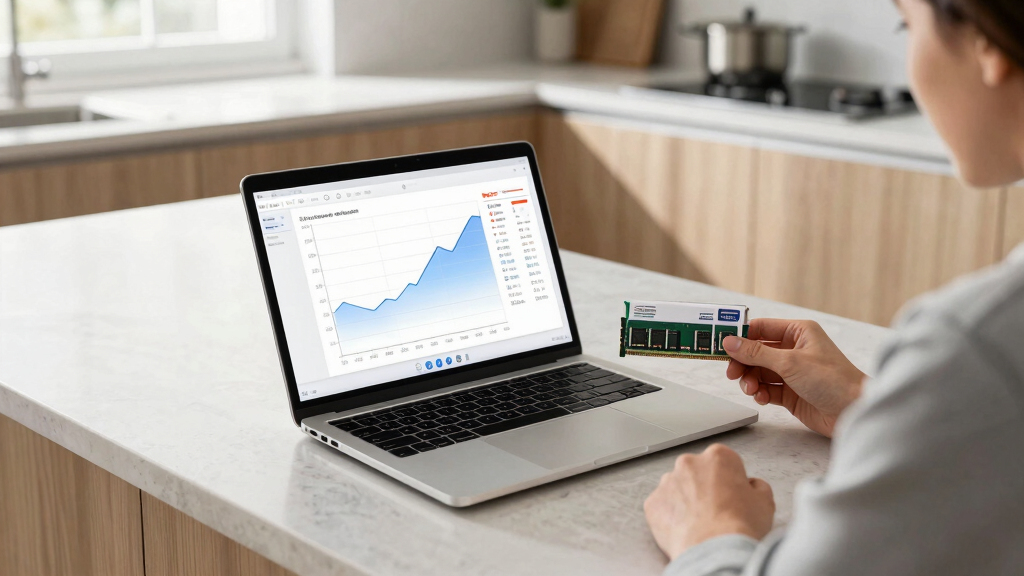

📊 Full opportunity report: When Does Cheap Memory Come Back? The 2027–2029 Question on ThorstenMeyerAI.com — validation score, market gap, and execution plan.

Prime made for students and young adults
- Fast, free delivery for dorm and study essentials
- Prime Video and Amazon Music included
- Member-only deals
TL;DR
Memory prices are unlikely to fall significantly before 2028, with industry experts predicting a return to more normal levels only after that. Capacity expansion is slow, and demand remains high, especially from AI applications.
Memory prices are expected to remain elevated until at least late 2028 or early 2029, according to industry forecasts and manufacturer warnings. This means that the era of cheap memory, a concern for consumers and tech companies alike, is unlikely to return soon, driven by physical capacity limits and sustained demand.
Experts such as IDC and industry leaders like Samsung and SK Hynix predict that memory supply will not stabilize until around late 2028. The primary bottleneck is the long lead time required to build and ramp new fabrication plants, with several major projects delayed or only beginning production in 2027 or later. For instance, Micron’s Idaho DRAM fab is expected to start mid-2027, while the largest planned facility, Micron’s Clay megafab, has been pushed to 2030.
Current capacity additions are insufficient to meet soaring demand, especially from AI infrastructure, which continues to grow rapidly. Industry insiders warn that supply will remain tight, and prices will stay at a permanently higher baseline—approximately 30–50% above pre-crisis levels—well into the late 2020s. The industry consensus is that relief will be modest and gradual, not a return to pre-crisis pricing.
When does cheap memory come back?
The question everyone’s really asking: do I just wait this out? The honest answer is a timeline, three scenarios, and news you may not want — the cheap memory you remember isn’t coming back. A less-expensive market probably is — later, and at a higher floor.
Capacity ramps ’27–’28; price climbs stop, then ease. Settles ~30–50% above pre-crisis — the new baseline, not a return to 2024.
AI keeps accelerating; OpenAI locked ~40% of DRAM through 2029; makers pause expansion to protect record margins; each HBM gen worsens the math.
AI demand moderates just as delayed ’27–’28 fabs all arrive → classic overshoot → prices crash. Not the bet — but never impossible in this industry.
The one relief valve that needs no fab is efficiency: if compression (Part 9) cuts how much memory each model needs, demand softens on the timescale of a software update, not a construction project. So the posture isn’t waiting — it’s the discipline this series has been about. Memory is now a scarce, valuable resource; treat it that way. Buy what you need, right-size, own what’s steady, rent what’s spiky, quantize either way. The people who do best won’t be the ones who guessed the bottom — they’ll be the ones who stopped needing so much. That’s the squeeze, end to end.
Implications of Persistent Memory Shortages
This outlook indicates that consumers and tech companies should not expect significant price drops in memory chips before 2028. The sustained high prices could impact device costs, data center expenses, and the overall pace of technological adoption. For businesses, especially those heavily reliant on AI and high-performance computing, this means planning for continued supply constraints and higher costs.
Moreover, the industry’s physical limitations and rational capacity discipline suggest that a glut and crash scenario remains unlikely in the near term, but the risk persists if demand suddenly moderates or if new supply comes online too quickly.
As an affiliate, we earn on qualifying purchases.
Physical and Market Constraints on Memory Supply
The delay in relief is rooted in the physical realities of semiconductor manufacturing. Building advanced fabs takes years, with new capacity additions like SK Hynix’s Indiana plant and Samsung’s Pyeongtaek line scheduled for 2028. The largest planned facility, Micron’s Clay megafab, is not expected until 2030. Additionally, the bottleneck in cleanroom space and advanced packaging limits the ability to quickly increase usable memory output.
Market behavior also plays a role. Memory manufacturers, enjoying record profits, are cautious about overbuilding, especially as AI demand continues to grow. They are likely to maintain tight supply discipline to sustain margins, further delaying relief for consumers.
“The shortage could extend through 2027 and beyond, with meaningful easing only expected in late 2028 or 2029.”
— Samsung spokesperson
Uncertainties in Memory Market Recovery Timeline
While forecasts point to late 2028 or early 2029 for significant relief, uncertainties remain regarding the pace of capacity expansion, potential demand shifts, and technological breakthroughs that could alter the timeline. The possibility of a market crash if demand suddenly drops or oversupply occurs also lingers, though it is considered less likely in the near term.
Key Developments to Watch in Memory Supply
Next, investors and industry watchers should monitor the progress of major fab projects, especially Micron’s Clay megafab and Samsung’s new lines. Additionally, any shifts in AI demand or new efficiency techniques that reduce memory consumption could influence the supply-demand balance. Industry reports and earnings calls in 2027 will provide more clarity on the pace of capacity ramp-up and pricing trends.
Key Questions
When can we expect memory prices to return to pre-crisis levels?
Most industry experts predict that prices will not normalize until late 2028 or early 2029, due to physical capacity constraints and demand growth.
Will the memory shortage cause prices to stay high forever?
While prices are expected to remain elevated for several years, gradual relief is possible as new capacity comes online, but a full return to pre-crisis levels is unlikely in the near term.
Can technological advances reduce memory demand and ease shortages?
Yes, improvements in memory efficiency and AI model compression could reduce demand, providing some relief without new fabrication capacity.
What are the main factors delaying relief?
The primary factors are the long lead times to build and ramp new fabs, physical bottlenecks in cleanroom space, and manufacturers’ cautious capacity discipline driven by profitability and demand forecasts.
Source: ThorstenMeyerAI.com
Halloween Picks
halloween
As an affiliate, we earn on qualifying purchases.