
In 2025, the global refugee crisis continues to grow due to escalating conflicts, climate change, and economic instability. Rising sea levels, droughts, and extreme weather force millions to flee their homes, especially in coastal and arid regions. Conflicts over resources worsen displacement, creating a cycle of violence and migration. Strained borders and limited aid exacerbate the situation, impacting marginalized groups most. Staying informed reveals the complex interplay of these causes shaping today’s crisis.
Key Takeaways
- Escalating conflicts, climate change, and economic instability significantly increase global displacement by 2025.
- Rising sea levels and extreme weather events cause climate-induced displacement in coastal and arid regions.
- Resource conflicts over water and land, combined with climate stress, drive large-scale refugee movements.
- Climate change and conflict often intersect, creating a feedback loop that worsens displacement crises.
- Humanitarian and political challenges persist as borders and resources strain under growing refugee flows.
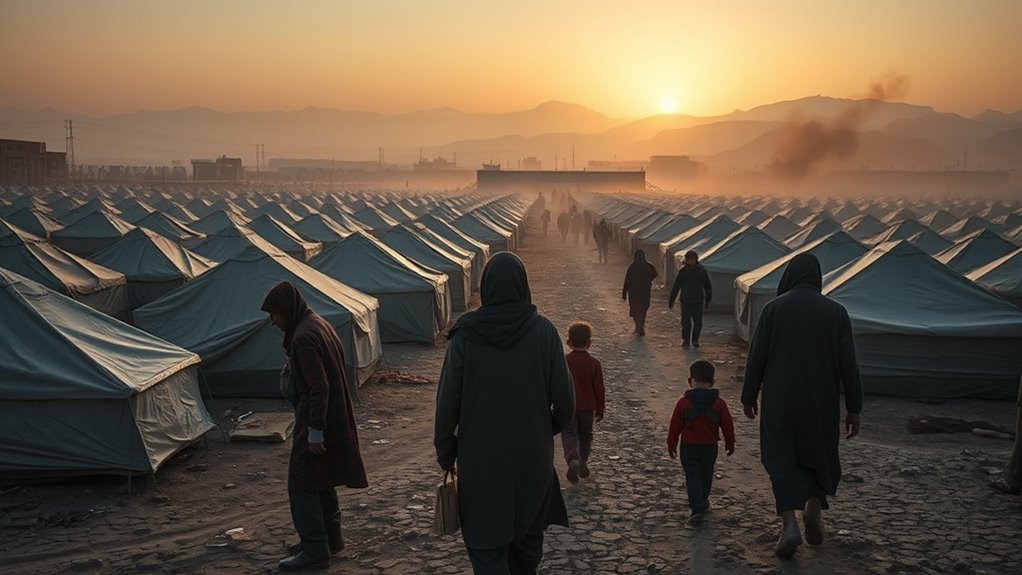
As conflicts, climate change, and economic instability continue to escalate, the global refugee crisis reaches unprecedented levels in 2025. You see it everywhere—people fleeing their homes en masse, seeking safety and stability from circumstances beyond their control. One of the most significant drivers is climate displacement, where rising sea levels, extreme weather events, and prolonged droughts render regions uninhabitable. Coastal communities, small island nations, and arid zones become unlivable, forcing residents to abandon everything they know in search of safer ground. These climate-induced displacements often overlap with conflict zones, further compounding the crisis. When environmental stressors worsen existing conflicts, they fuel violence and unrest, displacing even more people. You might notice that many refugees now originate from areas where climate impacts have intensified pre-existing tensions over resources like water and arable land. Additionally, the health and well-being of displaced populations are increasingly threatened by the collapse of healthcare systems, which hampers efforts to provide essential medical aid. In conflict zones, the situation becomes even more dire. Civil wars, insurgencies, and political upheavals displace millions, often in a matter of days or weeks. You see families torn apart, with children and elders caught in the crossfire, losing their homes and livelihoods. These conflicts frequently involve contested territories rich in resources, making them strategic hotspots for violence. As infrastructure collapses and public services break down, people are left with little choice but to flee. The danger isn’t just from violence but also from the collapse of healthcare, sanitation, and food systems. Many seek refuge in neighboring countries, only to encounter overwhelmed borders and strained humanitarian resources. The ongoing violence creates a cycle of displacement, where fleeing from one conflict zone often leads to another, or to overcrowded camps that lack basic necessities. The convergence of climate displacement and conflict zones amplifies the scale of the refugee crisis. Climate stressors can ignite or intensify conflicts over dwindling resources, pushing already vulnerable populations into flight. Conversely, conflict zones often lack the infrastructure and stability needed to adapt to climate shocks, making them even more prone to displacement. You may also notice that the most affected populations tend to be the most marginalized—women, children, and minorities—who face heightened risks during their journeys and in refugee camps. Governments and international agencies are struggling to keep pace with this growing crisis, trying to provide shelter and aid amid political tensions and resource shortages. The interconnectedness of climate change and conflict ensures that the refugee crisis in 2025 is not just a humanitarian issue but a complex web of social, environmental, and political challenges that demand immediate, coordinated action.
Frequently Asked Questions
How Will Refugee Crises Impact Global Economies by 2025?
You’ll see refugee crises impact global economies by 2025 through significant economic impacts and strained labor markets. As refugees seek safety, you might notice increased demand for resources, services, and jobs, putting pressure on local economies. This can lead to both challenges, like unemployment and resource shortages, and opportunities, such as filling labor gaps. Overall, you’ll observe a complex interplay affecting economic growth and stability worldwide.
What Role Do International Organizations Play in Managing Future Refugee Waves?
International organizations play a vital role in managing future refugee waves by providing humanitarian aid and coordinating policies. You’ll see them mobilize resources quickly, deliver essential services, and support host nations. They work to streamline efforts across countries, ensuring aid reaches those in need efficiently. Their leadership helps shape effective policies, fostering collaboration and stability, so you can better address the complexities of rising refugee numbers and protect vulnerable populations worldwide.
How Might Climate Change Accelerate Refugee Movements Worldwide?
Climate change will likely accelerate refugee movements by increasing climate migration and creating environmental refugees. As rising temperatures, sea-level rise, and extreme weather events destroy homes and livelihoods, you’ll see more people forced to flee their communities. These environmental refugees seek safety elsewhere, often crossing borders. This shift will strain resources and challenge international responses, making it essential for you to understand and address the root causes of climate-induced displacement.
What New Technologies Are Being Developed to Assist Refugees?
You’ll find that new technologies like virtual shelters are transforming refugee support by providing safe, accessible spaces online. AI translators also play a vital role, breaking down language barriers and helping refugees communicate effectively with aid organizations. These innovations make it easier for you to access resources, find community, and receive assistance, ultimately empowering refugees to rebuild their lives more efficiently and with greater dignity in challenging circumstances.
How Will Refugee Policies Evolve to Address Increased Displacement?
You’ll see refugee policies evolve through significant policy reform, making asylum procedures more efficient and accessible. Governments are likely to streamline application processes, leverage technology for faster verification, and adopt more humanitarian approaches. These changes aim to reduce delays, improve support systems, and guarantee fair treatment. By embracing innovative policies, you can expect a more responsive framework that better addresses increased displacement and provides timely assistance to those in need.
Conclusion
As you navigate this unfolding storm, remember the world is a fragile vessel caught in turbulent seas. The refugee crisis of 2025 is a beacon warning us that if we don’t steer with compassion and action, the ship risks capsizing under the weight of neglect. Your awareness and efforts are the lighthouse guiding those lost in darkness toward hope. Together, we can anchor stability before the storm swallows us all.