🔍 Read the full analysis: How To Read Claude Fable 5.2’S Results Against The AI Trendline on ThorstenMeyerAI.com

Prime made for students and young adults
- Fast, free delivery for dorm and study essentials
- Prime Video and Amazon Music included
- Member-only deals
TL;DR
A November 12 analysis of Anthropic’s Claude Fable 5.2 reports scores above projected trendlines on the Remote Labor Index, Epoch Capabilities Index and RoboDojo. The freelance-work result is the strongest signal; the Epoch lead falls within the index’s uncertainty range, while RoboDojo relies on Anthropic’s own unverified run.
An analysis published November 12 says Anthropic’s Claude Fable 5.2 scored above projected trendlines on three AI benchmarks, with the clearest margin on a test of paid freelance projects. The other results are less conclusive: its Epoch Capabilities Index lead falls within the index’s uncertainty range, and its RoboDojo score comes from an Anthropic-run test rather than a verified leaderboard entry.
The analysis, published by Thorsten Meyer AI, says its author retrieved leaderboard data and Anthropic’s launch material, then rebuilt the trendlines rather than relying on a chart supplied to the author. The method compares a new model with the pace of previous benchmark record-setters, excluding Fable 5.2 from the fitted trend. The resulting gaps differ by benchmark, and the author says reasonable fitting choices affect some results more than others.
On the Remote Labor Index (RLI), Fable 5.2 completed 41.3% of 240 projects to a standard reviewers judged a reasonable client would accept. The analysis’s trend estimate for its November 9 release date was 27.2%, a difference of 14.1 percentage points. At the fitted pace, the trendline would take about 90 days to reach the model’s score. The analysis estimates the gap remains between 13.0 and 14.4 points under alternate fitting choices.
On Epoch AI’s index, the model scored 173.4, compared with a trend estimate of 171.1—about 2.4 points, or 1.7 months, ahead. But Epoch’s reported uncertainty range for Fable 5.2, 169.9 to 177.5, extends below the trend estimate. On RoboDojo, Anthropic reported a 64.9% success rate, 8.8 points above the analysis’s main trend fit. A leaderboard entry for Q0-Preview is higher at 68.9%. The author says alternate reasonable RoboDojo fits put Fable 5.2’s gap between 3.8 and 23.3 points.
Claude Fable 5.2 against the AI trendline
A November 12 analysis finds scores above projected trends on three benchmarks, with evidence strongest for freelance work and more qualified for the other results.
The clearest signal: freelance work
The analysis compares each score with a projection based on earlier benchmark record-setters.
A substantial lead
Fable 5.2 scored 41.3% against a 27.2% trend estimate. The tested gap stays between 13.0 and 14.4 points under alternate fits.
A lead within uncertainty
Its 173.4 score is above the 171.1 trend estimate, but Epoch’s uncertainty range extends below that estimate.
A result needing verification
Anthropic reported 64.9%, but the score comes from its own run rather than a verified leaderboard entry.
What the freelance score shows
Passing means reviewers judged the work good enough for a reasonable client to accept.
- A strong result against the fitted trend
- Performance on substantial freelance project tasks
- Most tested projects did not pass
- It does not prove reliable work across every client, task or deadline
How to read the comparisons
“Above trendline” means exceeding a projection from earlier record-setters at the model’s release date.
The analysis left Fable 5.2 out of the trendline fits.
Each benchmark score was compared with the projected value for release.
The size and strength of the apparent lead vary by benchmark and fitting choices.
Evidence to watch
Clearer uncertainty estimates and independently verifiable results would sharpen the comparisons.
| Benchmark | Evidence strength | Key caveat |
|---|---|---|
| Remote Labor Index | Strongest reported margin | No published confidence interval |
| Epoch Capabilities Index | Modest projected lead | Uncertainty range crosses below trend |
| RoboDojo | Company-reported score | Not independently verified; fit-sensitive gap |
Freelance Work Shows the Clearest Gain
The results matter because they suggest that benchmark progress may not be uniform across tasks. The RLI tests whether AI can produce work on substantial, real freelance assignments—not just answer short questions or solve a narrow benchmark problem. Its 41.3% result is more than twice Fable 5.1’s 17.92% rate on the same leaderboard, according to the figures in the analysis.
That does not mean the model can replace freelancers across the board. Most projects in the test did not meet the acceptance standard, and a benchmark pass does not establish that a system can reliably manage client communication, revisions, deadlines or work outside the test’s project sample. The RLI result is a strong relative signal against the trendline, not proof of broad, dependable automation.
The contrast across the three benchmarks also cautions against treating a single headline score as a complete measure of progress. A substantial lead on one task set can coexist with a statistically uncertain advantage on a composite index and a less independently verified result on a robotics simulation.
Products Worth Considering

Samsung Galaxy Tab A11 8.7-Inch Wi-Fi Tablet, 64GB, 4GB RAM, 90Hz, Gray, with 20W Charger
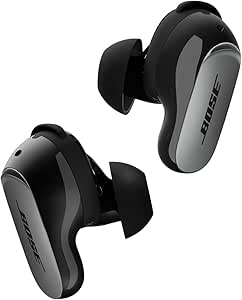
Bose QuietComfort Ultra Earbuds (2nd Gen), Wireless Noise-Cancelling Earbuds with Immersive Audio and Wireless Charging Case, Black

Logitech MX Mechanical Wireless Illuminated Keyboard, Clicky Switches
As an affiliate, we earn on qualifying purchases.
How the Three Trendlines Were Built
“Above the trendline” here means a score exceeded the value projected from previous benchmark record-setters at the new model’s release date. The author says Fable 5.2 was left out of each fit. The analysis used logistic curves for the two percentage-based measures, which are bounded at 100%, and a straight line for Epoch’s index. It translated the vertical score gap into an estimate of how long the earlier pace of progress would take to reach the new score.
The RLI, developed by Scale AI and the Center for AI Safety, covers 240 projects from 358 Upwork freelancers across 23 job categories. Scale AI says the average human project took 28.9 hours and was worth $632.60. Reviewers compare AI work with work produced by professionals; a project passes if the AI deliverable is at least as good as what a reasonable client would accept. The analysis says Scale AI ran the Claude models at high effort.
Epoch’s index combines results from more than 50 benchmarks to support comparisons over time as individual tests approach their score ceilings. Epoch cautions that absolute ECI values are not meaningful on their own, though comparisons between models can be. The analysis also notes that the RLI leaderboard provides no confidence interval for its automation rate and that its trend fit excludes four agent products lacking release dates in Epoch’s dataset.
Verification and Error Margins Remain
The RLI gap appears less sensitive to the trendline choices tested in the analysis, but the leaderboard itself reports no confidence interval. The author estimates a rough sampling margin of about plus or minus six percentage points for a 41% rate across 240 projects, and says that would not erase the reported 14-point gap. That estimate is the author’s calculation, not a published leaderboard interval.
The ECI result is less decisive: its stated uncertainty range crosses below the trend estimate, so the analysis does not establish a clear lead beyond that range. RoboDojo carries a different limitation. The 64.9% figure is reported by Anthropic from an internal run, not independently verified as a leaderboard score, and the size of its trendline gap changes substantially with fitting choices.
The analysis also notes that it omitted four leaderboard entries because their release dates were unavailable in Epoch’s dataset. The supplied material does not establish how adding those products would change the trend fits. The article was researched and drafted with AI assistance, including Claude; the author disclosed that Anthropic’s model is the subject. The author says Anthropic, Scale AI, Epoch AI and the RoboDojo team did not review or sponsor the article.
Independent Scores Could Clarify the Picture
The next useful evidence would be independently verifiable benchmark results, particularly for RoboDojo, alongside clearer uncertainty estimates for the RLI rate. Future leaderboard updates could also change the trend comparisons if missing release dates are added or new record-setting models arrive.
Until then, the analysis supports a measured reading: Fable 5.2 is well above the fitted RLI trend; its ECI score is only modestly above the projection and within the stated uncertainty range; and its RoboDojo result remains a company-reported figure whose trendline margin is method-sensitive. The analysis does not establish how these benchmark scores translate into performance on everyday work beyond the tests.
Key Questions
What does it mean that Fable 5.2 is above the trendline?
It means its score exceeded the value projected from earlier benchmark record-setters at the model’s release date. It is a comparison with past benchmark progress, not proof that the model is ahead on every kind of task.
Which result is the strongest?
The Remote Labor Index result has the clearest reported margin: 41.3%, against a trend estimate of 27.2%. The analysis says the gap remains broadly similar under the alternate fits it tested.
Does the freelance benchmark show that most work can be automated?
No. Fable 5.2 passed 41.3% of the 240 tested projects under the benchmark’s acceptance standard. That means most projects in this test did not pass, and the result does not cover every type of freelance work.
How certain are the Epoch and RoboDojo comparisons?
The ECI score is above the trend estimate, but Epoch’s uncertainty range extends below it. The RoboDojo score was reported by Anthropic rather than verified as a leaderboard entry, and the estimated gap varies substantially with the trendline method.
Was the analysis reviewed by the organizations involved?
The author says Anthropic, Scale AI, Epoch AI and the RoboDojo team did not review or sponsor the article. The author also disclosed that the article was researched and drafted with AI assistance, including Claude.
Source: ThorstenMeyerAI.com