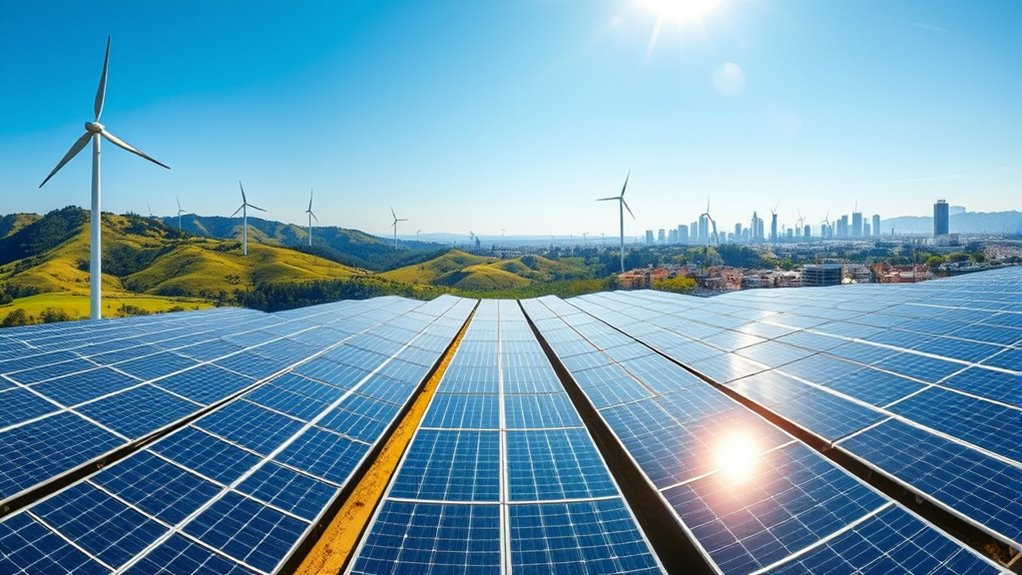

By 2025, solar and wind technologies have made huge leaps, making renewable energy more efficient, affordable, and widespread. You’ll see advanced, flexible solar panels on rooftops and vehicles, along with taller, more powerful wind turbines capturing more energy. Storage solutions now guarantee reliable power even when the sun isn’t shining or the wind isn’t blowing. If you keep exploring, you’ll discover how these innovations are shaping a sustainable future for everyone.
Key Takeaways
- Solar panels have become highly efficient and affordable, enabling widespread rooftop and urban installations.
- Wind turbines are taller and more efficient, capturing more energy from stronger offshore and onshore winds.
- Advanced energy storage solutions ensure reliable, continuous power supply despite solar and wind intermittency.
- Innovations in green technology have driven economic growth, creating new jobs and reducing carbon footprints globally.
- Solar and wind power are central to a sustainable energy future, significantly reducing dependence on fossil fuels by 2025.
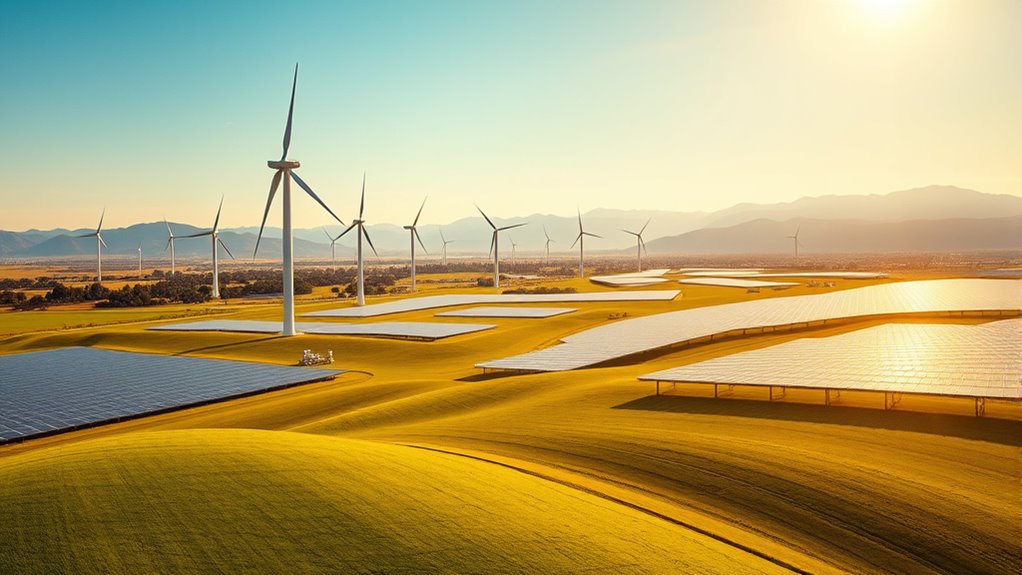
By 2025, green energy has become a central part of the global economy, transforming how we produce and consume power. You’ve likely noticed that solar innovation has accelerated rapidly, making solar panels more efficient and affordable than ever before. Breakthroughs in photovoltaic technology mean that you can now generate more electricity from less space, enabling widespread adoption even in urban areas. These advancements have drastically reduced the cost per watt, empowering individuals, businesses, and governments to invest confidently in solar power. As a result, large-scale solar farms dominate many landscapes, and rooftop installations are almost ubiquitous, seamlessly integrated into everyday life. The push for solar innovation has also led to the development of flexible, lightweight panels, which you can easily install on various surfaces, including curved roofs and even vehicles, expanding the reach of solar energy.
Meanwhile, wind technology has seen remarkable progress, revolutionizing how we harness natural energy sources. You might have observed that modern wind turbines are taller, more efficient, and capable of capturing more energy from the breeze than their predecessors. Thanks to advancements in blade design and materials, wind farms now operate with higher capacity factors, producing more power with less environmental impact. Offshore wind farms, in particular, have become a significant contributor to the energy mix, thanks to the availability of stronger, more consistent winds over the oceans. These developments mean you benefit from cleaner energy, and communities are less dependent on fossil fuels. The integration of digital controls and predictive maintenance has also improved the reliability and lifespan of wind turbines, making wind technology more cost-effective and accessible. Moreover, innovations in renewable energy storage are helping to address the intermittency issues associated with solar and wind power, increasing their reliability as main energy sources.
Both solar innovation and wind technology have played essential roles in meeting global energy demands sustainably. As a consumer or policymaker, you now have access to a broader range of green energy options, with infrastructure and technology evolving to make renewable sources more reliable and affordable. These milestones reflect a collective effort to reduce carbon footprints and combat climate change, emphasizing the importance of clean energy in your everyday life. By 2025, it’s clear that solar and wind advancements aren’t just about environmental benefits—they’re about reshaping economies, creating jobs, and ensuring a sustainable future. You’re part of this transformation, witnessing how innovation drives progress and makes green energy a practical, powerful choice for everyone.
Frequently Asked Questions
What Are the Main Challenges in Scaling Green Energy Infrastructure?
You face several challenges in scaling green energy infrastructure. Storage challenges make it tough to store excess energy for later use, causing reliability issues. Grid integration is also complex, as existing grids need upgrades to handle variable solar and wind power. Additionally, high costs and regulatory hurdles slow down expansion. Overcoming these obstacles requires investment, innovation, and policy changes to guarantee a smooth shift to cleaner energy sources.
How Will Green Energy Policies Impact Global Economies?
You’ll see green energy policies act as a catalyst, sparking economic growth worldwide. As countries embrace policy integration, they’ll open new industries and jobs, boosting economies. However, it’s a double-edged sword—some sectors may face disruptions. If you keep the momentum, you’ll help build a sustainable future while strengthening global markets. Embracing this shift means steering through challenges but reaping rewards that benefit everyone in the long run.
What Technological Advancements Are Expected to Improve Efficiency?
You’ll see significant advancements in technology that boost efficiency through improved energy storage solutions and smarter grid integration. Enhanced batteries and other storage methods will allow you to store excess solar and wind energy for later use, reducing waste. Meanwhile, smarter grid systems will seamlessly balance supply and demand, making renewable energy more reliable and accessible. These innovations will help you harness green energy more effectively and contribute to a cleaner, sustainable future.
How Can Developing Countries Adopt Solar and Wind Power Effectively?
You can unleash solar and wind power’s potential by securing innovative solar financing options, making projects affordable and accessible. Focus on building local expertise for wind maintenance, ensuring these systems operate efficiently over time. By fostering partnerships and investing in community training, developing countries can overcome barriers, unlock clean energy, and boost economic growth. Stay proactive, adapt strategies to local needs, and watch your energy landscape transform sustainably.
What Are the Long-Term Environmental Impacts of Large-Scale Green Energy?
You’ll find that large-scale green energy can benefit the environment long-term by promoting habitat preservation and biodiversity enhancement. As you implement solar and wind projects thoughtfully, they tend to have minimal land disruption compared to fossil fuels. Over time, this approach reduces pollution and conserves ecosystems, helping species thrive. Your efforts support a sustainable future where renewable energy and natural habitats coexist, ensuring healthier environments for generations to come.
Conclusion
By 2025, your commitment to clean, compelling, and cutting-edge green energy will create a climate-conscious change. Embrace the advancements in solar and wind power, and witness a world where sustainable solutions markedly shape your surroundings. Stay steadfast, support smarter strategies, and see your efforts spark a sustainable, shining future. Together, you can turn the tide toward a greener, greater tomorrow, making a meaningful mark in the marvelous march toward modernization.