🔍 Read the full analysis: Google’s Genie 4: A New Way To Step Inside AI-Generated Worlds on ThorstenMeyerAI.com

Prime made for students and young adults
- Fast, free delivery for dorm and study essentials
- Prime Video and Amazon Music included
- Member-only deals
TL;DR
Google DeepMind demonstrated Genie 4 on October 27, describing it as a real-time world model that creates interactive scenes with audio and text-directed changes. The demonstrations are company-selected, access is limited, and DeepMind says scenes can drift after a few minutes of interaction.
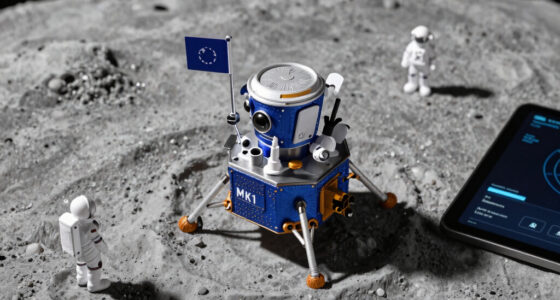
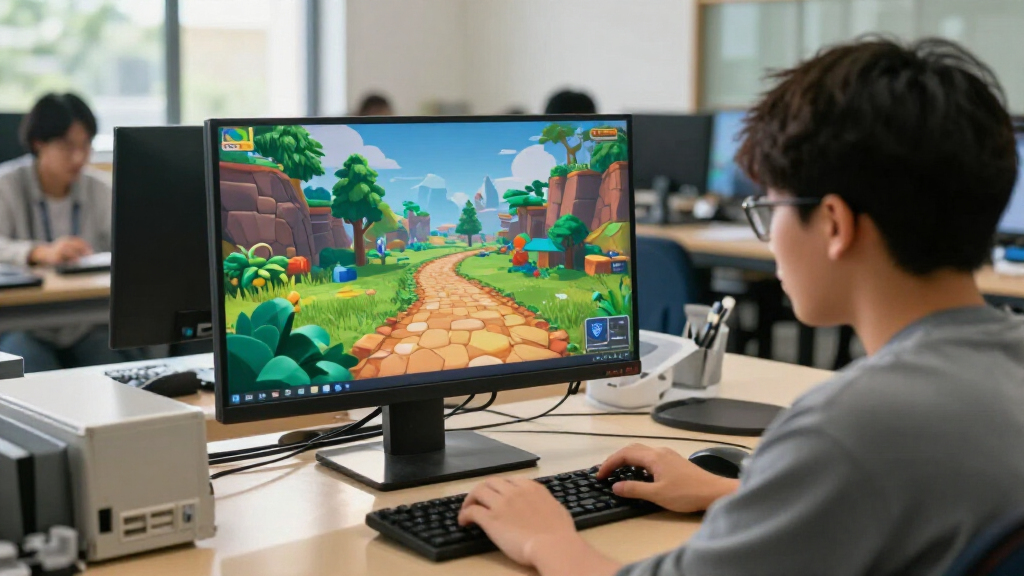
Google DeepMind demonstrated Genie 4 on October 27, presenting it as a real-time AI model that generates interactive scenes users can move through and change with text. The announcement matters because it extends AI-generated video toward responsive environments with sound and ongoing interaction, but the system is not broadly available and its scenes can drift over time.
DeepMind describes Genie 4 as a world model: rather than rendering a complete clip from a prompt, it predicts what the next part of a scene should look like as a user moves or gives instructions. The company says users can steer scenes with keyboard and mouse controls and type changes such as adding rain, moving the camera, or introducing a person or object. DeepMind says the model updates the scene while it runs, rather than relying on a stored 3D map like a conventional game engine.
The company also says Genie 4 generates audio alongside visuals, including environmental sounds, music and dialogue. DeepMind describes Gemini 3.8 Flash as a companion system that interprets goals, breaks them into steps and monitors generated frames. The claimed capabilities were shown in DeepMind’s own selected demonstrations; the company did not publish benchmark figures in the source material.
Access is currently limited to trusted testers. DeepMind said the system is expected to come to Google AI Ultra subscribers through Project Genie and to early Gemini API partners, but it gave no launch date or API pricing. DeepMind’s own description says details and objects may “shift or drift over time” and that Genie 4 supports “a few minutes of continuous interaction.” TechCrunch and Bloomberg, as cited by heise, reported demonstrations lasting about two minutes; that figure is not in DeepMind’s own announcement text.
Infographic 01 · How Genie grew up
From flat sketches to worlds with sound, in under three years.
Each step as Google DeepMind described it. Session limits and consistency are different measures, so read the labels.
- Feb 2024
Genie 1Simple 2D worlds11 billion parameters, learned from unlabelled internet videos - Dec 2024
Genie 23D worlds from a single imageConsistent “for up to a minute”; real time only as a slimmed-down, lower-quality version - Aug 2025
Genie 3First real-time Genie720p at 24 frames per second, consistent “for a few minutes”, memory about one minute back - Jan 2026
Project GenieUS AI Ultra subscribers can play60 seconds per world, partly because of compute costs - May 2026Project Genie goes globalIn the $200 AI Ultra tier, for users 18 and older
- 27 Oct 2026
Genie 4Sound, live steering, more realismResearch preview for trusted testers; Ultra subscribers and API partners “coming soon”
Genie 3 vs. Genie 4
As described by Google DeepMind. Genie 4 column = vendor claims unless marked.
| Feature | Genie 3 (Aug 2025) | Genie 4 (Oct 2026) |
|---|---|---|
| Sound | Genie 3: None | Genie 4: Generated with the picture: ambient noise, music, dialogue |
| Steering | Genie 3: Keys, plus “promptable world events” | Genie 4: Free-form text changes while it runs; Gemini adapts and checks them |
| Look | Genie 3: 720p, 24 fps | Genie 4: “Unprecedented realism”; no resolution or frame rate published |
| How long | Genie 3: “A few minutes”; Project Genie capped at 60 s | Genie 4: “A few minutes” (DeepMind); up to ~2 min consistent scene reported |
| Access | Genie 3: Small preview, then Project Genie | Genie 4: Trusted testers; Ultra and API partners “coming soon” |
Sources: Genie paper, arXiv, 23 Feb 2024; Genie 2 blog, 4 Dec 2024; Genie 3 blog, 5 Aug 2025; TechCrunch, 29 Jan 2026; Google, 19 May 2026; Google DeepMind, Genie 4 blog, 27 Oct 2026; Genie 4 model page (limitations, disclaimer); TechCrunch, 27 Oct 2026. Table wording: Thorsten Meyer.
Powered by Thorsten Meyer AI
From Generated Clips to Playable Scenes
Genie 4 points toward a different use of generative AI: creating scenes that respond to a person’s actions, rather than producing a fixed video for viewing. If the interactions become dependable, developers could use such systems to sketch game environments, test visual ideas or make previsualization scenes that can be altered on the fly. Those uses remain early: the source describes film previsualization and game prototyping as tester feedback reported by DeepMind, not as established products or independently verified results.
The technology may also matter for robotics, where simulated environments can help researchers test tasks before using physical machines. DeepMind showed a research demonstration in which Gemini broke a task into steps and Genie 4 simulated Apptronik’s Apollo humanoid playing checkers. As The Decoder noted, no physical robot was involved in that scene, so it should not be read as evidence that Genie 4 has trained a real robot to perform the task.
More convincing generated scenes also increase the importance of provenance. DeepMind says Genie 4 video and audio outputs carry an invisible SynthID watermark. That is a company statement about the system; the source does not provide independent testing of how reliably the watermark can be detected or preserved.
Products Worth Considering

Logitech MX Master 4 for Mac, Ergonomic Bluetooth Mouse with Haptic Feedback, Ultra-Fast Scrolling, USB-C Charging, for MacOS, iPadOS, Windo

Samsung 27-inch Odyssey OLED G6 QD-OLED QHD Gaming Monitor

Samsung 27 Odyssey OLED G5 (G50SF) QHD QD-OLED Gaming Monitor
As an affiliate, we earn on qualifying purchases.
How Genie Has Developed
Genie follows a series of DeepMind research systems. The first version, announced in February 2024, generated simple 2D worlds; its research paper described an 11-billion-parameter model trained on unlabeled internet videos. Genie 2, introduced in December 2024, generated 3D worlds from a single image and maintained consistency for up to a minute, though real-time use required a reduced-quality version.
In August 2025, DeepMind introduced Genie 3, which it described as its first real-time world model. The company said it could run at 720p and 24 frames per second, with consistency lasting a few minutes and visual memory reaching back about a minute. Google opened Genie 3 through Project Genie to paying U.S. subscribers in January 2026. TechCrunch reported a 60-second limit per world at that time, citing compute costs. Genie 4’s announced addition of generated sound and more direct text control builds on that development, though the source does not provide comparable performance measurements for the new model.
“Details and objects “can shift or drift over time.””
— Google DeepMind, describing Genie 4’s limits
Access, Performance and Reliability
Several practical details remain open. DeepMind has not announced a release date for Project Genie access or early Gemini API partners, and it has not disclosed API pricing. The company also provided no benchmark numbers in the source material, making it difficult to compare Genie 4’s speed, visual consistency or audio performance with other systems.
The demonstrations were selected by DeepMind, rather than an independent evaluation of typical use. How well scenes hold together across different prompts, longer sessions or repeated interactions is not established. DeepMind acknowledges drift, but has not specified how often it occurs or what causes it. Reports of roughly two-minute scenes come from media coverage, not the company’s own stated duration. The reliability of SynthID on generated audio and video also remains untested in the information provided.
Waiting for Broader Access
The next public milestone is wider access to Project Genie for Google AI Ultra subscribers and early partners using the Gemini API. DeepMind has said that access is coming, but has not set a date or published API terms. Until then, independent users cannot verify the company’s demonstrations directly.
Further evidence will depend on public availability and more detailed technical reporting: session limits, performance measurements, how often worlds drift, and how audio responds to user changes. Those details will help show whether Genie 4 is mainly a research demonstration or a practical tool for developers and researchers.
Key Questions
What is Google Genie 4?
Genie 4 is a Google DeepMind world model that predicts and generates scene updates as a person moves through a world or gives it instructions. DeepMind says it does not use a stored 3D map like a conventional game engine.
Can the public use Genie 4 now?
No. DeepMind says access is limited to trusted testers. Google AI Ultra subscribers through Project Genie and early Gemini API partners are expected to get access later, but no date has been announced.
What does Genie 4 add, according to DeepMind?
DeepMind says it adds more realistic scenes, text-directed changes while a world is running, and audio generated alongside the visuals. These are company claims presented in selected demonstrations; benchmark results were not provided in the source material.
How long can a Genie 4 world run?
DeepMind says Genie 4 supports “a few minutes of continuous interaction” and warns that objects and details can drift. Media reports cited in the source describe scenes of about two minutes, but DeepMind did not state that specific duration in its announcement text.
Is Genie 4 already training real robots?
The source describes a robotics research demonstration, not a physical robot being trained by Genie 4. The Apollo humanoid appeared in a simulated checkers scene; no real robot was involved in that demonstration.
Source: ThorstenMeyerAI.com