
In 2026, climate change is expected to intensify weather patterns, bringing more frequent and severe heatwaves, storms, and droughts. Seasonal shifts may disrupt traditional cycles, making weather more unpredictable and harder to forecast. Rising sea levels and warmer oceans could lead to stronger hurricanes and coastal flooding. Urban areas might face increased safety risks due to extreme conditions. Keep exploring to discover how these changes will impact different regions and what you can do to stay prepared.
Key Takeaways
- Expect more frequent and intense heatwaves, especially in urban areas, due to rising global temperatures and urban heat trapping.
- Increased storm activity and heavier rainfall will lead to higher risks of flash floods and coastal storm surges.
- Coastal regions will experience higher sea levels and stronger hurricanes fueled by warmer oceans.
- Seasonal patterns are expected to shift or blend, complicating weather forecasting and preparedness efforts.
- Overall weather variability will grow, making extreme events more common and challenging meteorological predictions.
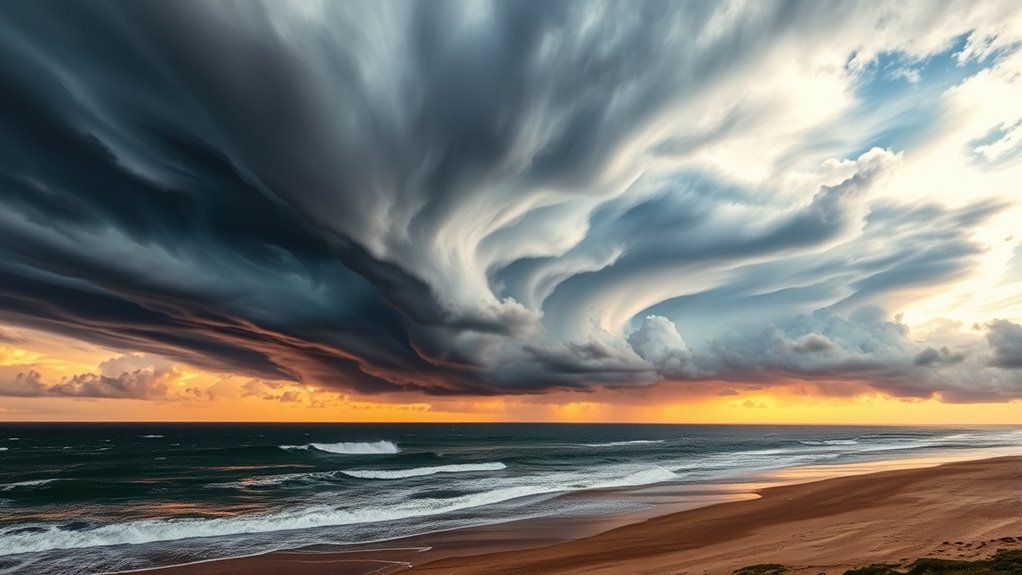
What will the climate look like in 2026? As we move into this year, meteorologists are closely watching how climate change continues to influence weather patterns worldwide. The impacts of rising global temperatures aren’t just numbers on a chart—they’re shaping the daily weather you experience. Expect more frequent and intense weather events, with a noticeable shift in seasonal patterns. Extreme heatwaves, heavy storms, and unpredictable rainfall are becoming more common, driven by the way climate change amplifies existing weather patterns. These changes aren’t isolated; they ripple across regions, affecting agriculture, water resources, and urban infrastructure. If you live in a coastal area, you might notice higher sea levels and stronger storm surges, as warmer oceans fuel more powerful hurricanes and typhoons.
Meteorologists predict that in 2026, the variability in weather patterns will continue to grow. This means that what used to be considered rare weather events could become part of the norm. Droughts could stretch longer, impacting food production and water availability, while heavy rainfall in short periods might lead to flash floods. These shifts are directly tied to climate change, which is altering the atmosphere’s basic dynamics. The increased concentration of greenhouse gases traps more heat, disrupting traditional weather cycles. As a result, you might see seasons blending into each other or experiencing shifts that catch even seasoned weather forecasters off guard. This unpredictability makes it more *integral* than ever to stay informed and prepared. Additionally, advancements in weather modeling are helping scientists better understand and predict these evolving patterns.
In 2026, scientists also expect that the patterns of climate change will influence the intensity and frequency of storms. Warmer air holds more moisture, leading to more powerful storms with greater rainfall. This not only affects weather but also the safety of communities. Infrastructure that wasn’t designed for such extreme conditions might face new vulnerabilities. Meanwhile, the ongoing climate change impacts will likely intensify heatwaves, making summer months more uncomfortable and dangerous, especially in urban areas where heat can be trapped by concrete and asphalt.
Frequently Asked Questions
How Accurate Are Meteorologists’ Climate Predictions for 2026?
You can trust that meteorologists’ climate predictions for 2026 are fairly reliable, thanks to advanced climate models. While these models incorporate vast data and improve prediction accuracy, there’s still some uncertainty due to complex climate variables. You should keep in mind that prediction reliability varies depending on the specific weather patterns and regions. Overall, though, these models give a solid outlook for the year ahead, helping you plan better.
What Are the Main Factors Influencing Climate Forecasts in 2026?
You should know that climate variability and advancements in forecast models mainly influence climate predictions for 2026. While natural fluctuations create uncertainty, improved models help you better understand long-term trends. Factors like rising greenhouse gases, ocean currents, and atmospheric patterns intertwine, shaping your climate outlook. Despite complexities, scientists work continually to refine forecasts, giving you a clearer picture of what to expect in 2026.
Will Climate Change Impacts Be More Severe in 2026 Than Previous Years?
You’ll likely see climate change impacts become more severe in 2026 if current trends continue, making climate resilience and adaptation strategies essential. As weather events intensify, you should prioritize building adaptive measures and supporting policies that reduce vulnerability. While some impacts may be mitigated, the increasing severity underscores the importance of proactive efforts to enhance resilience, helping communities better withstand future climate challenges.
How Do Regional Forecasts Differ Within the 2026 Climate Predictions?
Regional variability influences the 2026 climate forecasts, so you’ll notice differences across areas. Some regions may face more intense storms or droughts, while others experience milder impacts. Meteorologists improve forecast precision by considering local factors, but these regional differences mean you should stay alert to localized weather patterns. Keep an eye on updates from trusted sources, as forecasts can evolve with new data, helping you prepare effectively for upcoming climate challenges.
What Technological Advancements Improve Climate Prediction Accuracy for 2026?
Did you know that advances in remote sensing and machine learning can boost climate prediction accuracy by up to 30%? You’ll benefit from these technologies as they help meteorologists analyze vast data more precisely. Remote sensing captures real-time environmental changes, while machine learning identifies patterns faster than ever. Together, these innovations enable more reliable forecasts for 2026, helping you prepare better for weather extremes and climate shifts ahead.
Conclusion
As you look toward 2026, expect the climate’s gentle whispers to guide us through subtle shifts and quiet changes. While the horizon may hint at calm waters, subtle ripples remind us to stay attentive and respectful of nature’s delicate balance. Embrace the coming year as an opportunity to nurture harmony, trusting that with mindful effort, we can help steer the journey toward brighter, more resilient days ahead.