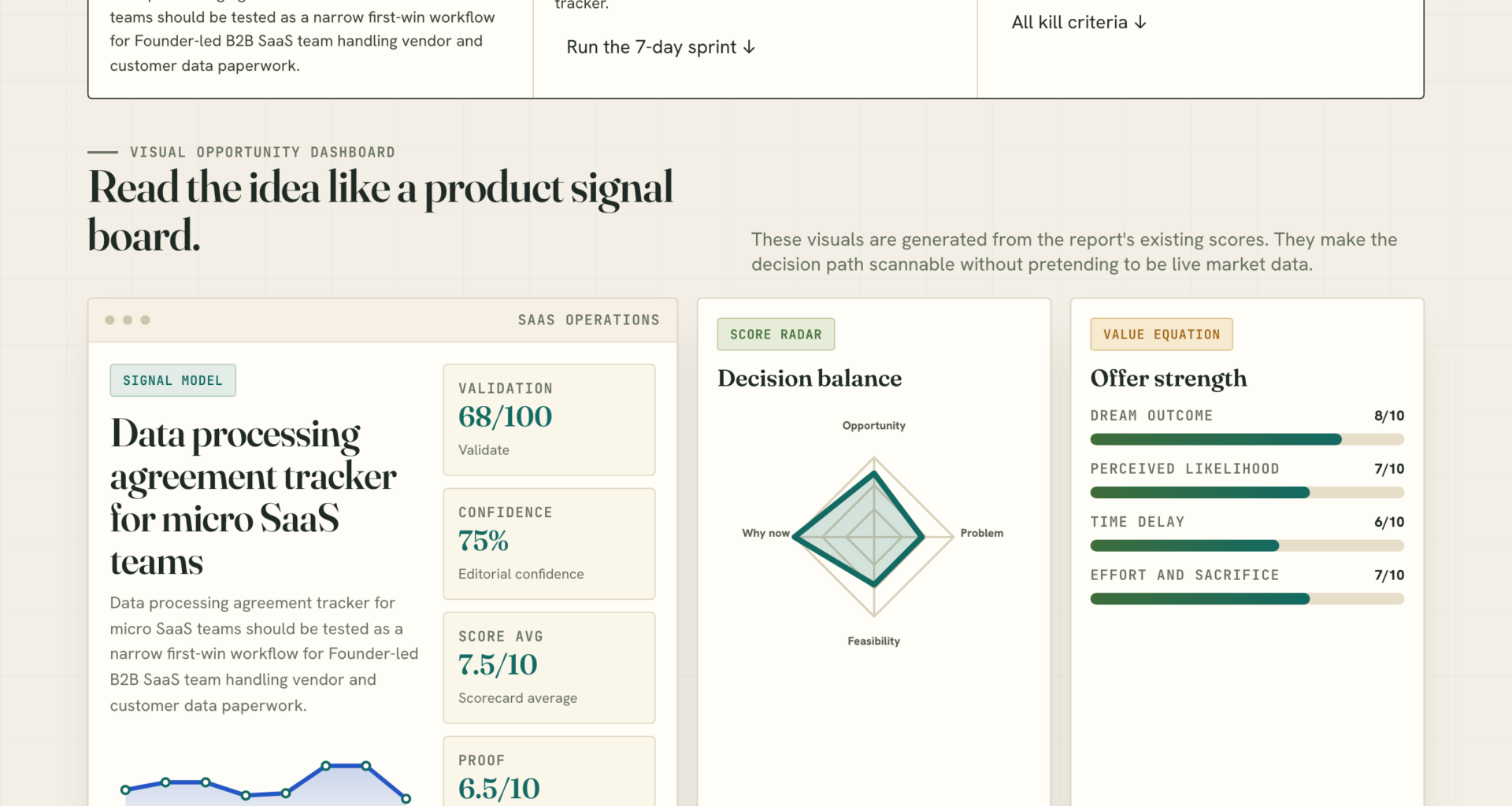

📊 Full opportunity report: Data processing agreement tracker for micro SaaS teams on IdeaNavigator AI — validation score, market gap, and execution plan.

Prime made for students and young adults
- Fast, free delivery for dorm and study essentials
- Prime Video and Amazon Music included
- Member-only deals
TL;DR
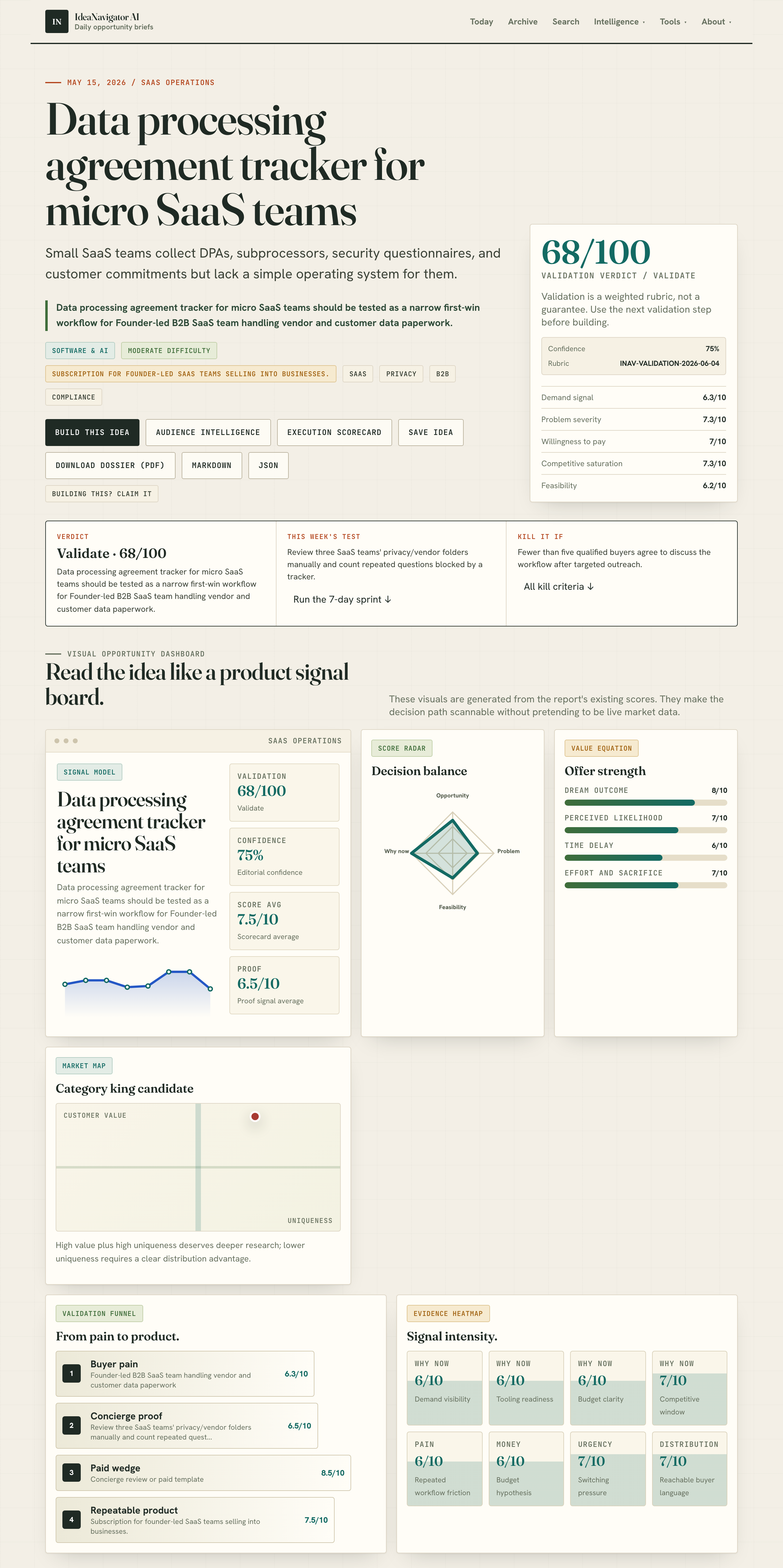
A startup is testing a data processing agreement tracker tailored for small SaaS teams. The tool aims to simplify compliance management amid rising privacy demands. Its initial pilot will assess its effectiveness in reducing manual data review efforts.
A new data processing agreement (DPA) tracker designed specifically for founder-led micro SaaS teams is now in testing, aiming to simplify the management of vendor and customer data paperwork amid increasing privacy compliance demands.
The tracker is intended for small SaaS teams handling multiple DPAs, subprocessors, security questionnaires, and customer commitments. It offers features such as tracking renewal dates, clause statuses, and source document links, providing a centralized operating system for compliance documentation.
According to sources familiar with the initiative, the tool is currently undergoing a pilot test where three SaaS teams are manually reviewing their privacy and vendor folders to evaluate whether the tracker reduces repeated questions and manual effort. The goal is to validate its utility as a first-win workflow for founder-led B2B SaaS companies.
Why a DPA Tracker Matters for Small SaaS Teams
As privacy regulations like GDPR and CCPA tighten, even smaller SaaS companies face increased pressure to manage detailed data processing agreements and related compliance documentation. The tracker aims to address this challenge by providing a simple, scalable solution tailored to the needs of micro SaaS teams, potentially reducing legal and operational overheads.
If successful, this tool could streamline compliance workflows, improve vendor and customer trust, and help small SaaS companies meet regulatory expectations earlier in the sales cycle. It also signals a market shift toward specialized tools for smaller teams managing complex data privacy obligations, which have traditionally been the domain of larger enterprises.
Products Worth Considering

Bose SoundLink Flex Bluetooth Speaker (2nd Gen) – Portable Outdoor Speaker with Hi‑Fi Audio, Waterproof and Dustproof, USB‑C, Up to 12 Hours

Logitech MX Mechanical Wireless Illuminated Keyboard, Clicky

Amazon Kindle Scribe (64GB) with Premium Pen, Metallic Jade
As an affiliate, we earn on qualifying purchases.
Growing Privacy Demands and Small SaaS Compliance Challenges
In recent years, privacy regulations such as GDPR and CCPA have increased the compliance burden for SaaS providers. Larger companies typically have dedicated legal teams and compliance systems, but smaller, founder-led SaaS teams often lack dedicated resources and rely on manual processes.
This gap has led to a demand for lightweight, easy-to-use tools that can help small teams manage DPAs, subprocessors, and security questionnaires efficiently. The current market has seen a proliferation of compliance tools aimed at larger organizations, but few solutions are tailored specifically for micro SaaS teams handling data paperwork on a lean budget.
“The tracker aims to reduce repetitive questions and manual review efforts by providing a centralized system for compliance documentation.”
— an anonymous researcher
Unclear Impact and Adoption Potential of the DPA Tracker
It is not yet confirmed how effectively the tracker will reduce manual effort or whether small SaaS teams will adopt it widely after the pilot. The success depends on user feedback and integration ease, which are still being evaluated during the testing phase.
Next Steps for Validation and Market Rollout
The pilot will continue over the coming weeks, with feedback from participating SaaS teams guiding further development. If results are positive, the creators plan to refine the tool and prepare for broader beta testing followed by a potential commercial launch targeted at founder-led SaaS companies.
Key Questions
What features does the DPA tracker include?
The tracker offers features such as managing customer, vendor, and subprocessor data, tracking renewal and clause statuses, and linking to source documents.
Who is the target user for this tool?
It is designed for founder-led B2B SaaS teams that handle data paperwork without dedicated legal or compliance teams.
When will the tracker be available for wider use?
The current phase is testing; a broader market rollout is expected after successful validation, likely within the next few months.
How does this tool help small SaaS companies?
It simplifies the management of complex compliance documentation, reduces repetitive questions, and streamlines workflows, helping small teams meet privacy standards efficiently.
What are the main challenges the tracker aims to address?
It aims to address the lack of lightweight, easy-to-use systems for managing DPAs, subprocessors, and related privacy documentation in small SaaS teams.
Source: IdeaNavigator AI