On World Oceans Day, it’s important to recognize that our blue planet’s oceans cover over 70% of Earth’s surface and are essential for supporting life, climate regulation, and overall health. They teem with diverse species, from tiny plankton to massive whales, and provide critical resources. However, threats like pollution, overfishing, and climate change threaten these ecosystems. By understanding more about these issues, you can discover simple ways to help protect and preserve our precious oceans.
Key Takeaways
- World Oceans Day raises awareness about ocean health and the importance of marine biodiversity.
- It highlights threats like pollution, overfishing, and climate change impacting oceans globally.
- The day encourages actions such as reducing plastic use and supporting marine conservation initiatives.
- Protecting oceans is vital for climate regulation, water quality, and sustaining marine ecosystems.
- Global efforts aim to promote sustainable practices and preserve ocean ecosystems for future generations.
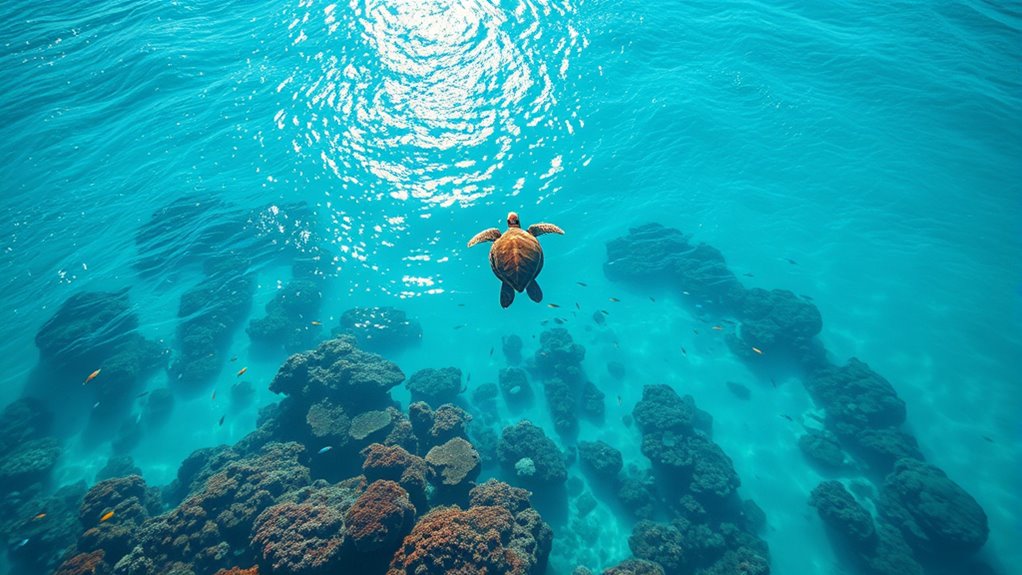
Have you ever paused to truly appreciate the incredible diversity and beauty of our blue planet? The oceans cover more than 70% of Earth’s surface, acting as a vast and essential ecosystem teeming with life. This marine biodiversity is astonishing; from tiny plankton to massive whales, countless species depend on the health of our oceans. Yet, despite their importance, our oceans face mounting threats—pollution, overfishing, climate change—that jeopardize this delicate balance. That’s why, on World Oceans Day, it’s imperative to reflect on our role in ocean conservation and what we can do to protect these invaluable waters.
When you think about marine biodiversity, you’re considering a complex web of life that sustains the entire planet. Each species, no matter how small, contributes to the ocean’s health, helping regulate climate, purify water, and support food chains. Protecting this diversity isn’t just about saving charismatic creatures like dolphins or sea turtles; it’s about safeguarding the entire ecosystem. You can make a difference by supporting initiatives that promote marine conservation, whether by reducing plastic use, avoiding products that harm marine life, or advocating for protected areas. Every action counts in maintaining the resilience of our oceans.
Ocean conservation involves more than just stopping pollution; it’s about restoring and maintaining the ocean’s natural functions. You can contribute by staying informed and spreading awareness about sustainable fishing practices, the importance of marine protected areas, and the dangers of ocean acidification. Participating in local beach cleanups or supporting organizations dedicated to marine research and conservation empowers you to be part of a global effort to preserve this essential resource. It’s also imperative to hold governments and corporations accountable for policies and practices that harm marine environments, pushing for stronger regulations and enforcement. Additionally, supporting efforts to protect marine biodiversity hotspots can help preserve high concentrations of endemic species under threat. Recognizing the role of marine ecosystems in climate regulation is crucial for developing effective conservation strategies that ensure the long-term health of our oceans. Understanding how marine ecosystems operate is crucial for developing effective conservation strategies that ensure the long-term health of our oceans. Moreover, integrating Indigenous wellness practices into conservation efforts can foster a more inclusive and culturally respectful approach to protecting marine environments. Protecting the health of our oceans is also vital because they act as carbon sinks, absorbing large amounts of atmospheric CO2 and helping mitigate climate change.
Frequently Asked Questions
How Do Ocean Currents Affect Global Climate?
Ocean currents play a essential role in shaping our climate by redistributing heat across the globe. You might notice that warm currents, like the Gulf Stream, raise temperatures in nearby regions, while cold currents cool them down. These currents drive thermohaline circulation, which helps regulate marine heatwaves and global climate patterns. Without these processes, weather systems would be less predictable, and many ecosystems would struggle to survive.
What Are the Most Endangered Marine Species?
You might wonder which marine species are most endangered. Sharks, sea turtles, and certain corals face severe threats due to overfishing, habitat loss, and climate change. Protecting marine biodiversity requires robust conservation strategies like establishing marine protected areas and reducing pollution. By supporting these efforts, you help guarantee the survival of the world’s most vulnerable marine species, safeguarding ocean health for future generations.
How Does Plastic Pollution Reach the Deep Ocean?
You might wonder how plastic pollution reaches the deep ocean. Microplastic pathways often start with surface debris, carried by currents and wind. These tiny particles sink as they accumulate, becoming deep sea debris. Once in the depths, they persist for decades, harming marine life. Your actions, like reducing plastic use and recycling, can help prevent microplastics from traveling these pathways, protecting our oceans’ mysterious and essential deep-sea ecosystems.
What Innovative Technologies Are Protecting Marine Ecosystems?
Imagine marine ecosystems as fragile glass sculptures; one crack can cause the whole thing to shatter. Innovative technologies like marine robotics are helping protect these delicate habitats by monitoring coral reefs and assisting in coral restoration efforts. These robots can reach places humans can’t, delivering targeted aid and collecting crucial data. By combining advanced tech and ecological efforts, you’re helping preserve our oceans’ health for future generations.
How Can Individuals Contribute to Ocean Conservation Efforts?
You can contribute to ocean conservation by supporting sustainable fishing practices and advocating for marine protected areas. Choose sustainably sourced seafood, reducing overfishing and habitat destruction. Spread awareness about the importance of protecting marine ecosystems and encourage others to do the same. Participating in beach cleanups and reducing plastic use also helps prevent pollution. Every small action adds up, making a significant difference in preserving our oceans for future generations.
Conclusion
As you celebrate World Oceans Day, remember that protecting our oceans isn’t just a duty—it’s a necessity. You can reduce plastic, support sustainable practices, and spread awareness. Every action matters, every voice counts, every effort counts. By caring for our blue planet, you ensure vibrant ecosystems, healthy communities, and a sustainable future. Because when you act, you inspire change; when you care, you make a difference; when you unite, you safeguard our world’s greatest treasure.