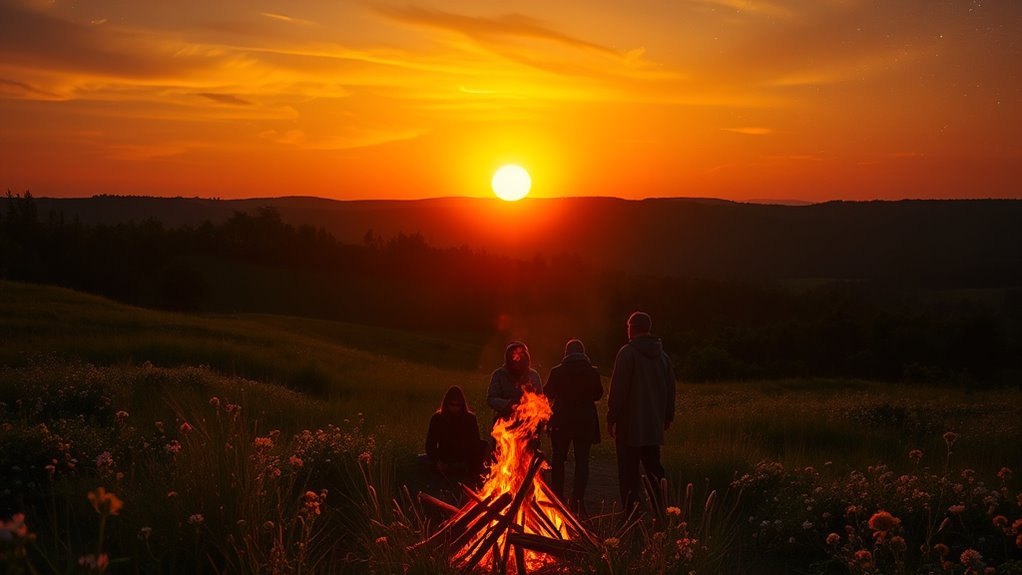

The summer solstice, happening around June 21st in the Northern Hemisphere, marks the longest day when the Earth’s tilt toward the sun is at its peak. People have celebrated this celestial event for thousands of years through festivals, bonfires, and rituals, honoring the sun’s power. Ancient structures like Stonehenge aligned with the solstice, reflecting their understanding of celestial cycles. To discover more about the science behind this day and its traditions, keep exploring these fascinating aspects.
Key Takeaways
- The summer solstice occurs around June 21st in the Northern Hemisphere, marking the longest day and shortest night of the year.
- It results from Earth’s tilt toward the sun, with sunlight directly hitting the Tropic of Cancer.
- Ancient cultures celebrated the solstice with festivals, rituals, and structures like Stonehenge aligned to sunrise.
- The solstice reflects precise celestial mechanics, illustrating Earth’s orbit and axial tilt.
- Modern traditions include outdoor festivities, bonfires, and honoring the sun’s peak power, connecting us to ancient solar observances.

Have you ever wondered why the summer solstice marks the longest day of the year? It’s all about solar alignment—the moment when the Earth’s tilt is at its maximum toward the sun. As the Earth orbits the sun, its tilted axis causes the sun to reach its highest point in the sky around June 21st in the Northern Hemisphere. This specific positioning results in the longest period of daylight and the shortest night, making it a significant marker in the calendar. The solstice isn’t just a scientific event; it’s been a catalyst for cultural celebrations across civilizations for thousands of years. Ancient peoples observed this day with awe, recognizing it as a time when the sun’s power was at its peak. Many cultures built structures aligned with the solstice, like Stonehenge in England, where the rising sun perfectly lines up with specific stones during sunrise. Such solar alignments weren’t coincidental—they demonstrated an understanding of celestial movements and were often integrated into spiritual or agricultural practices. These ancient societies celebrated the solstice with festivals, feasts, dances, and rituals designed to honor the sun’s energy and ensure a bountiful year ahead. Today, modern celebrations still echo these traditions, emphasizing the enduring importance of this astronomical event. From community gatherings to solitary rituals, people mark the day with outdoor activities, bonfires, and symbolic offerings to welcome the sun’s full strength. The connection between the science of the solstice and cultural celebrations reminds us of our deep-rooted relationship with the cosmos. It’s a time to appreciate the natural rhythms of our planet and recognize how ancient civilizations observed and respected these celestial cycles. Understanding the solar alignment that causes the solstice helps us grasp why it’s so meaningful—it’s a precise point in the Earth’s orbit where sunlight hits the Tropic of Cancer directly, illuminating the northern hemisphere most intensely. These solar alignments also influence agricultural practices, as farmers historically relied on the solstice to mark the beginning of new planting or harvesting seasons. Recognizing the significance of celestial cycles offers deeper insight into how ancient societies synchronized their lives with the universe, shaping traditions that persist today. The combination of scientific understanding and cultural reverence creates a rich tapestry of traditions that continue to thrive today. Whether through scientific curiosity or cultural festivities, the summer solstice remains a powerful reminder of our connection to the universe and its cycles. Additionally, the understanding of solar phenomena enhances our appreciation for how these natural events influence modern environmental awareness and ecological balance. Moreover, studying astronomical events can help us understand the broader impacts of celestial mechanics on Earth’s climate and ecosystems. Furthermore, recognizing these phenomena fosters a greater respect for the intricate balance of our planet’s climate systems, which are affected by celestial and terrestrial factors alike.
Frequently Asked Questions
How Do Different Cultures Celebrate the Summer Solstice Worldwide?
You see that different cultures celebrate the summer solstice through ancient rituals and modern festivals. In some places, you might join in bonfires, dance, or gather for spiritual ceremonies that honor the sun. Others hold music festivals or colorful parades, blending tradition with contemporary fun. These celebrations reflect a shared respect for nature’s cycles, allowing you to connect with history and community while marking the longest day of the year.
What Are the Environmental Impacts of Summer Solstice Celebrations?
You might not realize it, but summer solstice celebrations can impact the environment through pollution increase and habitat disturbance. Large gatherings, fireworks, and transportation contribute to air and water pollution, harming local ecosystems. Additionally, increased human activity can disturb wildlife habitats, causing stress or displacement. Being mindful of these effects helps you reduce your environmental footprint during festivities, supporting healthier ecosystems while still enjoying the traditions.
How Does the Solstice Influence Local Ecosystems and Wildlife Behavior?
Ever wonder how the solstice impacts wildlife and ecosystems? During this time, you’ll notice flora migration shifts and animal breeding activities intensify, aligning with the longer daylight hours. The extended daylight influences behaviors like feeding and mating, helping ecosystems thrive. You might see birds migrating earlier or animals breeding at different times. This natural rhythm keeps the environment balanced, showcasing how celestial events shape life around you.
Are There Any Health Benefits Linked to Celebrating the Solstice?
Celebrating the solstice can boost your mental health by encouraging outdoor activities and social connections, which reduce stress. It also helps your body produce more vitamin D from sunlight exposure, essential for mood regulation and immune support. By marking this special day, you get a chance to reconnect with nature, improve your well-being, and embrace the positive effects of sunlight, making it a meaningful and healthful experience.
How Has the Perception of the Summer Solstice Changed Over History?
You might notice that the perception of the summer solstice has evolved from ancient rituals honoring celestial cycles to modern adaptations celebrating light and nature. Historically, it marked important spiritual and agricultural milestones, but today, it’s often seen as a time for festivals and outdoor activities. These changing views reflect shifts in cultural values, blending old traditions with contemporary celebrations, making the solstice a symbol of renewal and community across ages.
Conclusion
As the summer solstice marks the sun’s triumphant peak, imagine yourself as a traveler riding the longest highway, where daylight is a shining guide and shadows retreat. Just like the sun’s journey, your own adventures are fueled by moments of brightness and warmth. Embrace this day as a beacon of balance and energy, knowing that, like the sun, your own light can shine brightest when you follow your path with passion and purpose.