Saint Nicholas Day 2025 honors the legendary life of a 4th-century bishop known for secret acts of charity and kindness, shaping the original Santa Claus tradition. Today, many celebrate by giving gifts, especially to children who leave out shoes or stockings for treats. These customs blend religious reverence with festive cheer, emphasizing generosity and community spirit. To discover how these ancient traditions transformed into modern holiday practices and what makes this celebration special, keep exploring the story behind Saint Nicholas.
Key Takeaways
- Saint Nicholas Day on December 6th honors the 4th-century bishop known for charity and kindness, inspiring the Santa Claus legend.
- Traditions include children leaving shoes or stockings for small gifts, candies, or fruit, symbolizing Saint Nicholas’s acts of generosity.
- Cultural practices blend religious reverence with secular festivities, emphasizing community, storytelling, and sharing.
- Modern celebrations often involve charity drives, community events, and educational activities highlighting the holiday’s original spirit.
- The holiday’s core message of giving, compassion, and kindness remains central, connecting historical origins with contemporary traditions.
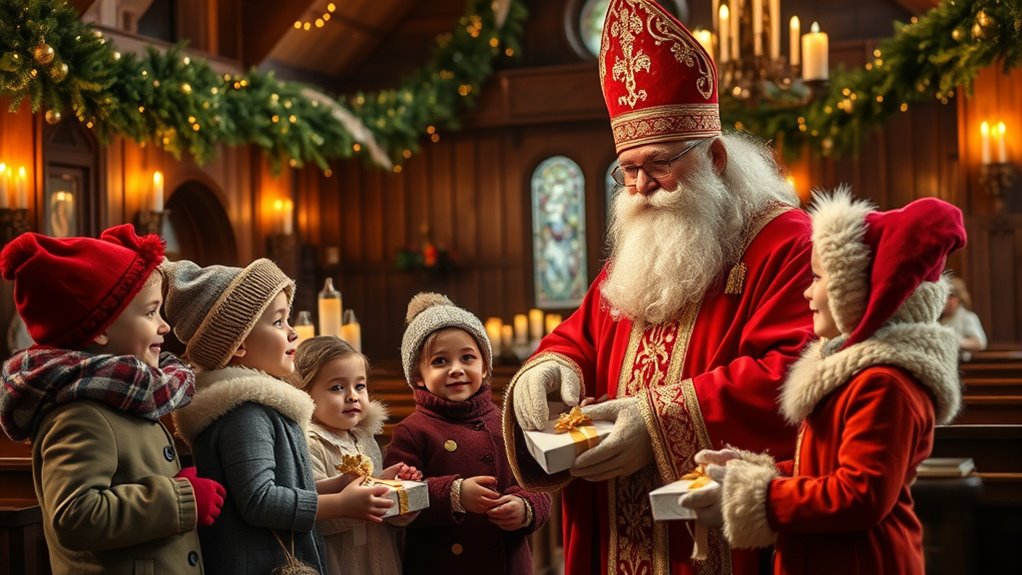
As December approaches, families around the world prepare to celebrate Saint Nicholas Day 2025, a tradition rooted in giving and kindness. This special day honors Saint Nicholas, a historical figure known for his generosity and compassion, and has evolved over centuries into a festive occasion marked by gift-giving and merriment. Understanding the history origins of Saint Nicholas Day reveals a rich tapestry of cultural stories and religious practices. Saint Nicholas was a 4th-century bishop from Myra, in what is now Turkey, famed for secretly giving coins to the poor and rescuing children from danger. Over time, tales of his kindness spread across Europe, transforming into legends that celebrated his role as a protector and benefactor. The day dedicated to him, originally observed on December 6th, became a way for communities to commemorate his deeds and encourage acts of charity.
Modern celebrations of Saint Nicholas Day vary widely, but they all share a core spirit of generosity. In many countries, children keenly await December 6th, leaving out shoes or stockings to be filled with small gifts, candies, or fruit. Families might attend special church services or participate in community parades that honor the saint’s legacy. In the Netherlands, children put out their shoes on the night before, hoping for treats from Sinterklaas, a festive figure inspired by Saint Nicholas. Similarly, in Germany and Belgium, gift-giving is a central part of the celebration, often accompanied by festive songs and storytelling. These customs have adapted over time, blending religious reverence with secular festivities, making the day accessible and joyful for all ages.
These traditions are also influenced by cultural practices that have helped shape modern festivities, emphasizing the importance of community and shared values. Today’s modern celebrations have also embraced the spirit of giving back beyond personal gift exchanges. Many communities organize charity drives or volunteer efforts in Saint Nicholas’s name, emphasizing his original acts of kindness. Schools and organizations host events that teach children about his history origins, fostering a sense of gratitude and community service. Despite the commercialization that surrounds many holiday traditions, the core meaning remains intact: a reminder to be generous, compassionate, and mindful of others. As you prepare to celebrate Saint Nicholas Day 2025, you join countless others in honoring a tradition that has persisted for centuries—one that encourages giving freely, caring deeply, and spreading joy. Whether through small gifts, acts of kindness, or community service, this day serves as a timeless reminder of the true spirit of the season rooted in the history origins and modern celebrations of Saint Nicholas.
Frequently Asked Questions
How Did Saint Nicholas Become Associated With Gift-Giving?
You might not realize it, but the gift-giving origins of Saint Nicholas come from saintly legends where he secretly gave gifts to those in need. These stories highlight his generous spirit, inspiring traditions of gift-giving during his feast day. Over time, his reputation grew, leading people to see him as a symbol of kindness and generosity. That’s how Saint Nicholas became associated with gift-giving, shaping the Santa Claus tradition we celebrate today.
Are There Any Specific Traditions Unique to Saint Nicholas Day in Different Countries?
On Saint Nicholas Day, you’ll find unique traditions across different countries—like leaving shoes out in the Netherlands, filling stockings in Germany, or participating in parades in Poland. You’ll enjoy regional customs that celebrate Saint Nicholas’s kindness, and indulge in culinary traditions like special pastries and treats. These customs, rooted in local history and culture, create a festive atmosphere, making each celebration memorable and distinct from place to place.
What Are the Origins of the Santa Claus Figure in Modern Culture?
You might find that the modern Santa Claus originated from historical origins like Saint Nicholas, a kind-hearted bishop known for gift-giving. Over time, cultural adaptations transformed his story into the jolly, red-suited figure we recognize today. This evolution blended traditions from different countries, shaping Santa into a symbol of generosity and holiday cheer worldwide. The blend of history and cultural change makes Santa Claus a truly universal figure.
How Has the Celebration of Saint Nicholas Day Evolved Over Centuries?
Did you know that Saint Nicholas Day has evolved from medieval customs into a celebration marked by diverse folklore variations? Over centuries, it shifted from simple gift-giving to elaborate traditions across Europe. You may notice how different regions incorporate unique customs, blending history with modern festivities. This evolution reflects how cultural influences and local stories shape the way communities honor Saint Nicholas, creating a rich, enduring legacy.
Are There Religious Significances Attached to Saint Nicholas Day Celebrations?
You’ll find that Saint Nicholas Day celebrations carry deep religious customs and spiritual significance. People often honor the saint’s kindness and generosity, reflecting Christian values. Many participate in church services or leave offerings as acts of devotion. These customs remind you of Saint Nicholas’s role as a protector and gift-giver, emphasizing the holiday’s roots in faith and spirituality. Celebrating this day helps reinforce the religious importance behind the tradition.
Conclusion
As you celebrate Saint Nicholas Day 2025, remember it’s more than just a tradition—it’s a chance to connect with the true spirit of giving. Embrace the joy and kindness that this day inspires, knowing it’s the heart of the holiday season. Keep in mind, sometimes the smallest acts make the biggest difference. So, go ahead and spread warmth and cheer; after all, it’s the little things that truly count in making memories last.