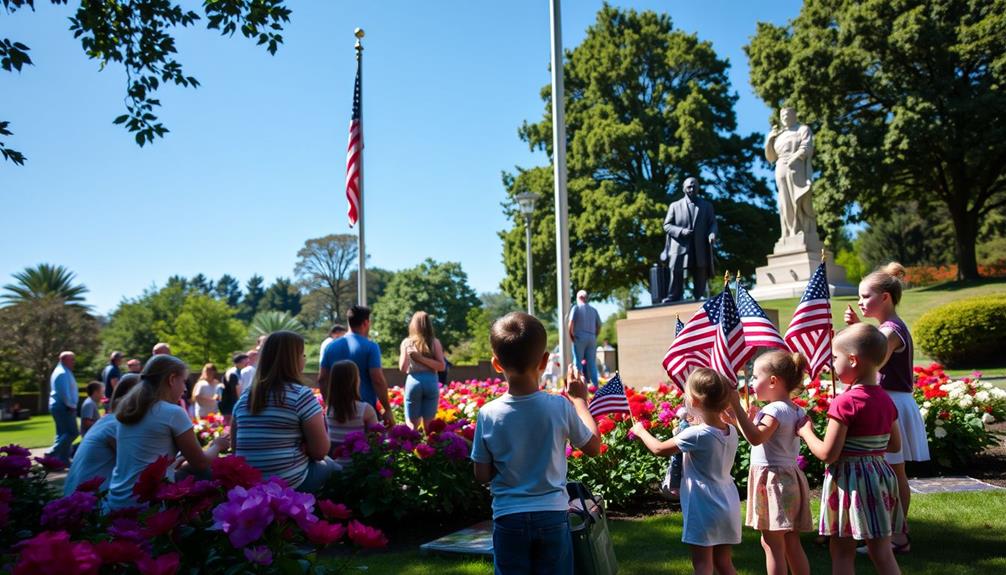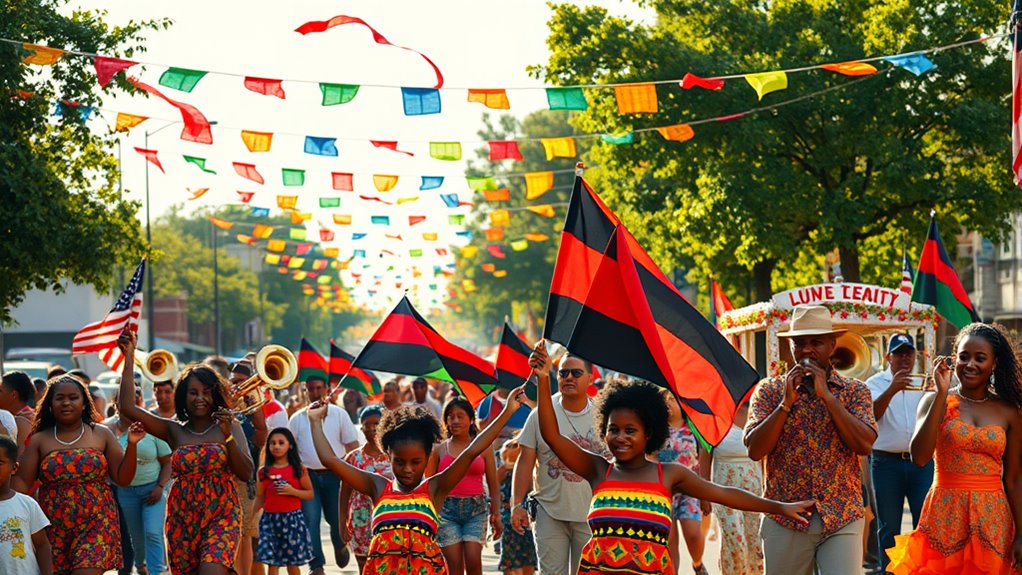

On Juneteenth, you’ll find lively parades, cultural festivals, and community gatherings that celebrate freedom and resilience. Festivities often include traditional foods like fried chicken, collard greens, and sweet potato pie, along with fireworks and concerts. People also join marches, rallies, and educational events to honor history and promote racial justice. The celebrations foster pride and unity while passing down stories of perseverance. Keep going to explore more about how Americans come together to mark this important day.
Key Takeaways
- Celebrations include vibrant parades, music, dance, and community gatherings highlighting cultural pride and heritage.
- Traditional foods like fried chicken, collard greens, and sweet potato pie are central to festivities.
- Educational events such as lectures and panel discussions explore the history and significance of emancipation.
- Activism and reflection are emphasized through marches, rallies, and honoring those who fought for freedom.
- Decorations, visual displays, and storytelling preserve cultural legacy and foster a sense of unity and progress.
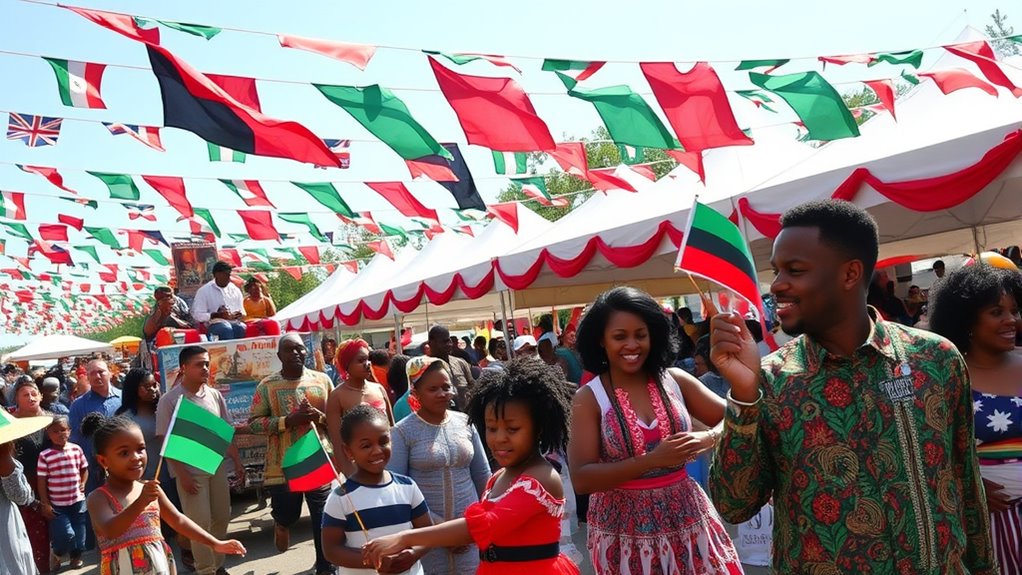
Juneteenth, often called Freedom Day, marks a pivotal moment in American history when the last enslaved African Americans learned of their emancipation in 1865. This day holds profound historical significance because it symbolizes the end of slavery in the United States, even though the formal abolition came with the 13th Amendment. As you observe Juneteenth, you participate in a tradition rooted in resilience and liberation, celebrating the strides made toward racial equality. It’s a reminder of the struggles endured and the ongoing journey toward justice, serving as a powerful reminder of America’s complex history with slavery and emancipation. The day’s importance extends beyond mere remembrance; it’s a celebration of cultural pride and identity for African American communities nationwide.
Throughout the country, Juneteenth is marked by vibrant cultural celebrations that honor African American heritage. You might see parades filled with music, dance, and colorful displays that showcase the richness of Black culture. Community gatherings often feature local artists, storytellers, and performers who share their histories and stories, fostering a sense of unity and pride. Many cities host educational events, such as lectures and panel discussions, that explore the historical significance of emancipation and its lasting impact. These festivities aren’t just about looking back—they’re about celebrating progress and resilience while acknowledging the struggles faced along the way. Recognizing the historical significance of emancipation helps deepen understanding of the holiday’s importance. Additionally, community organizations often host workshops that highlight ongoing issues related to racial justice and equality, emphasizing the importance of racial justice initiatives.
Vibrant Juneteenth celebrations honor Black culture through parades, arts, education, and community pride.
Food plays a central role in Juneteenth celebrations, too. Barbecues, picnics, and soul food dinners bring people together to enjoy traditional dishes like fried chicken, collard greens, and sweet potato pie. These meals serve as a tribute to African American culinary heritage and community bonding. Fireworks displays and concerts often conclude the day’s festivities, filling the night sky with color and music, symbolizing hope and freedom. Many families also incorporate storytelling into their celebrations, passing down stories of ancestors and emphasizing the importance of cultural heritage in shaping identity. The sharing of stories helps preserve the legacy of resilience within families and communities. You also see many communities use Juneteenth as an opportunity for reflection and activism. Events like marches and rallies emphasize the ongoing fight for racial equality and justice. It’s a day to honor those who fought for freedom and to advocate for continued progress. Recognizing the color accuracy of visual displays and decorations further enriches the festive atmosphere. It’s a day to honor those who fought for freedom and to advocate for continued progress. It’s important to recognize that cultural pride is a vital aspect of the holiday, fostering a sense of belonging and identity among African Americans. Whether you’re participating in local festivals, attending educational programs, or simply spending time with loved ones, you’re contributing to a collective acknowledgment of history and a celebration of cultural identity. Juneteenth isn’t just a holiday; it’s a powerful reminder of the resilience of a community and the ongoing pursuit of freedom and equality in America.
Frequently Asked Questions
How Did Juneteenth Originate Historically?
You might wonder how Juneteenth started. It originated after the emancipation proclamation, which declared enslaved African Americans free in 1863. However, many states didn’t immediately obey it. On June 19, 1865, Union soldiers arrived in Galveston, Texas, and announced the enslaved people’s freedom. This day marked the effective end of slavery for many, making Juneteenth a historic celebration of liberation and resilience for African Americans.
Are There Regional Differences in How Juneteenth Is Celebrated?
Did you know over 47 states now recognize Juneteenth? You’ll notice regional customs and local events vary across the country. In some areas, celebrations focus on parades and community picnics, while others emphasize educational programs or historical reenactments. These regional differences make each celebration unique, reflecting local traditions and cultural influences. So, wherever you are, you’ll find Juneteenth festivities that honor freedom in diverse, meaningful ways.
What Are Some Traditional Foods Associated With Juneteenth?
You’ll find that traditional foods played a big role in Juneteenth celebrations. Soul food, like fried chicken, collard greens, and cornbread, often graces the table, honoring African American heritage. Barbecue traditions also shine, with grilled meats and smoky dishes bringing people together. These delicious foods symbolize resilience and community, making them an essential part of the festivities that celebrate freedom and culture.
How Has Juneteenth Evolved Over the Past Century?
Imagine scenes of vibrant community parades filling streets with music and dance, echoing African American traditions. Over the past century, Juneteenth has transformed from quiet observances into widespread celebrations. Today, you see cities hosting festivals, educational events, and soulful performances that honor history and resilience. This evolution reflects a growing recognition of freedom’s significance, uniting communities in a shared celebration of heritage and progress that continues to inspire.
Is Juneteenth Recognized as a Federal Holiday Nationwide?
You might wonder if Juneteenth has gained federal recognition as a holiday across the country. Currently, it’s officially recognized as a federal holiday, meaning nationwide observance is now mandated. This recognition helps honor the history and significance of freedom for African Americans. As a result, more states and communities participate in celebrations, reflecting the nation’s commitment to remembering this important milestone in American history.
Conclusion
As you reflect on Juneteenth, consider how this day reminds us of resilience and the ongoing journey toward equality. Do you see it as just a celebration or a call to action? Embracing the traditions and stories shared each year, you can play a part in honoring freedom’s true meaning. After all, understanding our history empowers us to shape a more just future—so, will you celebrate and advocate for progress?