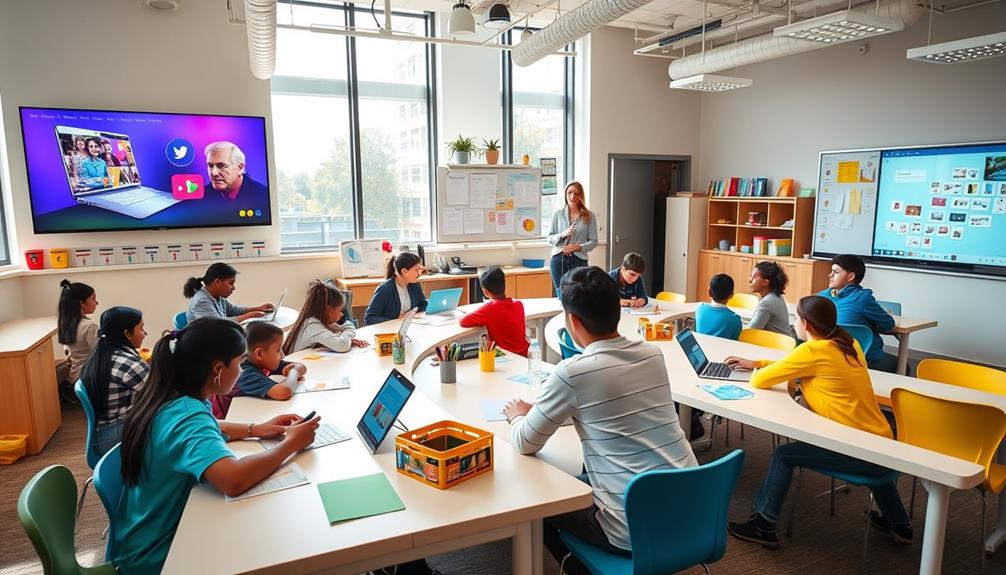
You can adapt by using ChatGPT as a supplemental tool to answer student questions, generate ideas, and encourage discussions. To promote critical thinking, challenge students to analyze AI responses and discuss ethics, bias, and privacy. Balance AI use with active learning activities to keep engagement high. By understanding its limitations and incorporating ethics into your lessons, you’ll better prepare students for an AI-driven future. Keep exploring to discover more effective strategies.
Key Takeaways
- Teachers integrate ChatGPT as a collaborative tool to enhance engagement and facilitate deeper understanding through active learning activities.
- Educators incorporate AI ethics discussions to promote responsible use and foster digital literacy among students.
- They balance AI use with traditional methods, encouraging critical analysis of AI outputs to develop critical thinking skills.
- Teachers provide guidance on AI limitations, biases, and safety measures to ensure responsible implementation in the classroom.
- Professional development helps teachers adapt their strategies, leveraging ChatGPT to boost creativity, collaboration, and future readiness.

As artificial intelligence continues to transform education, ChatGPT has become a powerful tool in the classroom. You might find yourself using it to answer student questions, generate lesson ideas, or facilitate discussions. But with this new technology comes the responsibility to address AI ethics, ensuring that its use promotes fairness, transparency, and respect for student privacy. When integrating ChatGPT, you need to contemplate how it impacts student engagement. Will it encourage students to think critically, or will they rely too heavily on AI for answers? Striking the right balance is key. You want ChatGPT to serve as a supplement, not a substitute, for active learning. To do this, you can design activities that prompt students to question or expand on the AI-generated responses, fostering deeper understanding and critical thinking skills. Engaging students becomes easier when they see ChatGPT as a collaborative tool rather than a shortcut. You might, for instance, ask students to analyze the AI’s responses, identify potential biases, or compare AI outputs with their own ideas. This approach keeps students involved and thinking actively rather than passively receiving information. It also raises awareness about AI ethics — encouraging students to consider issues like data privacy, bias in algorithms, and the importance of human oversight. When students understand the ethical implications of AI, they become more conscientious users and creators of these tools. Recent research indicates that AI vulnerabilities can be exploited, highlighting the need for ongoing safety measures and responsible implementation. Developing an understanding of fathers’ influence and how guidance shapes character can serve as a metaphor for how AI influences learning and decision-making. Recognizing the importance of user education can help students navigate AI tools responsibly and effectively. Additionally, understanding emotional support can help educators address students’ concerns and anxieties about AI integration, fostering a supportive learning environment. As a teacher, your role is to guide them through these considerations, fostering a digital literacy that’s essential in today’s world. You can incorporate discussions about AI ethics into your lessons, making them part of the learning process. This not only enhances student engagement but also prepares them to navigate an increasingly AI-driven society responsibly. Additionally, you need to be transparent about how ChatGPT works, its limitations, and potential biases. This openness builds trust and encourages responsible use. By setting clear boundaries and expectations, you help students develop a healthy relationship with AI tools. As you adapt to this technology, keep in mind that ChatGPT can be a catalyst for creativity and collaboration, provided you approach it thoughtfully. Use it to spark curiosity, challenge assumptions, and promote ethical awareness. With mindful integration, ChatGPT can elevate your teaching and enhance student engagement, all while instilling important values about AI ethics. Ultimately, your goal is to leverage this innovative tool in a way that empowers students, fosters critical thinking, and prepares them for a future where AI is ubiquitous.
Frequently Asked Questions
How Do Teachers Address Students’ Reliance on Chatgpt?
You can address students’ reliance on ChatGPT by promoting AI literacy and encouraging critical thinking. Explain the importance of understanding how AI works and its limitations to reduce student dependency. Incorporate activities that require students to analyze AI-generated content and develop their own ideas. This approach helps students become more confident in their skills, fostering responsible use of AI tools while ensuring they don’t overly depend on them for learning and problem-solving.
What Training Do Educators Need to Effectively Use Chatgpt?
You need training that covers curriculum adaptation and ethical considerations to effectively use ChatGPT. This includes understanding how to integrate AI tools into lessons, ensuring they complement learning objectives. You should also learn about ethical issues like data privacy, bias, and responsible AI use. With proper training, you can confidently navigate these areas, making AI a valuable asset while maintaining academic integrity and fostering critical thinking skills among students.
How Is Student Privacy Protected When Using Chatgpt?
You might worry about data privacy and ethical considerations when using AI tools like ChatGPT. Rest assured, you can protect student privacy by ensuring data is anonymized and stored securely. Many platforms follow strict guidelines to prevent misuse, giving you confidence that student information stays safe. By staying informed about privacy policies and ethical practices, you create a safe learning environment where AI supports education without compromising privacy.
Can Chatgpt Be Integrated With Existing Classroom Technologies?
You can integrate ChatGPT with existing classroom technologies to enhance learning experiences. Focus on AI literacy to help students understand AI capabilities and limitations. Classroom integration involves linking ChatGPT with platforms like learning management systems or educational apps, making it seamless for teachers and students. By doing so, you foster a tech-savvy environment where AI tools support personalized learning and engagement, ensuring a smooth, effective educational experience.
What Is the Cost of Implementing Chatgpt in Schools?
You might think the cost of implementing ChatGPT is high, but consider the savings from reduced paper use and personalized learning. While budget concerns and necessary technology upgrades pose challenges, investing in AI tools can boost efficiency and engagement. The initial expenses vary, including licensing fees and infrastructure, but the long-term benefits often outweigh the costs, making AI integration a worthwhile step for future-focused schools.
Conclusion
As a teacher, embracing AI tools like ChatGPT can transform your classroom experience. Did you know that 65% of educators report increased student engagement with AI-assisted learning? By adapting to these tools, you not only enhance understanding but also prepare students for a future where AI is everywhere. So, plunge in, experiment, and see how ChatGPT can open new doors for your teaching and your students’ learning journey.