
When selecting STEM toys for kids, the best overall choice is the Snap Circuits Jr. SC-100 because it delivers immediate, visible results with low frustration for children aged 8 and up. For those prioritizing pure logic without electronics, the Educational Insights Kanoodle offers a screen-free spatial reasoning challenge that grows with the child. Meanwhile, the Smartivity Robotic Mechanical Hand stands out for older children who want complex, tangible engineering outcomes. The main tradeoff in this category lies between immediate gratification and long-term skill development; some toys offer quick wins, while others require sustained patience. Continue reading to see how these options stack up against other contenders in build quality, educational value, and age appropriateness.

Prime made for students and young adults
- Fast, free delivery for dorm and study essentials
- Prime Video and Amazon Music included
- Member-only deals
Key Takeaways
- Snap Circuits Jr. remains the gold standard for introducing electronics because it eliminates the frustration of soldering or loose wires, allowing kids to focus purely on circuit logic.
- Magnetic tiles like PicassoTiles and EchoPlan offer superior open-ended play value compared to fixed-model kits, though they require more parental guidance to spark initial creativity.
- The Smartivity Robotic Hand is significantly more complex than standard building sets, making it suitable only for children who have already mastered basic assembly concepts.
- Digital tools like the BMDSAE microscope bridge the gap between physical observation and digital documentation, a feature rarely found in traditional analog science kits.
- Open-ended building sets like Brain Flakes provide the highest longevity, as they do not become obsolete once the child outgrows specific model instructions.
| Snap Circuits Jr. SC-100 Electronics Kit, 100+ Projects, Ages 8+ |  | Best for Learning Circuitry | Model: SC-100 | Recommended age: 8 years and up | Projects: 100+ | VIEW LATEST PRICE | See Our Full Breakdown |
| Educational Insights Kanoodle Brain Teaser Puzzle |  | Best Portable Logic Challenge | Brand: Educational Insights | Puzzle challenges: 228 | Formats: 2D and 3D | VIEW LATEST PRICE | See Our Full Breakdown |
| Smartivity Robotic Mechanical Hand STEM Toy for Kids Ages 8–14 |  | Best Mechanical Engineering Build | Brand: Smartivity | Model: SMRT1135 | Age range: 8–14 years | VIEW LATEST PRICE | See Our Full Breakdown |
| 3Doodler Start+ Essentials 3D Pen Set for Kids |  | Best for Creative 3D Design | Brand: 3Doodler | Model: Start+ | Age range: 6 years and up | VIEW LATEST PRICE | See Our Full Breakdown |
| PicassoTiles 100-Piece Magnetic Building Tiles for Kids |  | Best for Collaborative Building | Brand: PicassoTiles | Model: PT100 | Number of pieces: 100 | VIEW LATEST PRICE | See Our Full Breakdown |
| Klutz LEGO Gear Bots STEM Activity Kit for Ages 8–12 |  | Best for Learning Mechanical Motion | Age range: 8–12 years | Number of models: 8 | LEGO elements: 62 | VIEW LATEST PRICE | See Our Full Breakdown |
| Take-Apart Dinosaur Building Toy Set with Electric Drill, 4-Pack |  | Best for Young Builders | Recommended age: 3–8 years | Included dinosaurs: Tyrannosaurus Rex, Triceratops, Parasaurolophus, and Velociraptor | Set contents: 4 dinosaurs | VIEW LATEST PRICE | See Our Full Breakdown |
| EchoPlan 150-Piece Magnetic Building Blocks Set |  | Best for Open-Ended Spatial Building | Recommended age: 4–8 years | Piece count: 150 | Design elements: 32 | VIEW LATEST PRICE | See Our Full Breakdown |
| ThinkFun Gravity Maze Marble Logic Game |  | Best for Screen-Free Logic Challenges | Age range: 8+ | Challenges: 60, beginner to expert | Game grid: 1 | VIEW LATEST PRICE | See Our Full Breakdown |
| BMDSAE 1000X Handheld Digital Microscope for Kids with 2.0-Inch IPS Screen |  | Best for Exploring Real-World Specimens | Magnification: Up to 1000X | Screen: 2.0-inch IPS | Camera: 2MP | VIEW LATEST PRICE | See Our Full Breakdown |
| CrunchLabs The Crunchinator STEM Toy by Mark Rober, Ages 8–15 |  | Best for Hands-On Engineering Curiosity | Brand: CrunchLabs | Model: The Crunchinator | Recommended Age: 8–15 years | VIEW LATEST PRICE | See Our Full Breakdown |
| Nex Playground Active Play System for Kids and Families | 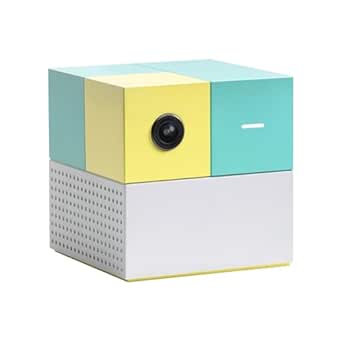 | Best for Active Family Engagement | Number of Players: Up to 4 | Connection: HDMI | Included Games: Fruit Ninja, Starri, Whac-a-Mole, Go Keeper, Party Fowl | VIEW LATEST PRICE | See Our Full Breakdown |
| Qirptey 125-Piece STEM Building Blocks Kit for Ages 3+ |  | Best Starter Kit for Young Builders | Brand: Qirptey | Piece Count: 125 | Recommended Age: 3 years and up | VIEW LATEST PRICE | See Our Full Breakdown |
| Sillbird 12-in-1 Solar Robot Building Kit, 190 Pieces |  | Best for Renewable Energy Education | Brand: Sillbird | Models: 12 | Pieces: 190 | VIEW LATEST PRICE | See Our Full Breakdown |
| Brain Flakes 500 Piece Set, Ages 3+, Interlocking Plastic Disc Toy for Creative Building |  | Best for Open-Ended Creative Play | Brand: Brain Flakes | Number of Pieces: 500 | Age Range: 3+ | VIEW LATEST PRICE | See Our Full Breakdown |
| STEM toys for kid | Material | Brand |
|---|---|---|
| Snap Circuits Jr. SC-100 Elect | — | — |
| Educational Insights Kanoodle | Plastic | Educational Insights |
| Smartivity Robotic Mechanical | Engineered wood | Smartivity |
| 3Doodler Start+ Essentials 3D | Plastic | 3Doodler |
| PicassoTiles 100-Piece Magneti | Plastic | PicassoTiles |
| Klutz LEGO Gear Bots STEM Acti | — | — |
| Take-Apart Dinosaur Building T | ABS plastic | — |
| EchoPlan 150-Piece Magnetic Bu | ABS | — |
| ThinkFun Gravity Maze Marble L | — | — |
| BMDSAE 1000X Handheld Digital | — | — |
| CrunchLabs The Crunchinator ST | — | CrunchLabs |
| Nex Playground Active Play Sys | — | — |
| Qirptey 125-Piece STEM Buildin | Not specified | Qirptey |
| Sillbird 12-in-1 Solar Robot B | ABS | Sillbird |
| Brain Flakes 500 Piece Set | Plastic | Brain Flakes |
More Details on Our Top Picks
Snap Circuits Jr. SC-100 Electronics Kit, 100+ Projects, Ages 8+
I’d choose the Snap Circuits Jr. SC-100 for kids who want to see how electrical connections work, rather than only build shapes or solve puzzles. Its color-coded parts snap onto a grid without tools or soldering, so children can focus on following a circuit and seeing what happens. The illustrated guide offers 100+ projects, giving it more guided electronics variety than the construction-focused PicassoTiles 100-Piece Magnetic Building Tiles. Compared with the solo spatial challenges in Kanoodle, this kit is more about cause and effect through physical circuits. The tradeoffs are that it needs batteries, and the supplied product information conflicts on whether there are 28 or 29 components. It suits curious beginners, but kids seeking open-ended building may prefer tiles or a mechanical model.
Pros:- Offers more than 100 circuit projects for repeatable practice.
- Color-coded components snap together without tools or soldering.
- Illustrated instructions help beginners follow each build.
- Introduces basic electronics through hands-on cause and effect.
Cons:- Batteries are required and are not specified as included.
- Product information gives conflicting component counts of 28 and 29.
Best for: Children ages 8 and up who want guided, hands-on introductions to circuits and electronics.
Not ideal for: Families seeking a battery-free toy or open-ended construction without step-by-step projects.
- Model:SC-100
- Recommended age:8 years and up
- Projects:100+
- Components:28 components listed; another source count says 29
- Included:Plastic snap-grid and illustrated project manual
- Tools required:None
- Soldering required:No
- Batteries:Required
Our verdict“Choose this kit for guided electronics learning; pick PicassoTiles instead for more open-ended structural building.”
Educational Insights Kanoodle Brain Teaser Puzzle
Kanoodle is the most compact, individual problem-solving pick in this group: its case stores the pieces and doubles as the board, with 228 challenges spanning flat and 3D arrangements. That makes it a better fit for travel or a short screen-free activity than the larger, collaborative PicassoTiles 100-Piece Magnetic Building Tiles. It also asks children to reason through a fixed puzzle, unlike the Snap Circuits Jr. SC-100, where instructions lead toward working circuits. Beginner-to-expert levels offer a path to harder spatial tasks, though some puzzles may frustrate children who want quick wins. The main limitation is built into the format: it is for one player, so it does little for shared building or teamwork. I’d pick it for a child who enjoys quiet solo challenges.
Pros:- Includes 228 challenges at different difficulty levels.
- Combines 2D and 3D spatial puzzles.
- Carrying case stores the pieces and serves as a built-in board.
- Offers screen-free solo play in a compact format.
Cons:- Designed for one player, limiting shared play.
- Some challenges may be difficult for children who prefer quick, guided progress.
Best for: Children age 7 and up who enjoy independent logic puzzles and need a compact activity for travel.
Not ideal for: Siblings or families looking for a cooperative, open-ended STEM activity rather than a one-player puzzle.
- Brand:Educational Insights
- Puzzle challenges:228
- Formats:2D and 3D
- Pieces:12
- Players:1
- Included:Puzzle pieces, 48-page illustrated guide, carrying case with built-in game boards
- Recommended age:7 years and up
- Material:Plastic
- Warranty:1 year against manufacturer defects
Our verdict“Choose Kanoodle for portable solo spatial reasoning, not for collaborative construction or hands-on electronics.”
Smartivity Robotic Mechanical Hand STEM Toy for Kids Ages 8–14
The Smartivity Robotic Mechanical Hand gives children a tangible way to explore how a hand-like mechanism can move, making it a stronger choice for anatomy and mechanical curiosity than Kanoodle’s abstract spatial puzzles. It also offers a more defined build than the freeform structures possible with PicassoTiles 100-Piece Magnetic Building Tiles: children assemble one working model using step-by-step instructions. Its engineered-wood construction gives the project a different feel from the plastic kits elsewhere in this lineup, while the stated lifetime replacement parts can help if a piece is lost or damaged. The tradeoff is that assembly is central to the experience, so it may not suit a child who wants immediate play or many alternate builds. I’d choose it for a patient builder interested in robotics or anatomy.
Pros:- Creates a working mechanical hand through hands-on assembly.
- Step-by-step instructions support the building process.
- Engineered wood provides an alternative to the lineup’s plastic construction toys.
- Lifetime replacement parts are included.
Cons:- Requires assembly before the model can be used.
- Centers on a single finished model rather than a large set of alternate projects.
Best for: Builders ages 8–14 who want an assembly project that connects mechanical movement with a hand-like model.
Not ideal for: Children who want a toy ready for immediate play, or families seeking a set with many interchangeable build options.
- Brand:Smartivity
- Model:SMRT1135
- Age range:8–14 years
- Material:Engineered wood
- Theme:Anatomy and robotics
- Package quantity:1
- Item dimensions:11.81 × 9.8 in
- Replacement parts:Lifetime replacement parts included
Our verdict“Pick this for a focused mechanical build; choose Snap Circuits for more varied guided projects.”
3Doodler Start+ Essentials 3D Pen Set for Kids
The 3Doodler Start+ Essentials is the creative-design choice here: children draw in three dimensions with a pen, DoodlePad, and included activity materials. Its stated no-hot-parts design distinguishes it from tools that rely on heated tips, while the screen-free format gives young makers a physical way to explore shapes and structures. Compared with Snap Circuits Jr. SC-100, it offers less direct instruction in electronics but more freedom to invent objects; compared with PicassoTiles, it enables line-based forms rather than assembling magnetic panels. The set includes 72 plastic strands and stencils, but the pen uses only 3Doodler Start filaments, which narrows replenishment choices. I’d choose it for a child drawn to art and making, not for someone seeking a conventional coding or circuitry lesson.
Pros:- Designed with no hot parts for child-oriented use.
- Combines creative making with screen-free exploration of 3D forms.
- Includes a DoodlePad, activity guide, stencils, and 72 plastic strands.
- USB-C charging and safety stand-by mode are included.
Cons:- Uses only 3Doodler Start plastic filaments.
- Its creative focus offers less structured electronics learning than Snap Circuits.
Best for: Children age 6 and up who enjoy drawing, crafting, and exploring three-dimensional shapes without a screen.
Not ideal for: Families who want broad filament compatibility or a STEM toy focused on circuits, coding, or mechanical construction.
- Brand:3Doodler
- Model:Start+
- Age range:6 years and up
- Included components:3D pen, DoodlePad/Doodlemat, 72 plastic strands, USB-C cable, activity guide
- Material:Plastic
- Dimensions:9.06 × 6.02 × 2.56 inches
- Weight:10.72 ounces
- Number of pieces:6
- Warranty:1 year against manufacturer defects
Our verdict“Choose this for hands-on 3D creativity, but select Snap Circuits for a more direct introduction to electronics.”
PicassoTiles 100-Piece Magnetic Building Tiles for Kids
PicassoTiles PT100 earns its place as the group-friendly builder: 100 magnetic tiles give children room to make larger 3D structures together, while play can introduce shapes, colors, counting, and magnetic polarity. Unlike the fixed, single-player challenges in Kanoodle, these tiles leave the design open to negotiation and rebuilding. They also suit younger children than the Snap Circuits Jr. SC-100, with a stated age range starting at 3, though they teach broad building concepts rather than circuits. The set supports solo or multiple-player play and is described as easy to assemble and store. Its tradeoff is that the learning is less directed: families wanting step-by-step projects or a focused engineering mechanism may prefer Snap Circuits or the Smartivity Robotic Mechanical Hand.
Pros:- 100 tiles allow larger and more varied structures.
- Supports exploration of shapes, colors, counting, and magnetism.
- Can be used for individual or multiple-player building.
- Designed for assembly and storage.
Cons:- Open-ended play provides less step-by-step instruction than Snap Circuits.
- Its broad construction focus does not provide the specific mechanical project found in the Smartivity hand kit.
Best for: Families with children age 3 and up who want a reusable building set for solo play or shared construction.
Not ideal for: Buyers seeking guided STEM lessons, a specific mechanical build, or a compact set for a small play area.
- Brand:PicassoTiles
- Model:PT100
- Number of pieces:100
- Age range:3 years and up
- Material:Plastic
- Color:Multicolor
- Dimensions:14 × 11.63 × 3.13 inches
- Weight:5.5 pounds
- Players:Multiple
Our verdict“Choose PicassoTiles for shared, open-ended building, and pick a guided kit if your child wants a defined STEM lesson.”
Klutz LEGO Gear Bots STEM Activity Kit for Ages 8–12
I’d choose this kit for a child who wants to see how simple mechanisms make a model move. Its eight creatures use LEGO Technic elements, paper components, and a hand-cranked mechanism; the 64-page book explains the axles, cams, and cranks behind the builds. That makes it more focused on mechanical concepts than the Take-Apart Dinosaur set, which centers on assembling and posing familiar figures. Step-by-step instructions make the projects approachable, though the child still needs patience to build each model and turn the crank to animate it. The tradeoff is that motion depends on manual operation, and some models include papercraft rather than being made entirely from LEGO pieces. I’d pick it for guided building and mechanism learning, not for self-moving play.
Pros:- Eight models offer several guided building projects.
- Explains mechanical concepts such as axles, cams, and cranks.
- Includes LEGO elements, papercraft sheets, and step-by-step instructions.
- Connects construction with problem solving and reasoning.
Cons:- Models move only while the child turns the crank.
- Papercraft components may be less appealing to children who prefer all-plastic builds.
Best for: Ages 8–12 who enjoy following build instructions and want to learn how gears and cranks create motion.
Not ideal for: Children looking for motorized or free-moving builds, or builders who would rather avoid paper components.
- Age range:8–12 years
- Number of models:8
- LEGO elements:62
- Papercraft sheets:10
- Book:64 pages
- Operation:Manual crank
- Dimensions:10 x 1.5 x 10 inches
Our verdict“Choose this kit for an instruction-loving child who wants hands-on lessons in mechanical motion rather than motorized action.”
Take-Apart Dinosaur Building Toy Set with Electric Drill, 4-Pack
For a young child who learns by taking things apart and putting them back together, this set offers a more immediate start than the Klutz LEGO Gear Bots kit. It includes four dinosaurs, a low-speed electric drill, and manual screwdrivers, so children can practice fastening parts before turning the assembled figures into poseable toys. The choice of electric or hand tools gives families some flexibility, while the four different dinosaur designs provide variety without requiring a long sequence of mechanical builds. Its STEM value is centered on assembly and hands-on coordination; it does not explain mechanisms as directly as the Gear Bots book or offer the progressive logic challenges found in ThinkFun Gravity Maze. The 3–8 age recommendation also means adult supervision is sensible around the tools and small parts, especially for younger children.
Pros:- Includes four different dinosaurs for varied assembly and play.
- Offers both a low-speed electric drill and manual screwdrivers.
- Poseable joints let children use the finished builds as toys.
- Assembly instructions support guided construction.
Cons:- The STEM learning centers mainly on assembly rather than explaining engineering concepts.
- Younger children may need close supervision with tools and small components.
Best for: Families with dinosaur-loving children ages 3–8 who want an introductory tool-based assembly activity with play after building.
Not ideal for: Older children seeking deeper mechanics or logic challenges, or households looking for a project with detailed STEM explanations.
- Recommended age:3–8 years
- Included dinosaurs:Tyrannosaurus Rex, Triceratops, Parasaurolophus, and Velociraptor
- Set contents:4 dinosaurs
- Tools:Low-speed electric drill, 2 drill bits, and 4 manual screwdrivers
- Material:ABS plastic
- Features:Poseable joints
- Instructions:Assembly instructions included
Our verdict“Pick this set for a young dinosaur fan who will enjoy assembling figures and then posing them.”
EchoPlan 150-Piece Magnetic Building Blocks Set
I’d put this set on the shortlist for children who prefer inventing their own structures to following a fixed project. Its 150 one-inch blocks come in 32 designs, giving young builders plenty of pieces to experiment with shapes and spatial relationships. Eight magnets per block are intended to support stable construction, while the included guide can help when a child needs an idea to get started. Compared with PicassoTiles 100-Piece Magnetic Building Tiles, EchoPlan uses smaller blocks and offers a higher piece count, which may suit detailed constructions but can make individual pieces less convenient for little hands. The listed age guidance is inconsistent across the product details, so I’d check the package guidance before buying. Some users may also find the reported jingling sound distracting during play.
Pros:- 150 pieces across 32 designs support varied structures.
- Eight magnets per block are intended to help constructions hold together.
- Smooth edges and sealed magnets are specified in the product details.
- An included guide offers building ideas.
Cons:- The age guidance varies between the description and product details.
- The reported jingling sound may distract some children or households.
- One-inch blocks may be less comfortable for young children to handle than larger tiles.
Best for: Families with children ages 4–8 who want a large collection of small magnetic pieces for open-ended building and spatial play.
Not ideal for: Buyers who want larger, easier-to-handle magnetic tiles or need consistent age guidance before choosing a set.
- Recommended age:4–8 years
- Piece count:150
- Design elements:32
- Block size:About 1 inch
- Magnets per block:8
- Material:ABS
- Included components:Instruction manual
- Certifications:CPSIA and ASTM
Our verdict“Choose EchoPlan for a child who enjoys open-ended building with many small magnetic pieces and can handle the set’s size and sound tradeoffs.”
ThinkFun Gravity Maze Marble Logic Game
Gravity Maze is the strongest choice here for a child who likes solving a defined problem rather than building freely. Players arrange towers on a grid to create a marble path, working through 60 progressive challenges from beginner to expert. That gives the game a clearer logic-and-testing focus than EchoPlan’s open-ended magnetic construction or the Take-Apart Dinosaur set’s assembly play. The self-contained challenge cards also make it suited to independent play, though children can work through a puzzle together. The tradeoff is that progress depends on patience: a mistaken tower placement may require rethinking the route, which can frustrate children seeking quick results. Its small marbles also call for care around younger children, and the stated age range is 8 and up.
Pros:- 60 challenges range from beginner to expert.
- Tower placement gives hands-on practice in spatial reasoning and planning.
- Can be played independently or collaboratively.
- Offers a focused screen-free logic activity.
Cons:- Harder challenges may require patience and repeated adjustments.
- Small marbles need careful handling around younger children.
Best for: Children ages 8 and up who enjoy puzzles, spatial reasoning, and screen-free challenges they can solve independently or with a partner.
Not ideal for: Younger children, children who prefer open-ended creative construction, or families who need a toy without small marbles.
- Age range:8+
- Challenges:60, beginner to expert
- Game grid:1
- Towers:9
- Marbles:3
- Target piece:1
- Model number:44001006
Our verdict“Choose Gravity Maze for a puzzle-minded child who enjoys testing routes and working toward a clear solution.”
BMDSAE 1000X Handheld Digital Microscope for Kids with 2.0-Inch IPS Screen
This handheld microscope brings STEM play beyond building and puzzles by letting children inspect and save images of specimens. Its built-in 2.0-inch screen, manual focus, and adjustable LEDs make viewing more direct than a kit that relies on paper instructions, while the camera can store photos and AVI videos for sharing or school projects. Compared with ThinkFun Gravity Maze, it invites observation rather than deduction; compared with the Klutz LEGO Gear Bots kit, it explores real objects instead of model mechanisms. The stated magnification reaches 1000X, but the listed specs do not explain which specimens or viewing conditions suit that level, so buyers should not assume every sample will be easy to examine. Battery life is up to two hours, and the 32M storage may limit longer collecting sessions.
Pros:- Built-in screen allows viewing without a separate display.
- Manual focus and adjustable LED lighting offer control over specimen viewing.
- Can store photos and AVI videos for projects or sharing.
- Portable 200g design includes a lanyard and USB-C cable.
Cons:- Battery life is listed as up to two hours per charge.
- 32M storage may limit how much content can be saved.
- The product details do not clarify the viewing conditions for the maximum magnification.
Best for: Curious children who want to inspect everyday specimens, save images, and share observations with a computer.
Not ideal for: Families seeking a long-running cordless activity or generous built-in storage for many photos and videos.
- Magnification:Up to 1000X
- Screen:2.0-inch IPS
- Camera:2MP
- Lighting:8 adjustable LEDs with 3 brightness modes
- Battery:600mAh; up to 2 hours
- Storage:32M; supports 200+ photos or AVI videos
- Connectivity:USB-C data cable
- Weight:200g
- Warranty:1 year
Our verdict“Pick this microscope for a curious child who wants to observe and document specimens, provided its battery and storage limits fit the activity.”
CrunchLabs The Crunchinator STEM Toy by Mark Rober, Ages 8–15
This kit stands out because it visualizes mechanical advantage in a way most static toys cannot. Unlike the Sillbird 12-in-1 Solar Robot, which requires assembly and specific lighting conditions, the Crunchinator offers immediate, tactile feedback through its 30x force multiplier. Kids can physically feel the difference between pushing hard and using leverage, making abstract physics concepts concrete. The interchangeable plates allow for varied crushing effects, encouraging experimentation rather than rote instruction following. However, the scope is narrower than broader building sets like Brain Flakes; it focuses exclusively on destructive testing. While the contained chamber helps with cleanup, the nature of the activity means messes are inevitable if the seal isn’t perfect. It’s a specialized tool for understanding force, not a general-purpose building block.
Pros:- Demonstrates mechanical advantage and force multiplication clearly.
- Interchangeable plates add variety to the crushing experiments.
- QR code links to expert video explanations for deeper learning.
Cons:- Limited to objects that fit within the small chamber.
- Destructive play can create debris even with containment features.
Best for: Children ages 8-15 who are fascinated by physics, leverage, and mechanical engineering concepts.
Not ideal for: Parents seeking a mess-free, quiet play experience or children who prefer constructive assembly over destructive testing.
- Brand:CrunchLabs
- Model:The Crunchinator
- Recommended Age:8–15 years
- Interchangeable Plates:3
- Power Multiplier:30×
- Manufacturer:Moose Toys LLC
- Included Components:1 crunch toy, 2 googly eyes, 5 accessories, 1 wrench, 1 instruction manual
Our verdict“Choose this if you want a focused, high-impact demonstration of mechanical engineering principles.”
Nex Playground Active Play System for Kids and Families
This system redefines STEM by integrating physical movement with digital logic, a distinct departure from sedentary kits like the Brain Flakes 500 Piece Set. Instead of manipulating small pieces, children use their bodies to solve puzzles and play games, promoting gross motor skills alongside cognitive problem-solving. The controller-free design removes barriers to entry, allowing up to four players to join instantly. However, it relies heavily on a separate Play Pass subscription for the full library, which adds ongoing cost compared to one-time purchases like the Snap Circuits Jr. kit. It also requires a TV or projector, limiting where it can be used. This is less about building objects and more about understanding spatial awareness and reaction timing through interactive play.
Pros:- Supports up to four players without needing individual controllers.
- Promotes physical activity and gross motor skill development.
- KidSAFE+ COPPA certification ensures privacy compliance.
Cons:- Requires a separate Play Pass purchase for full game access.
- Dependent on a TV or projector for display.
Best for: Families looking for active, screen-based play that combines physical exercise with interactive gaming.
Not ideal for: Buyers who prefer one-time purchase models without subscriptions or those without space for a TV/projector setup.
- Number of Players:Up to 4
- Connection:HDMI
- Included Games:Fruit Ninja, Starri, Whac-a-Mole, Go Keeper, Party Fowl
- Age Range:5 and up
- Memory Storage:64 GB
- Item Dimensions:3 x 3 x 3 inches
- Privacy:Motion tracking data is not stored or processed in the cloud
Our verdict“Ideal for families wanting to turn screen time into an active, shared physical experience.”
Qirptey 125-Piece STEM Building Blocks Kit for Ages 3+
At 125 pieces, this set strikes a balance between overwhelming complexity and boredom for toddlers. It is significantly more manageable than the Brain Flakes 500 Piece Set, which can frustrate younger children with its sheer volume. The inclusion of an instruction booklet provides guided learning paths for specific models like cars and robots, offering structure that open-ended disc toys lack. However, the lack of specified material details is a concern; unlike the PicassoTiles magnetic sets which highlight strong magnets, this kit’s durability and connection strength remain uncertain. It serves as a gentle introduction to structural stability and following instructions, but may not sustain interest for older children who crave more challenging engineering tasks.
Pros:- 125 pieces provide a manageable complexity for beginners.
- Includes instructions for specific model builds.
- Portable storage box aids in organization and cleanup.
Cons:- Material composition is not specified.
- Limited number of pieces restricts large-scale creative projects.
Best for: Parents introducing building concepts to children ages 3-6 who need guided instructions and a manageable piece count.
Not ideal for: Older children seeking complex engineering challenges or buyers who require verified material safety specifications.
- Brand:Qirptey
- Piece Count:125
- Recommended Age:3 years and up
- Included Components:Building blocks, instruction manual, storage box
- Target Audience:Children, unisex
- Model:FYD1940
- Material:Not specified
Our verdict“A solid entry-level choice for young children who benefit from structured building guidance.”
Sillbird 12-in-1 Solar Robot Building Kit, 190 Pieces
This kit differentiates itself by integrating renewable energy concepts directly into the build process, unlike the purely mechanical Crunchinator. With 190 pieces and 12 distinct models, it offers substantial replay value and varying difficulty levels, making it suitable for gradual skill progression. The requirement for sunlight or strong artificial light teaches cause-and-effect relationships in energy conversion. However, this dependency on light can be a hurdle for indoor play in darker climates, whereas the ThinkFun Gravity Maze works anywhere. The assembly is more complex than magnetic tiles like EchoPlan, requiring patience and fine motor skills. It is best for children ready to engage with longer, more technical construction projects.
Pros:- Teaches renewable energy and solar power principles.
- Offers 12 different build options for extended engagement.
- Step-by-step instructions support independent learning.
Cons:- Requires adequate sunlight or strong artificial light to operate.
- Assembly can be challenging for younger children.
Best for: Children ages 10+ interested in robotics, solar power, and complex assembly projects.
Not ideal for: Younger children or those in areas with limited sunlight who need immediate, controller-based play.
- Brand:Sillbird
- Models:12
- Pieces:190
- Power Source:Sunlight or strong artificial light
- Material:ABS
- Recommended Age:10 years and up
- Dimensions:10.24 x 7.87 x 2.56 inches
Our verdict“The right pick for kids ready to tackle complex builds and learn about solar energy dynamics.”
Brain Flakes 500 Piece Set, Ages 3+, Interlocking Plastic Disc Toy for Creative Building
With over 500 pieces, this set offers the most expansive creative freedom in this lineup. Unlike the Qirptey 125-Piece Kit, which provides specific instructions, Brain Flakes relies on open-ended design, encouraging users to invent their own solutions. The interlocking disc system allows for both 2D and 3D construction, bridging the gap between flat puzzles and structural engineering. While it lacks the technical specificity of the Snap Circuits Jr. electronics kit, it excels in developing spatial reasoning and fine motor skills without rigid constraints. The durable storage jar keeps the numerous small pieces contained, a practical advantage over loose brick sets. It is less about learning a specific scientific principle and more about fostering flexible thinking.
Pros:- 500 pieces allow for large-scale and complex creations.
- Flexible discs support both 2D and 3D building.
- Durable storage jar simplifies cleanup and organization.
Cons:- Limited detailed building guides beyond basic ideas.
- Small disc size may be frustrating for very young children.
Best for: Creative children and classrooms that value open-ended invention over guided, single-solution projects.
Not ideal for: Parents looking for a single, clear scientific lesson or children who prefer large, easy-to-grasp blocks.
- Brand:Brain Flakes
- Number of Pieces:500
- Age Range:3+
- Item Dimensions:5.51 x 7.48 x 5.51 inches
- Item Weight:1.9 pounds
- Material:Plastic
- Warranty:90 day manufacturer warranty
Our verdict“Perfect for fostering creativity and spatial reasoning through unrestricted building possibilities.”

How We Picked
I evaluated these products based on three primary criteria: educational depth, age appropriateness, and durability. Educational depth wasn’t just about labeling a toy ‘STEM’; I looked for toys that teach specific concepts—such as circuit logic, spatial reasoning, or mechanical advantage—rather than just providing busy work. Age appropriateness was assessed by examining the complexity of instructions and the fine motor skills required, ensuring that the toy matched the developmental stage of the target age group rather than frustrating them prematurely.
Durability and maintenance were also critical factors, as STEM toys often involve small parts, electronics, or intricate assemblies that can break easily. I compared how each product handles wear and tear, whether replacement parts are available, and if the toy encourages repeated use or becomes a one-time project. This ranking prioritizes products that offer a balance of challenge and reward, ensuring that the child remains engaged long enough to grasp the underlying scientific or engineering principles.
Factors to Consider When Choosing STEM Toys For Kids
Choosing the right STEM toy requires looking beyond the label and understanding your child’s current interests and developmental stage. The market is flooded with options that promise educational value but often deliver little more than passive entertainment. This guide breaks down the key factors to help you make a decision that aligns with your child’s learning style and your household’s practical constraints.
Match Complexity to Developmental Stage
One of the most common mistakes buyers make is selecting a toy that is too advanced for their child’s current fine motor skills or cognitive abilities. A complex robotic hand kit might be exciting for a 12-year-old but frustrating for a 7-year-old who lacks the patience for intricate assembly. Start with the child’s current level, not their potential. If a child struggles with small pieces, opt for larger magnetic tiles or snap circuits. If they breeze through simple puzzles, look for kits with open-ended engineering challenges. The goal is to keep them in the ‘zone of proximal development,’ where the task is challenging but achievable with some effort.
Prioritize Open-Ended Play Over Fixed Instructions
Many STEM kits come with rigid step-by-step instructions that result in a single finished product. While these are good for teaching specific procedures, they often lack replay value once the model is built. Open-ended systems, such as magnetic tiles or interlocking discs, allow children to invent their own designs, fostering creativity alongside engineering skills. Consider whether you want a toy that teaches a specific lesson (like how a gear works) or one that serves as a creative tool for years. Hybrid products that offer both guided projects and free-play modes offer the best of both worlds, though they may come with a higher price tag and a steeper learning curve.
Assess Screen Dependency and Parental Involvement
Some STEM toys, like the Nex Playground or digital microscopes, rely heavily on screens or apps to function effectively. While these can be engaging, they introduce screen time into an activity that is often sought as an alternative to tablets. Evaluate your household’s stance on screen time before purchasing. Analog toys like Snap Circuits or Kanoodle provide tactile feedback and require no batteries or apps, making them ideal for travel or quiet time. Conversely, if your child is tech-savvy and enjoys digital interfaces, hybrid toys that blend physical building with digital feedback can enhance the learning experience by providing immediate visual confirmation of their work.
Consider Longevity and Replay Value
A toy that is used once and discarded is poor value, regardless of its educational merit. Look for modular systems that can be expanded or reconfigured. Magnetic building sets, for example, grow with the child; a simple tower at age 4 becomes a complex architectural structure at age 10. In contrast, a single-use science experiment kit has a limited lifespan. Check if the manufacturer offers expansion packs or if the components are compatible with other brands. Durability of materials is also key; plastic pieces that crack easily or electronic components that short out quickly will not survive years of enthusiastic play.
Evaluate the Learning Outcome vs. Entertainment Factor
Not all STEM toys are created equal in terms of what they actually teach. Some prioritize entertainment, resulting in a fun but shallow experience. Others are rigorous educational tools that may feel like homework. Identify your primary goal. If you want to spark curiosity in biology, a digital microscope offers more observation than a plastic model. If you want to teach logic, a puzzle game like Gravity Maze is more effective than a passive video game. Read the product descriptions carefully to see if they specify the skills developed, such as ‘spatial awareness’ or ‘circuit theory,’ rather than just claiming ‘educational benefits.’ The best toys make the learning invisible, wrapping the lesson in engaging play.
Frequently Asked Questions
At what age should I introduce STEM toys to my child?
You can introduce basic STEM concepts as early as age 3 with simple building blocks or interlocking discs that teach pattern recognition and fine motor skills. However, more complex electronics or logic puzzles are typically better suited for children aged 6 to 8, when they develop the patience and cognitive ability to follow multi-step instructions. The Qirptey Building Blocks or Brain Flakes are excellent entry points for toddlers, while kits like Snap Circuits are designed for the 8+ range where abstract thinking begins to mature.
Do expensive STEM toys provide better learning outcomes than cheaper options?
Price does not always correlate with educational depth. A simple Kanoodle puzzle can teach advanced spatial reasoning skills that rival expensive robotics kits. Conversely, a high-priced toy with poor design or confusing instructions may offer little value. The key is to match the toy’s complexity to the child’s interest. A cheap microscope that actually works and encourages outdoor exploration may teach more biology than a costly, fragile robot that breaks after two uses. Focus on the quality of the educational concept rather than the price tag.
How can I ensure my child doesn’t get frustrated and quit?
Frustration is a natural part of the engineering process, but it should not be overwhelming. Start with toys that offer immediate feedback, such as Snap Circuits, where the light bulb turns on instantly upon correct connection. For assembly-heavy kits like the Smartivity Robotic Hand, consider working alongside your child initially or breaking the project into smaller sessions. If a child repeatedly fails to complete a task, step back and choose a simpler option to rebuild their confidence before returning to the more complex challenge.
Are digital STEM toys better than physical ones?
Neither is inherently better; they serve different purposes. Digital toys like the Nex Playground are excellent for engaging children who prefer interactive, fast-paced feedback and can help teach coding logic in a gamified environment. Physical toys, such as magnetic tiles or mechanical kits, develop tactile skills, spatial awareness, and understanding of physical laws like gravity and friction. A balanced approach often works best, using digital tools for logic and coding, and physical tools for engineering and design.
What is the best STEM toy for a child who hates following instructions?
For children who resist step-by-step guides, choose open-ended construction sets like the PicassoTiles or Brain Flakes. These toys do not have a ‘wrong’ way to play, allowing the child to experiment freely without the pressure of a specific outcome. They encourage trial and error, which is the foundation of scientific thinking, without the rigidity of a manual. This approach keeps the child engaged by letting them drive the play, rather than the product.
Conclusion
Selecting the right STEM toys for kids depends largely on your child’s age, patience level, and specific interests. For the best overall balance of education and engagement, the Snap Circuits Jr. SC-100 is the top pick for children aged 8 and up, offering clear, rewarding results with minimal frustration. If you are looking for the best value in terms of longevity and open-ended play, the PicassoTiles or Brain Flakes sets provide years of creative engineering without becoming obsolete. For parents seeking a premium challenge for older children, the Smartivity Robotic Mechanical Hand delivers a sophisticated building experience that rewards persistence. Finally, for beginners or younger children just starting to explore logic, the Educational Insights Kanoodle offers a screen-free, portable way to develop critical thinking skills. By matching the toy’s complexity to your child’s current abilities, you can foster a genuine love for science and engineering that lasts well beyond the playroom.