📊 Full opportunity report: Is Artificial Intelligence The Ultimate Security Solution? Experts Debate on ThorstenMeyerAI.com — validation score, market gap, and execution plan.
TL;DR
A recent hardware wallet breach revealed a significant security flaw, sparking debate on AI’s role in future cybersecurity. Experts weigh AI’s potential and limitations in protecting digital assets.
On July 30, a security breach drained over $70 million worth of Bitcoin from nearly 1,200 wallets, exploiting a flaw in a widely used hardware wallet’s firmware. This incident underscores the vulnerabilities in current digital security systems and has reignited the debate about whether Artificial Intelligence can serve as the ultimate security solution.
The breach was caused by a firmware bug introduced in a March 2021 update, which replaced the device’s hardware random-number generator with a deterministic software fallback, significantly reducing entropy and making private keys predictable. Attackers, once aware of this flaw, used automated scripts to generate private keys, scan the blockchain for balances, and swiftly drain wallets, resulting in a loss of over $100 million. The hardware wallet manufacturer, Coinkite, admitted that an engineering error was responsible, despite recent AI-assisted firmware audits that failed to detect the vulnerability.
While there is no public evidence that AI was directly involved in executing the attack, industry experts suggest AI likely played a role in discovering or exploiting the flaw due to the speed and scale of the operation. The incident highlights a broader security challenge: even highly secure hardware can be compromised through software flaws, raising questions about the role of AI in future cybersecurity defenses.
A firmware error shrank the pool that “random” keys were drawn from. A searchable pool is a drainable one. Here is the mechanism, conceptually — no operational detail.
A March 2021 firmware update rerouted key generation from the device’s hardware random-number generator to a deterministic software fallback — drawing seeds from a dramatically smaller universe.
Once the flaw is understood, the whole attack runs on an ordinary machine — no internet needed until the final move.
Implications of AI in Future Cybersecurity Strategies
This incident illustrates that AI could be a double-edged sword in cybersecurity. On one hand, AI's capabilities in automating vulnerability detection and response could bolster defenses. On the other, malicious actors may leverage AI to identify flaws more rapidly and execute large-scale attacks. The event emphasizes the need for integrating AI thoughtfully into security frameworks to prevent future breaches and protect digital assets.
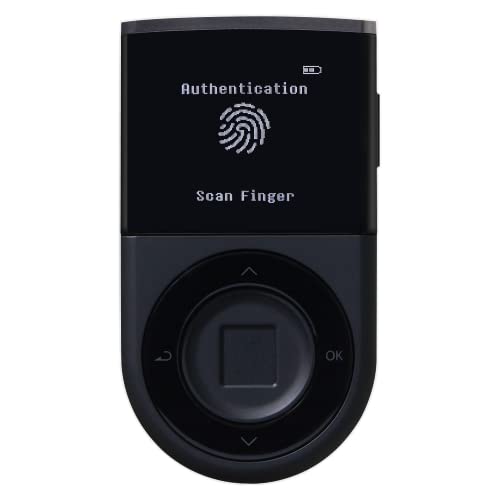
D'CENT Hardware Wallet | Biometric Cold Storage, Bluetooth, Multi-Crypto
- Secure Element with Fingerprint: EAL5+ certified chip with biometric protection
- Supports 4900+ Assets: Compatible with over 100 blockchains and tokens
- Bluetooth Mobile Management: Tap-to-sign via D'CENT app for easy control
As an affiliate, we earn on qualifying purchases.
As an affiliate, we earn on qualifying purchases.
Recent Trends in AI and Digital Security Flaws
Over the past few years, AI has increasingly been used to assist in code review, vulnerability detection, and threat analysis. Despite these advancements, the recent hardware wallet breach demonstrates that AI-assisted audits are not infallible; the flaw in the firmware went unnoticed even after an AI-aided review. Historically, security flaws in hardware and software have been exploited by human hackers, but the scale and speed of this attack suggest AI's growing role in both offense and defense.
"This is the sober reality of a new AI paradigm, where AI-assisted code review can surface latent bugs faster than the industry's most seasoned experts."
— Rodolfo Novak, CEO of Coinkite
Unclear Role of AI in the Attack's Execution
There is no concrete evidence that AI directly executed or facilitated the attack. While experts suspect AI's involvement given the attack's speed and scale, the specific use of AI remains unconfirmed. The precise mechanisms and whether AI tools were employed at any stage are still under investigation.
Next Steps in Securing Hardware and AI Integration
Security researchers and hardware manufacturers will likely intensify efforts to audit firmware with AI tools, aiming to prevent similar vulnerabilities. Additionally, the incident will fuel discussions on establishing standards for AI-assisted security reviews and the responsible integration of AI into critical infrastructure. Ongoing investigations will seek to clarify AI's exact role in this breach and develop strategies to mitigate future risks.
Key Questions
Could AI have prevented this hardware wallet breach?
AI-assisted audits may improve detection of vulnerabilities, but this incident shows they are not foolproof. The breach resulted from a human engineering error that AI tools failed to catch, highlighting the need for combined human and AI review processes.
Is AI likely to replace traditional cybersecurity methods?
AI is expected to augment, not replace, existing security measures. Its ability to analyze large datasets quickly can enhance threat detection, but reliance solely on AI could introduce new vulnerabilities.
What does this mean for the future of digital asset security?
This event underscores the importance of multi-layered security approaches, including rigorous testing, AI-assisted reviews, and human oversight, to safeguard digital assets against increasingly sophisticated threats.
Are hardware wallets still safe to use?
Hardware wallets remain one of the most secure options for storing digital assets when properly maintained and regularly updated. However, users should stay informed about vulnerabilities and follow best security practices.
Will AI make security breaches more common?
AI could enable both defenders and attackers to act more rapidly and at larger scale. While it has the potential to improve security, it also lowers the barrier for malicious actors to exploit vulnerabilities.
Source: ThorstenMeyerAI.com