
📊 Full opportunity report: The SSD Squeeze: Why Storage Joined the Party on ThorstenMeyerAI.com — validation score, market gap, and execution plan.

Prime made for students and young adults
- Fast, free delivery for dorm and study essentials
- Prime Video and Amazon Music included
- Member-only deals
TL;DR
Storage prices are rising sharply in 2026 due to supply shortages driven by AI’s massive storage needs and wafer competition. Industry leaders are prioritizing high-margin enterprise sales, causing shortages and price hikes across consumer and industrial markets.
Storage prices are surging in 2026, driven by a combination of supply shortages and increasing demand from artificial intelligence applications, according to industry sources. This marks a significant change from previous years, where storage costs generally declined, making high-capacity drives more affordable. The current market conditions are affecting both enterprise and consumer SSD markets, with prices increasing notably.
Industry reports indicate that enterprise SSD contract prices increased by a record 53–58% in the first quarter of 2026. Major flash manufacturers such as Samsung, SK Hynix, and Micron have scaled back wafer production targets, citing higher margins from existing scarcity rather than expanding capacity. Micron has admitted it can only meet about 55–60% of its main customer demand, and Phison has sold out its entire 2026 production, prioritizing high-margin server clients.
Simultaneously, consumer drives have experienced price increases, with some models seeing prices double or triple. PC manufacturers are adjusting storage configurations in new models. Industrial and automotive sectors are also affected, with lead times exceeding 20 weeks, and some QLC-based storage components are backordered for up to two years. The overall NAND market is forecasted to grow over 100% in revenue in 2026, reflecting increased demand driven by AI applications that require substantial storage capacity.
The SSD squeeze: storage joined the party
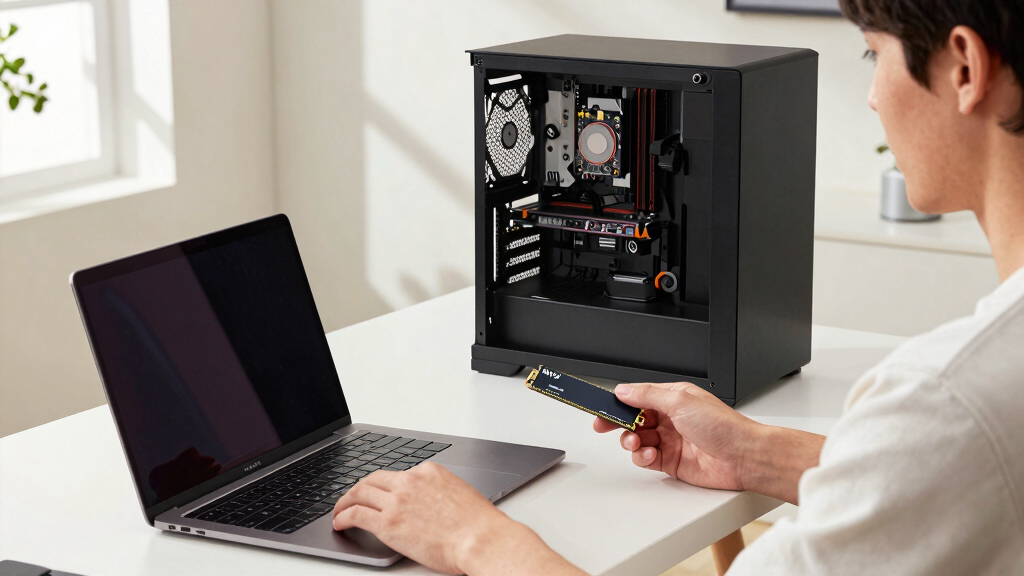
Storage was the last cheap thing in computing. Not anymore — a 2TB NVMe that was $120–150 in 2024 now lists at $300–480. And this time flash isn’t only collateral damage: AI eats storage directly.
both ways
Flash got hit twice — once as collateral sharing fabs with HBM, once directly as AI inference turned fast storage into something it consumes by the petabyte. That second force won’t fade; it grows with every model, every RAG pipeline, every cache that must live somewhere fast. Buy what you need now; favor TLC with DRAM cache, don’t overpay for Gen 5, watch for counterfeits. Relief isn’t forecast before late 2027. When the cheapest component in computing has a two-year waitlist, “commodity” no longer fits. Next: The High-End PC & Workstation Tax.
Impacts of Rising Storage Costs on the Tech Industry
The increase in storage prices indicates shifts within the supply chain, influenced by AI’s growing demand for high-capacity NAND flash. This trend can impact various markets, including enterprise servers and consumer devices, potentially leading to delays in product launches and higher costs for end-users. The current supply constraints are partly due to manufacturers prioritizing higher-margin products, which may prolong shortages and sustain elevated prices.
As an affiliate, we earn on qualifying purchases.
2026 NAND Market Disruptions and Industry Response
Over the past decade, NAND flash prices declined steadily, making high-capacity storage more accessible. However, recent developments have altered this trend. The same manufacturing facilities producing DRAM and HBM are now heavily contested, with companies shifting focus toward high-margin HBM and enterprise memory. This has led to reduced NAND output, compounded by the rapid growth in AI storage needs. AI models, particularly in inference tasks, require large volumes of fast flash storage, further increasing demand. Industry experts note that building new manufacturing facilities typically takes two to three years, and current capacity increases are insufficient to meet the surging demand, resulting in record contract prices and shortages.
“Our adjustments to wafer production targets to focus on high-margin products have influenced the current supply situation.”
— Samsung memory division spokesperson
Extent of Market Manipulation or Genuine Shortage
While industry experts agree that supply constraints are real, there is ongoing discussion about the extent to which current price increases are driven by actual shortages versus strategic capacity management aimed at maintaining margins. With a limited number of firms controlling much of the supply and prioritizing high-margin sales, some analysts suggest that market dynamics may be influenced by deliberate supply management, potentially prolonging shortages beyond what supply and demand fundamentals would suggest.
Future Capacity Expansion and Market Stabilization Expectations
Industry analysts anticipate that new manufacturing facilities will require two to three years to become operational, which suggests that shortages and elevated prices could persist into 2026 and possibly into 2027. Buyers are advised to monitor capacity expansion plans and to assess their actual storage requirements carefully. Staying informed about industry developments will be important for understanding when supply conditions might improve.
Key Questions
Why are SSD prices rising so rapidly in 2026?
Prices are increasing due to a combination of supply shortages caused by wafer competition and AI’s growing demand for high-capacity storage, along with manufacturers prioritizing high-margin products over capacity expansion.
How is AI driving storage demand?
AI applications, especially in inference and vector database querying, require large amounts of fast NAND flash. High-end AI GPUs and servers can need tens to hundreds of terabytes of storage, significantly increasing demand.
Will new manufacturing capacity solve the storage shortage?
While new fabs are planned, they are expected to take two to three years to become operational, so shortages and high prices are likely to continue in the near term.
Are consumers affected more than enterprise users?
Consumers are experiencing higher drive prices and reduced storage options, while enterprise and industrial sectors face longer lead times and more significant shortages, especially for specialized flash types.
Source: ThorstenMeyerAI.com
Halloween Picks
halloween
As an affiliate, we earn on qualifying purchases.