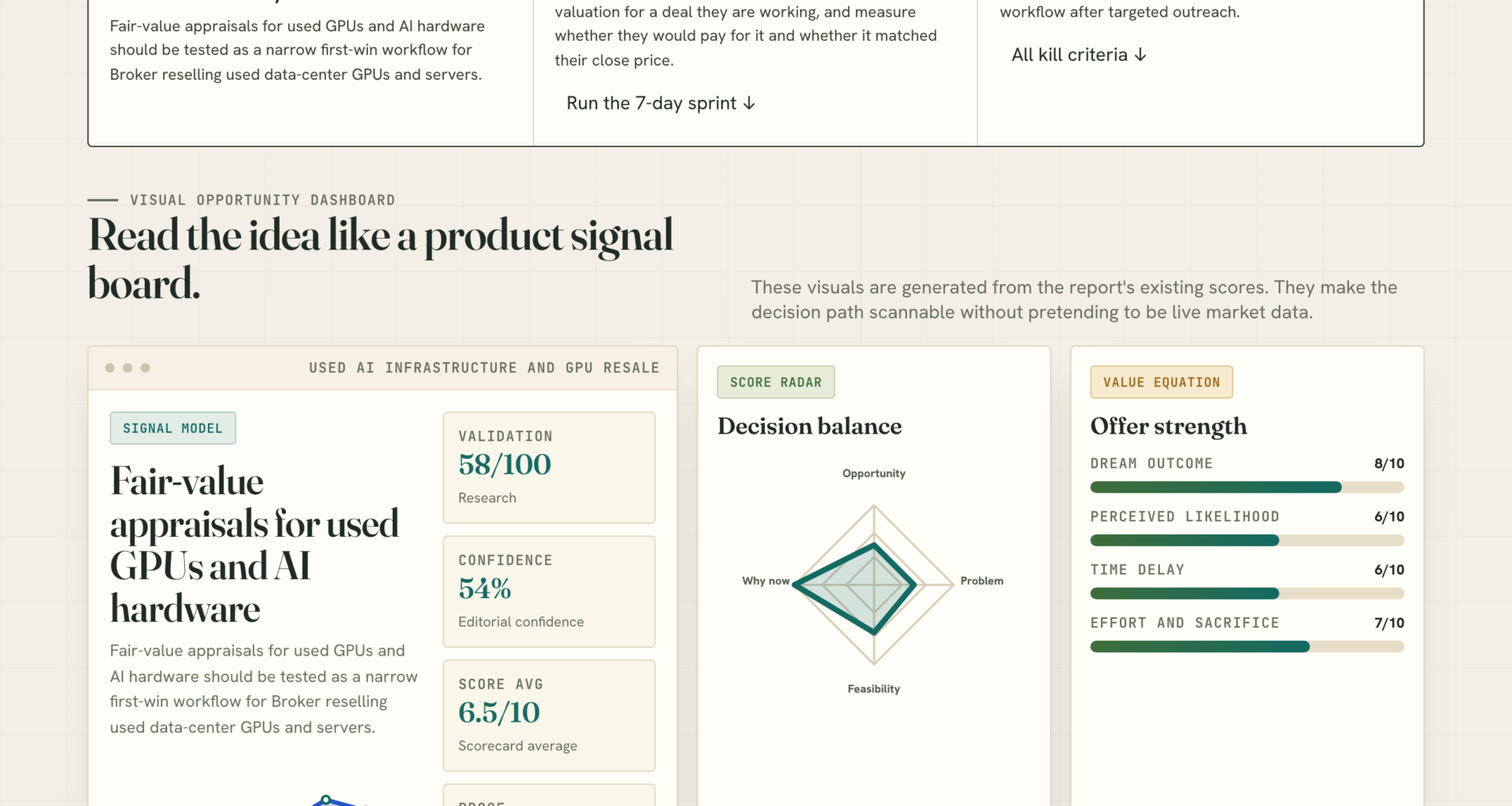

📊 Full opportunity report: Fair-value appraisals for used GPUs and AI hardware on IdeaNavigator AI — validation score, market gap, and execution plan.

Prime made for students and young adults
- Fast, free delivery for dorm and study essentials
- Prime Video and Amazon Music included
- Member-only deals
TL;DR
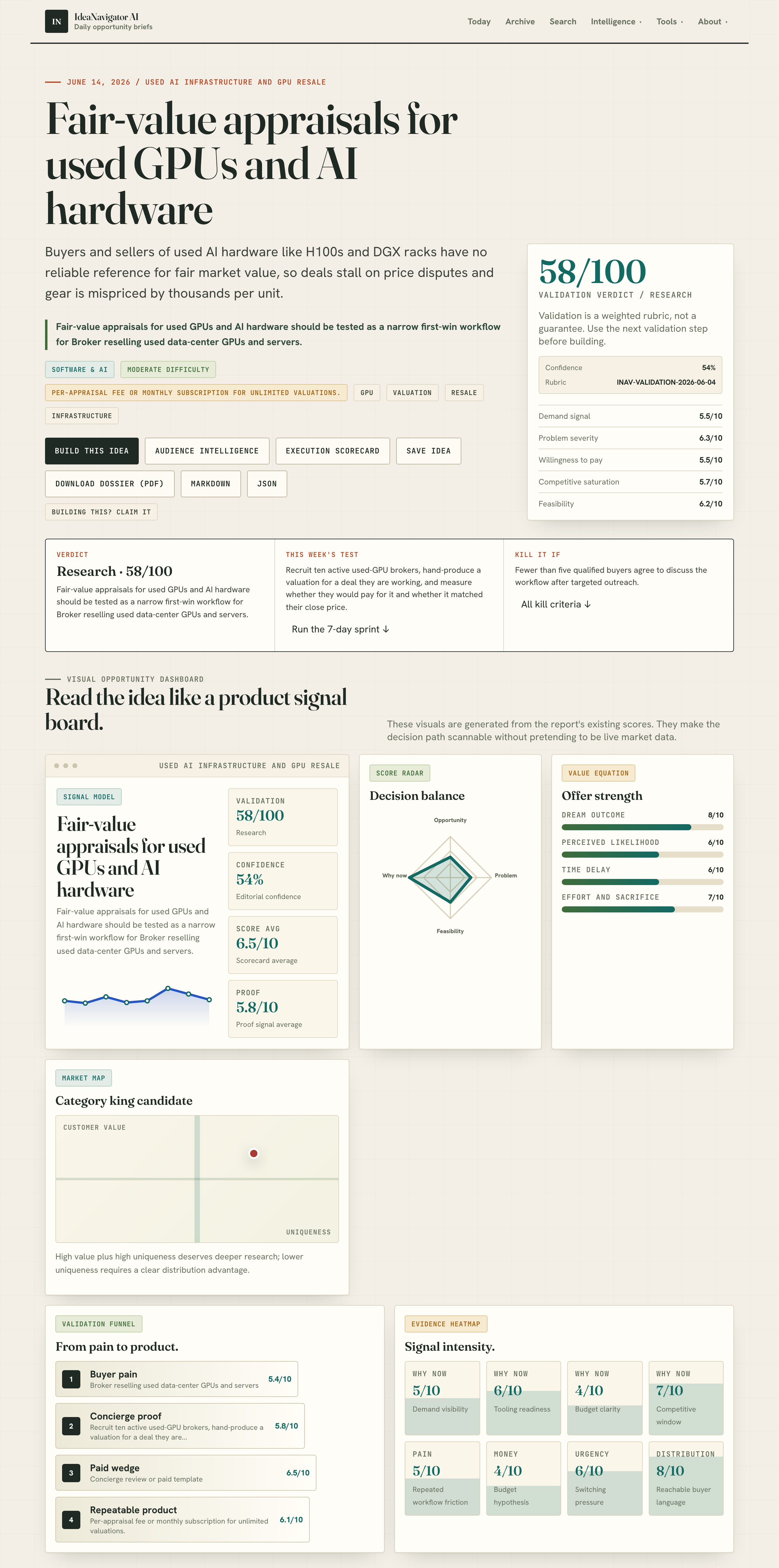
Developers propose a manual fair-value appraisal method for used GPUs and AI hardware to improve pricing transparency in secondary markets. This aims to reduce disputes and mispricing, with validation ongoing among active brokers.
A new manual valuation tool for used data-center GPUs and AI hardware is being tested to establish fair market prices, addressing a key challenge for brokers in the secondary market.
Market participants, including brokers reselling used AI hardware like H100s and DGX racks, face difficulties in determining accurate prices due to a lack of transparent benchmarks. This often leads to stalled deals and significant mispricing—sometimes thousands of dollars per unit.
The proposed solution is a manual valuation sheet where brokers input hardware details such as model, condition, and quantity. The tool then provides a curated fair-value range based on three recent comparable sales from public listings. This approach aims to create a reliable reference point, reducing disputes and improving deal efficiency.
Initial validation involves recruiting ten active used-GPU brokers to test the valuation method against their current deal prices. The goal is to assess whether brokers would pay for the service and if the valuation aligns with their close prices, serving as a proof of concept for broader adoption.
Impact of Standardized Fair-Value Appraisals on GPU Resale
This initiative could significantly improve pricing transparency in the used AI hardware market, enabling brokers to price gear more accurately and efficiently. It may reduce deal stalls caused by disagreements over value and prevent large mispricings that can impact margins. As hyperscalers and labs continue to refresh their GPU fleets rapidly, a reliable valuation method becomes increasingly important for secondary market stability and growth.
Products Worth Considering

Apple iPad Air 11-inch (M2), 512GB, Wi-Fi, Space Gray

Amazon Kindle Scribe Colorsoft 64GB (1st Generation)

Apple iPad Air 13-inch (M4), 128GB, Wi-Fi 7, Space Gray
As an affiliate, we earn on qualifying purchases.
Secondary Market Dynamics and Lack of Price Benchmarks
The secondary market for used data-center GPUs and AI hardware has grown rapidly as large organizations replace hardware more frequently. However, buyers and sellers lack a consistent reference for fair value, leading to disputes and mispricing. Currently, prices are often determined through private negotiations or public listings without standardized benchmarks, which hampers deal efficiency.
Recent large-scale hardware refreshes by hyperscalers and research labs have flooded the secondary market with recent-generation gear, intensifying the need for transparent valuation tools. The proposed manual appraisal method offers a practical first step toward establishing such benchmarks, with potential to evolve into automated solutions in the future.
“This manual valuation approach could provide the first reliable reference point for fair pricing in the used GPU market, reducing disputes and mispricing.”
— an anonymous researcher
Unconfirmed Effectiveness and Adoption Timeline
It is not yet clear how accurately the manual appraisal will reflect true market value, or how quickly brokers will adopt this tool. The validation process is ongoing, and broader industry acceptance remains uncertain at this stage.
Next Steps for Validation and Broader Implementation
The initial validation with ten brokers is underway, with results expected in the coming months. If successful, developers plan to refine the tool, expand testing, and consider automated versions. Industry adoption will depend on demonstrated accuracy and user feedback, shaping future market standards.
Key Questions
How will this valuation tool improve GPU resale deals?
It will provide a transparent, curated fair-value range based on recent comparable sales, helping brokers price gear more accurately and reduce disputes.
Is this approach automated or manual?
The current version is manual, involving input of hardware details to generate a fair-value estimate. Automation may be considered later based on validation results.
Will this method work for all types of AI hardware?
Initially, it focuses on popular data-center GPUs like H100s and DGX racks, but the framework could be adapted for other hardware types as the market develops.
When will this valuation method be widely available?
Broader industry adoption depends on validation outcomes; if successful, a more automated version could be introduced within the next year.
What are the main challenges facing this initiative?
The key challenges include ensuring valuation accuracy, achieving industry trust, and integrating the tool into existing broker workflows.
Source: IdeaNavigator AI