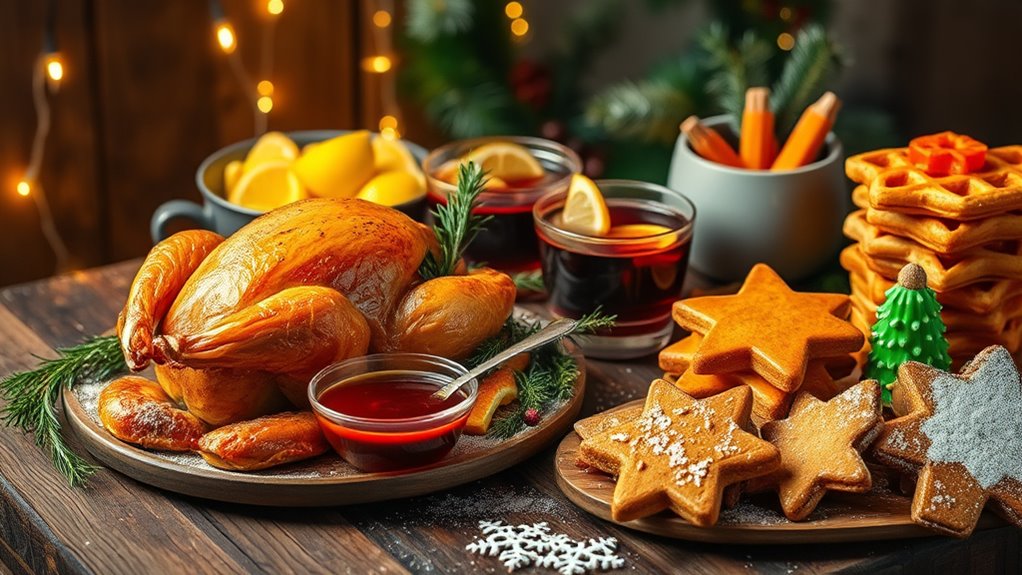

During winter holidays worldwide, you experience a rich tapestry of culinary traditions that celebrate culture and community. From comforting drinks like mulled wine and hot apple cider to regional desserts like panettone and bûche de Noël, these foods evoke warmth, nostalgia, and shared memories. They symbolize renewal, togetherness, and festive spirit across different regions. Exploring these seasonal treats reveals how food unites people in joyful celebration—there’s much more to discover behind every dish and flavor.
Key Takeaways
- Winter holiday foods reflect diverse cultural traditions, showcasing unique regional ingredients and festive culinary practices worldwide.
- Traditional beverages like mulled wine, hot apple cider, and eggnog warm bodies and spirits during seasonal gatherings.
- Regional desserts such as panettone, bûche de Noël, and lussekatter symbolize hope, community, and cultural identity.
- Foods serve as symbols of warmth, family unity, and renewal, preserving cultural stories and fostering shared memories.
- Celebrating local culinary customs during winter promotes global unity, joy, and the rich diversity of seasonal traditions.
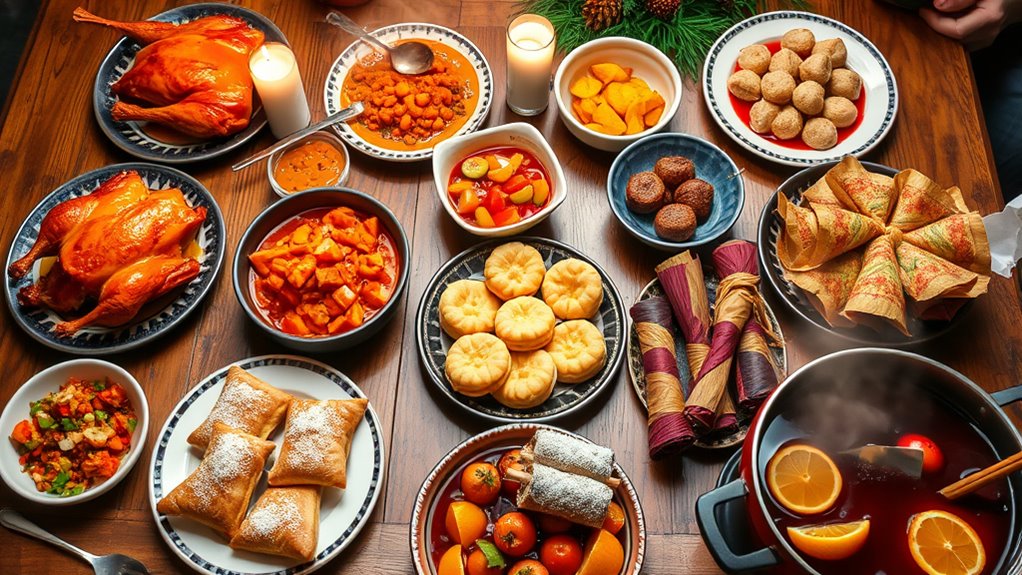
Have you ever wondered what makes winter holiday foods so special? It’s not just about the ingredients—it’s about the rich traditions, the shared memories, and the unique flavors that bring people together during this festive season. One of the most mesmerizing aspects of winter holiday cuisine is the array of traditional festive beverages. These drinks often carry centuries of history, passed down through generations, and are crafted to warm both body and spirit. Think of spiced mulled wine in Germany, hot apple cider in the United States, or eggnog in North America. These beverages aren’t just drinks; they’re rituals that evoke nostalgia and celebration. They often feature warm spices like cinnamon, cloves, and nutmeg, which create a comforting aroma that fills the air during winter gatherings. Sipping these drinks, you feel connected to a long-standing tradition that turns an ordinary moment into a special occasion. Many of these culinary traditions involve specific ingredients and preparation methods that have been preserved over centuries.
Alongside beverages, regional dessert specialties play an essential role in defining seasonal culinary traditions. These desserts reflect local ingredients, climate, and cultural influences, making each region’s holiday treats uniquely memorable. For example, in Italy, you might indulge in panettone, a sweet bread studded with candied fruits and raisins, often enjoyed with a cup of coffee or a glass of festive wine. In France, bûche de Noël, a yule log cake decorated to resemble a real log, symbolizes warmth and family unity. In Scandinavia, you might savor lussekatter, saffron buns that fill the bakery with a golden hue and a fragrant aroma. These regional desserts are more than just sweet treats—they’re symbols of hope, renewal, and community. They often involve special preparation methods or secret recipes that add an element of anticipation and excitement to holiday festivities.
These foods, whether warm beverages or intricate desserts, serve as a delightful reminder of the season’s spirit. They celebrate local customs while fostering a sense of unity and joy. As you partake in these culinary traditions, you’re not just enjoying a taste; you’re embracing a cultural story that connects past and present. The diversity of winter holiday foods worldwide highlights how universal the desire to gather, share, and celebrate truly is. So, next time you sip a traditional festive beverage or bite into a regional dessert specialty, remember—you’re part of a global tapestry woven with flavors, memories, and cultural pride that make this season so uniquely enchanting.

Soeos Mulled Wine Spice Kit 2.96 oz (0.74 oz*4), Mulling Spices for Wine, Apple Cider, and Tea, Mix of Six Premium Mulling Spices, Including Cinnamon, Star Anise, Cloves, Rosemary, Bay Leaf, and Nutmeg
PERFECT BLEND: Our Mulled Spice has Six Premium Spices, Cinnamon Stick, Star Anise, Nutmeg, Cloves, Rosemary, Bay Leaf.
As an affiliate, we earn on qualifying purchases.
As an affiliate, we earn on qualifying purchases.
Frequently Asked Questions
How Do Winter Holiday Foods Vary Across Different Cultures?
You’ll notice winter holiday foods vary greatly across cultures due to regional ingredient use and traditions. In some places, hearty roasts and pies are popular, while others favor sweet treats like cookies and candies. Cultural food variations reflect local flavors and customs, making each celebration unique. You can enjoy a diverse array of dishes, from spicy stews to delicate desserts, highlighting how regional ingredients shape festive menus worldwide.
What Are the Health Benefits of Traditional Winter Holiday Ingredients?
Oh, joy! Indulge in those holiday treats knowing they boost your health. Traditional winter ingredients like cinnamon, nuts, and citrus pack nutritional benefits, including essential vitamins and minerals. Plus, their antioxidant properties help fight off winter blues and colds. So, while you enjoy festive feasts, remember you’re also fueling your immune system and enhancing overall wellness—who knew holiday guilt could be so beneficial?
How Do Seasonal Ingredients Influence Holiday Recipes Worldwide?
Seasonal ingredients influence holiday recipes worldwide by inspiring adaptations that highlight regional flavors. You can incorporate local produce, spices, and ingredients, creating unique dishes that reflect cultural traditions. These adaptations foster a sense of authenticity and celebrate regional culinary identities. By embracing regional flavor influences, you make holiday meals more meaningful and diverse, allowing you to enjoy a rich tapestry of global winter culinary traditions that celebrate the season’s bounty.
Are There Any Common Dietary Restrictions in Winter Holiday Cuisines?
You’ll find common dietary restrictions like vegetarian options and gluten-free adaptations across winter holiday cuisines. Many recipes are modified to accommodate vegetarians or those avoiding gluten, ensuring everyone can enjoy the festivities. You might see plant-based dishes replacing meat or gluten-free baked goods. By offering these options, hosts make sure all guests feel included and can indulge in traditional flavors without compromising their dietary needs.
How Have Modern Culinary Trends Impacted Traditional Holiday Foods?
You might think traditional holiday foods are untouched, but modern trends have definitely shaken things up. Fusion cuisine and restaurant adaptations now blend classic recipes with new flavors, making holiday dishes more inventive and diverse. Ironically, these innovations often respect tradition while pushing boundaries, transforming familiar dishes into exciting culinary experiences. You’ll find seasonal favorites reimagined with global influences, proving that even holiday traditions evolve to satisfy contemporary tastes.

Keurig Mott's Hot Apple Cider, Keurig Single Serve K-Cup Pods, Flavored K Cups, 24 Count
Take a sip and let the flavor warm you!
As an affiliate, we earn on qualifying purchases.
As an affiliate, we earn on qualifying purchases.
Conclusion
As you savor these winter holiday foods, remember they symbolize more than just taste—they embody warmth, unity, and tradition. Each dish is a beacon of hope and connection, lighting the way through the coldest months. Let these flavors remind you that, like the seasons, our bonds grow stronger with shared memories and festive cheer. Embrace the richness of these culinary traditions, and carry their symbolic warmth into your heart long after the holidays fade.

Webake Yule Log Cake Pan Silicone Yule Log Cake Mold with 2 Bark Mat, Christmas Cake Mold for Cake, Jello, Dessert, Great for Christmas
【Premium Material】: Webake silicone yule log cake pan id made of food-grade silicone, which is BPA-free, durable, soft,…
As an affiliate, we earn on qualifying purchases.
As an affiliate, we earn on qualifying purchases.

Bauducco Classic Panettone, 24.0 oz (Pack of 1) – Soft and Moist Bread with Candied Fruit and Raisins – Traditional Italian Slow Rise Dough Recipe
MOIST, FRESH, READY TO EAT: Bauducco Classic Panettone is known for its moist, fresh, and aromatic qualities, making…
As an affiliate, we earn on qualifying purchases.
As an affiliate, we earn on qualifying purchases.