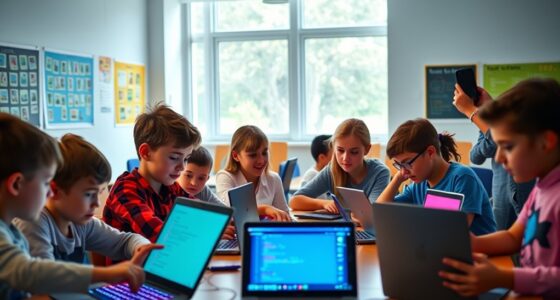

By 2025, you’ll likely experience personalized learning through AI tutors that adapt to your strengths and pace, making studying more engaging. Hybrid classrooms will let you attend in person or online, offering flexibility and greater access. These blended models combine technology and face-to-face teaching, creating a customized, interactive environment. As these trends grow, understanding how they reshape education can give you an edge—keep exploring to see what’s next.
Key Takeaways
- AI tutors will provide personalized, real-time assistance, adapting content to individual student needs for more effective learning.
- Hybrid classrooms will blend in-person and remote learning, increasing accessibility and flexibility for diverse student populations.
- Virtual reality will enhance engagement by offering immersive, experiential learning environments tailored to individual interests.
- Advanced visual technologies will improve display quality, making digital content more realistic and aiding spatial and visual skill development.
- Data-driven AI integration will enable continuous progress monitoring and customized interventions within hybrid learning settings.
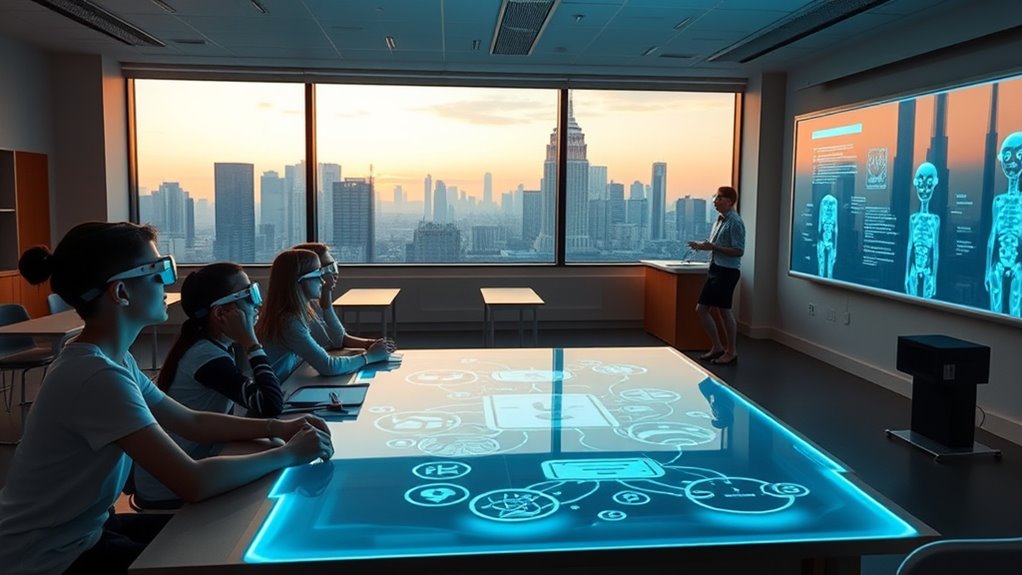
As we approach 2025, education is undergoing rapid transformation driven by technological advancements and shifting societal needs. One of the most significant changes you’ll notice is the rise of personalized learning. Instead of a one-size-fits-all approach, educational experiences are now tailored specifically to each learner’s strengths, interests, and pace. Adaptive platforms analyze your interactions and performance in real-time, adjusting content and difficulty to keep you engaged and challenged without feeling overwhelmed. This customization not only boosts motivation but also enhances comprehension, making learning more effective and enjoyable. Virtual reality (VR) plays a crucial role in this shift, offering immersive experiences that bring abstract concepts to life. Imagine exploring the depths of the ocean or walking through ancient cities—all from your classroom or home. VR creates a sense of presence that textbooks or videos simply can’t match. It allows you to practice complex skills in a safe, controlled environment, whether you’re dissecting a virtual frog or manipulating 3D models of molecules, fostering deeper understanding and retention. These tools are making education more engaging, especially for visual and kinesthetic learners who thrive on interactive experiences. Additionally, the integration of advanced visual technologies in education emphasizes the importance of color accuracy and high-quality displays to ensure clear, detailed visuals in virtual environments.
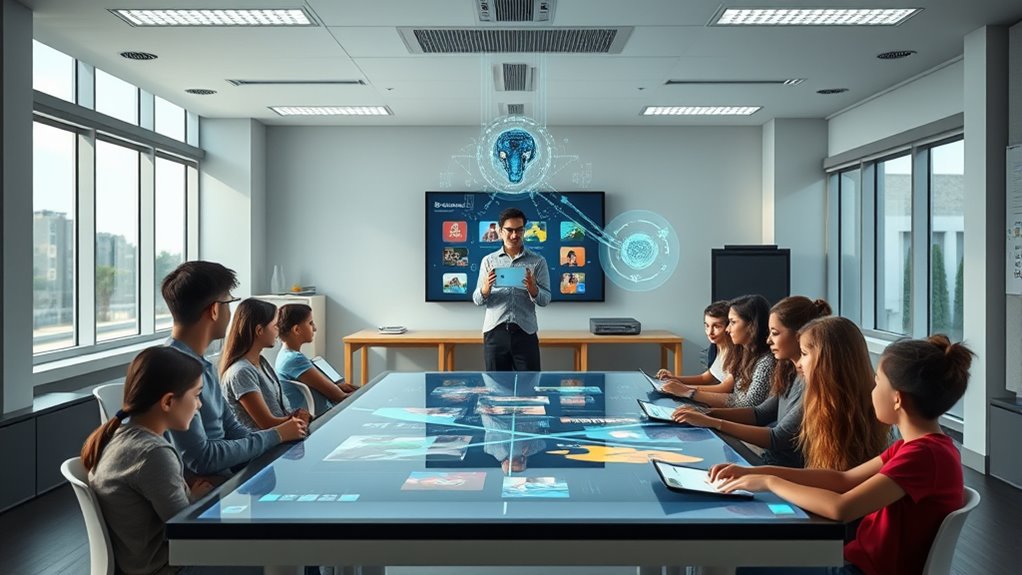
In addition to personalized learning and VR, the integration of hybrid classrooms is transforming how you access education. This model combines face-to-face instruction with online learning, giving you flexibility and control over your schedule. You might attend physical classes some days and switch to remote lessons on others, all while maintaining a seamless experience. This blending of in-person and digital learning simplifies access, especially for students in remote or underserved areas, ensuring more equitable opportunities. Teachers are leveraging data from digital platforms to monitor your progress more closely, allowing for timely interventions and tailored support. This approach promotes a more student-centered environment, where your individual needs and preferences shape your learning journey. Furthermore, hybrid classrooms foster collaboration through virtual breakout rooms, online discussions, and shared digital projects, encouraging you to connect with classmates regardless of physical location. As technology advances, these hybrid models will become even more sophisticated, incorporating AI-driven tools that personalize content further and facilitate real-time feedback.
Frequently Asked Questions
How Will AI Tutors Adapt to Different Learning Styles?
AI tutors will adapt to your learning styles by implementing personalization strategies and adaptive learning techniques. They analyze your responses, pace, and preferences to customize lessons in real-time, ensuring you stay engaged and challenged. As you progress, these tutors refine their approach, addressing your strengths and weaknesses. This dynamic adaptation helps you learn more efficiently, making education tailored to your unique needs and boosting your overall understanding.
What Are the Privacy Concerns With Hybrid Classroom Technologies?
You should be aware that hybrid classroom technologies raise privacy concerns, especially regarding data security and student privacy. As you use these tools, your personal information and learning data could be vulnerable to breaches or misuse. It’s essential to promote strong security measures and transparent policies from providers to protect student privacy and ensure that sensitive data remains confidential and secure.
Will AI Tutoring Replace Human Teachers Entirely?
They say “don’t put all your eggs in one basket,” and that’s true here. AI tutors won’t replace human teachers entirely because AI, despite its empathy and ethical programming, lacks the nuanced understanding and emotional connection only humans provide. You’ll still need teachers for guidance, mentorship, and inspiration, while AI can support personalized learning. Together, they create a balanced approach, enhancing education without replacing the human touch.
How Accessible Will Hybrid Classrooms Be Worldwide?
Hybrid classrooms will become more accessible worldwide, but your experience depends on global infrastructure and digital equity. In regions with strong internet and technology access, you’ll find these classrooms effective and inclusive. However, in areas lacking reliable connectivity or devices, access remains limited. As investments grow and policies improve, you’ll see increased opportunities for everyone, narrowing the digital divide and making hybrid learning a viable option globally.
What Training Will Teachers Need for AI Integration?
You’ll need targeted teacher training to effectively integrate AI into your classroom. This includes understanding AI tools, data privacy, and digital literacy. Additionally, you’ll focus on curriculum development that incorporates AI-driven resources, ensuring lessons remain engaging and inclusive. Staying updated on emerging technologies and participating in professional development will help you adapt quickly. This proactive approach guarantees you can confidently leverage AI to enhance student learning experiences.
Conclusion
As you look ahead to 2025, embracing AI tutors and hybrid classrooms could transform your learning experience. These innovations promise personalized support and flexible environments that cater to your unique needs. Will you seize the opportunity to adapt and thrive in this rapidly evolving educational landscape? The future of learning is in your hands—are you ready to embrace the change and unbolt your full potential?