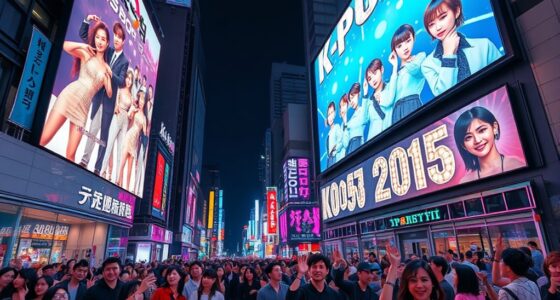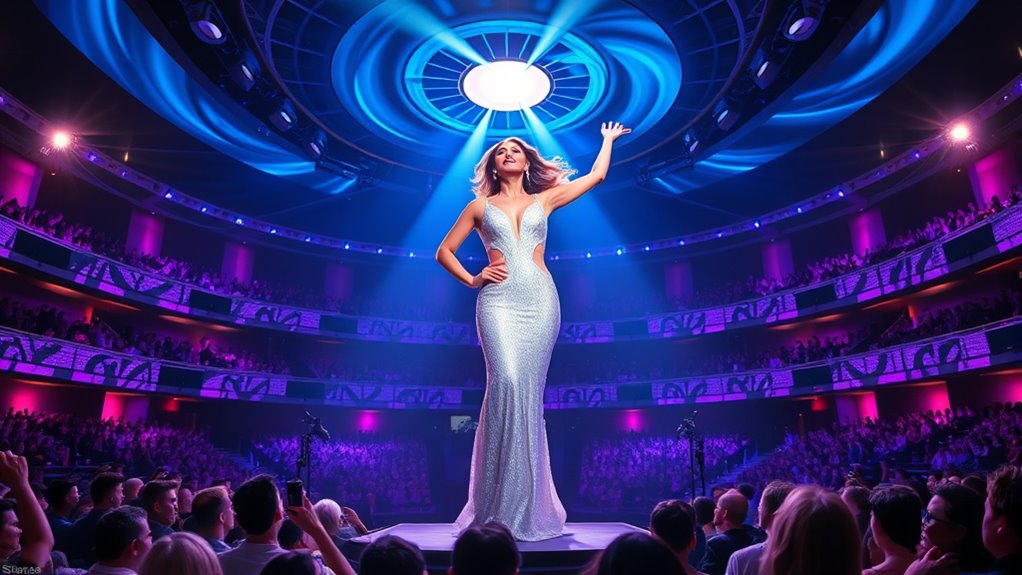

Celebrity holograms are already transforming live entertainment by enabling virtual stars to perform on stage, creating immersive experiences for fans. These digital reproductions can mimic movements, voices, and expressions, making it feel like you’re watching a real performance. While some worry about the authenticity and ethics, holograms are becoming more advanced and accessible. If you want to explore how this technology might shape future concerts, there’s plenty more to discover.

Prime made for students and young adults
- Fast, free delivery for dorm and study essentials
- Prime Video and Amazon Music included
- Member-only deals
Key Takeaways
- Holographic technology enables virtual stars to perform live-like shows, often in real-time or pre-recorded, creating immersive concert experiences.
- Advances in hologram realism and interactivity suggest virtual stars could perform live at multiple venues simultaneously.
- Ethical debates focus on authenticity, with some questioning whether hologram performances can truly replicate genuine live shows.
- While some virtual stars already perform in special events, widespread live hologram concerts depend on technological and industry developments.
- Future trends indicate that digital resurrection may complement traditional concerts, expanding how and where celebrities perform.

Celebrity holograms have transformed the way fans experience their favorite stars, bringing performances back to life long after their physical presence has faded. This technology has opened the door to virtual concerts where artists, either physically absent or long gone, can perform on stage through stunning digital resurrection. As you witness these holographic shows, it becomes clear that the line between reality and digital fantasy is blurring, allowing you to enjoy a concert experience that feels almost real.
The idea of virtual concerts powered by hologram technology is mesmerizing because it offers a new way to connect with icons from the past. Imagine attending a concert where a legendary singer, long deceased, performs as if they were still alive, singing your favorite hits. These digital resurrection performances aren’t just novelties—they serve as a bridge to the past, giving fans a chance to relive moments that might have otherwise been lost forever. The holograms are carefully designed to replicate the artist’s movements, expressions, and voice, creating an immersive experience that draws you into a world where the boundaries of time are erased.
Furthermore, the prospect of live holographic performances raises questions about the future of entertainment. While some see it as an innovative way to keep legendary artists alive, others wonder if it could diminish the authenticity of live music. However, the technology’s potential to enhance fan engagement is undeniable. You might find yourself attending a concert where a virtual star appears on stage, performing alongside current artists, or in a setting where the past and present seamlessly coexist. This digital resurrection offers a way for fans to experience legendary performances without the constraints of physical limitations or scheduling conflicts.
Of course, these hologram concerts aren’t without controversy. Critics argue that relying on digital resurrection could commodify artists’ images and diminish genuine human performances. Yet, as a fan, you’re given a unique opportunity to see once-in-a-lifetime shows that weren’t possible before. Virtual concerts featuring holograms could become a staple in entertainment, especially as technology advances and becomes more accessible. You might soon find yourself attending a concert where the artist appears in multiple venues simultaneously or even performing in locations they never physically visited.
In the end, the evolution of celebrity holograms and virtual concerts signifies a new era where digital resurrection keeps the magic alive, offering fans unforgettable experiences. Whether this technology will fully replace traditional live shows or complement them remains to be seen, but it’s clear that the future of entertainment will be shaped by these innovative holographic performances.
Top picks for "celebrity hologram virtual"
As an affiliate, we earn on qualifying purchases.
Frequently Asked Questions
How Do Hologram Performances Impact Artists’ Legacies?
Hologram performances profoundly impact artists’ legacies by enabling virtual resurrection, keeping their memory alive for new generations. You see, these digital recreations allow fans to experience concerts even after an artist’s passing, contributing to legacy preservation. However, you should also consider the ethical questions. While they honor artists’ contributions, they can sometimes blur the line between tribute and exploitation, affecting how their true legacy is perceived.
Can Holograms Replace Traditional Live Concerts Entirely?
While holograms offer a mesmerizing glimpse into digital nostalgia, they probably won’t fully replace traditional live concerts. You’ll still crave the thrill of real audiences, genuine interactions, and live energy. Virtual crowds can enhance experiences but lack the spontaneous magic of physical presence. Holograms serve as a fascinating supplement, not a complete substitute, preserving the essence of live music while embracing technological innovation.
What Are the Ethical Concerns Surrounding Hologram Technology?
You should consider the ethical concerns surrounding hologram technology, especially regarding privacy concerns and intellectual property. As a user or creator, you might worry about how personal data is collected and used, or if holograms infringe on artists’ rights. It’s important to guarantee that technology respects individual privacy and properly credits original creators, so that holograms enhance entertainment without crossing ethical boundaries.
How Do Fans Typically React to Hologram Performances?
Like Orpheus enchanted by his music, you find yourself captivated by hologram performances. Fans often experience intense emotional reactions, feeling a connection that transcends physical presence. This boosts fan engagement, sparking nostalgia or excitement. Some may feel uncomfortable, questioning authenticity. Overall, reactions vary, but holograms tend to evoke deep feelings, making fans both awe-inspired and contemplative about the future of live entertainment.
Will Hologram Technology Become More Affordable for Smaller Venues?
You might see hologram technology become more affordable for smaller venues as cost reduction efforts continue. Developers are working on making the technology more accessible and less expensive, which means you could soon enjoy live hologram performances without needing a big budget. As accessibility improves, smaller venues will likely adopt holograms, allowing you to experience virtual stars in more intimate and local settings, enhancing your entertainment options.
Conclusion
Imagine attending a concert where a legendary artist, long gone, takes the stage as a hologram, dazzling the crowd like a living legend. Just like that unforgettable moment, virtual stars are revolutionizing live entertainment, blending technology with memory. As holograms become more realistic, you might find yourself dancing alongside icons from the past, experiencing magic that’s almost as real as the artist themselves. The future of live shows is brighter—and more extraordinary—than you ever imagined.
Fall Picks
fall essentials
As an affiliate, we earn on qualifying purchases.