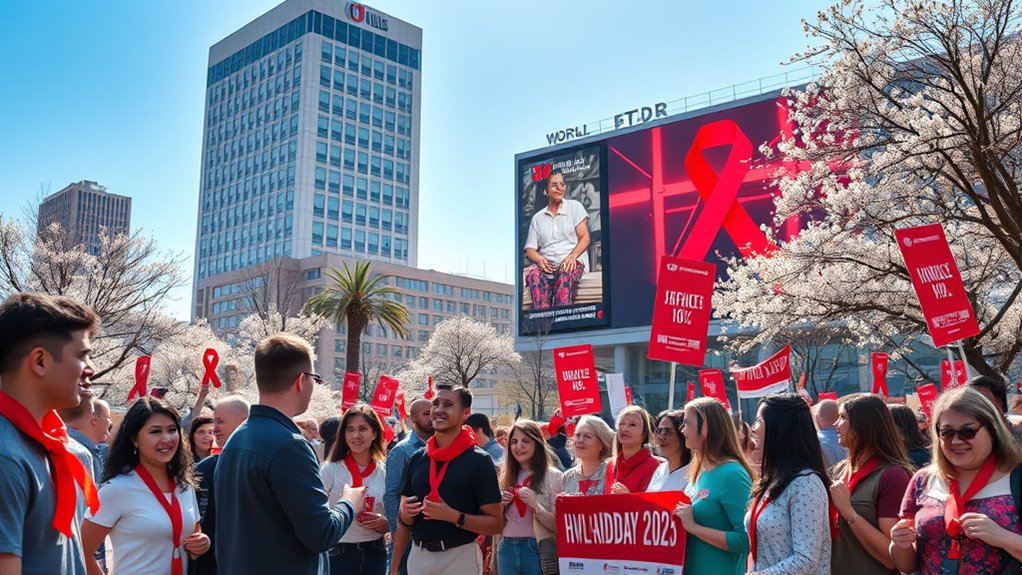

On World AIDS Day 2025, you’ll see important progress in HIV prevention, testing, and treatment. Significant strides have been made, but challenges like stigma and access gaps remain. Research advances bring hope with hopes for an effective vaccine and better therapies. Fighting social barriers is key to ending discrimination and improving care. If you keep exploring, you’ll discover how collective efforts are shaping the future of HIV/AIDS eradication.
Key Takeaways
- Significant progress has been made in HIV treatment access and prevention strategies worldwide.
- Stigma reduction remains a critical barrier, impacting testing, treatment, and community support efforts.
- Advances in vaccine research offer hope, but a fully approved HIV vaccine has yet to be developed.
- Early detection through expanded testing helps control transmission and improves health outcomes.
- Continued global collaboration and investment are essential to overcoming remaining challenges and ending AIDS by 2030.
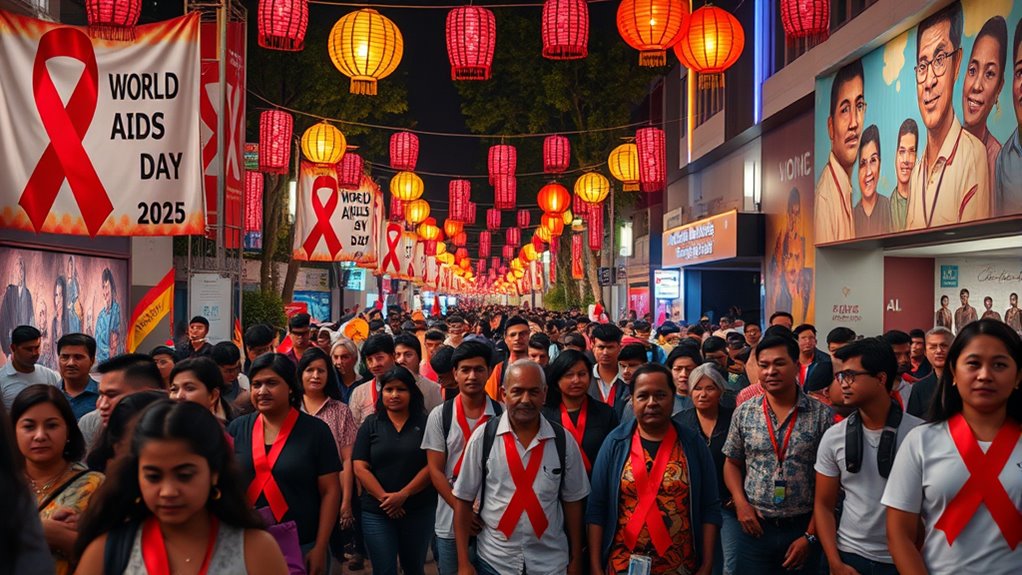
Every year on December 1st, people around the world come together to observe World AIDS Day, a crucial opportunity to raise awareness, fight stigma, and honor those affected by HIV/AIDS. This day reminds you of the importance of continued effort in combating HIV, not just through medical advances but also by addressing societal barriers. One of the biggest challenges remains stigma reduction. Despite progress, many individuals living with HIV still face discrimination, fear, and social exclusion. You can help by educating others, dispelling myths, and showing compassion. Reducing stigma is essential because it encourages more people to get tested, seek treatment, and share their experiences without fear. When stigma diminishes, communities become more supportive, and healthcare providers can deliver better, more inclusive care. These efforts are critical for improving the quality of life for those affected and for controlling the spread of the virus. Additionally, improving access to HIV testing services helps identify cases earlier and reduces transmission.
Simultaneously, vaccine development continues to be a pivotal focus in the fight against HIV. Scientists worldwide are making strides, exploring new approaches and refining existing ones to create an effective, accessible vaccine. Although a fully approved HIV vaccine remains elusive, ongoing research offers hope. A successful vaccine could dramatically reduce new infections, especially in regions hardest hit by the epidemic. You should recognize that vaccine development is a complex process, involving rigorous testing to ensure safety and efficacy. While progress might seem slow, every breakthrough brings us closer to a future where HIV can be prevented through immunization. In the meantime, prevention methods like PrEP, condom use, and regular testing remain essential tools in your arsenal. Education campaigns play a significant role here, empowering individuals to protect themselves and others.
As you reflect on the progress made and the challenges ahead this World AIDS Day, remember that your actions matter. Whether it’s advocating for better access to treatment, supporting research efforts, or simply fostering understanding within your community, you contribute to the global effort against HIV. The journey toward ending AIDS is ongoing, and every effort counts. Continued focus on stigma reduction will help break down barriers, allowing more people to live openly and access the care they need. Meanwhile, advancements in vaccine development promise a future where HIV transmission could be markedly curtailed. Your awareness and involvement are essential to turning these scientific and social advancements into real change. Together, with sustained effort, we can envision a world where HIV/AIDS is no longer a global health threat.
Frequently Asked Questions
How Has HIV Treatment Evolved Over the Past Decade?
Over the past decade, HIV treatment has seen major advancements. You now benefit from improved HIV medication options that are more effective and easier to take. Treatment breakthroughs include long-acting injectables, reducing daily pill burdens. These innovations help you maintain better viral suppression and improve your quality of life. Continuous research keeps pushing boundaries, making the fight against HIV stronger and more promising for everyone living with the virus.
What Innovative Prevention Methods Are Being Developed Currently?
Imagine a world where HIV prevention is so advanced, it feels like a superhero shield protecting you daily. You’re empowered by cutting-edge molecular diagnostics that catch infections early and digital outreach programs that reach you anytime, anywhere. These innovations are revolutionizing prevention, making it easier than ever to stay safe. With such tools, you’re at the forefront of a fight where HIV’s grip weakens, and hope grows stronger each day.
How Does Stigma Impact HIV Testing and Treatment Access?
Stigma creates significant social barriers, making you hesitant to get tested or seek treatment for HIV. It impacts mental health, leading to fear, shame, and isolation. When society stereotypes or discriminates, you might avoid healthcare services, delaying diagnosis and care. Addressing stigma is essential to improve access, ensuring you feel safe, supported, and empowered to take control of your health without judgment or fear.
What Role Do Community Organizations Play in HIV Prevention?
Community organizations play a crucial role in HIV prevention by fostering community engagement and providing peer support. You benefit from their outreach programs, which educate about safer practices and reduce stigma. They create safe spaces for conversations, encouraging testing and treatment adherence. By involving trusted peers, these groups make prevention efforts more relatable and effective, ensuring that more people access the resources and support they need to stay healthy and prevent HIV transmission.
Are There Any Promising Vaccines or Cures in Development?
Right now, vaccine research and cure development are making promising strides. Scientists are testing new vaccines that could better prevent HIV transmission, and some cure strategies show potential for eradicating the virus from the body. Although no definitive cure exists yet, ongoing clinical trials and innovative approaches give hope. You can stay informed and support this crucial research to help accelerate breakthroughs and bring us closer to ending HIV/AIDS.
Conclusion
As you reflect on World AIDS Day 2025, remember the words of Nelson Mandela: “It always seems impossible until it’s done.” Your efforts, awareness, and compassion are the keys to ending this fight. Though progress has been made, the path ahead still demands courage and unity. Together, like a beacon in the dark, you can help turn the tide against HIV, lighting the way toward a future where no one is left behind.