Around the world, Halloween blends ancient customs with modern fun. In the U.S., you’ll find costume parties and haunted houses, while Ireland and Scotland celebrate Samhain with bonfires and ghost stories. Mexico honors their ancestors during Día de los Muertos with vibrant parades and colorful altars. Japan hosts lively festivals, and the Philippines combine Halloween with All Souls’ Day, visiting cemeteries. Exploring these diverse traditions reveals how people connect with spirits, history, and community—keep going to discover more fascinating variations.
Key Takeaways
- Halloween customs vary globally, with traditions like costume parties in the U.S., bonfires in Ireland, and cemetery visits in the Philippines.
- Celtic festivals like Samhain influenced modern Halloween, emphasizing spirits, bonfires, and storytelling.
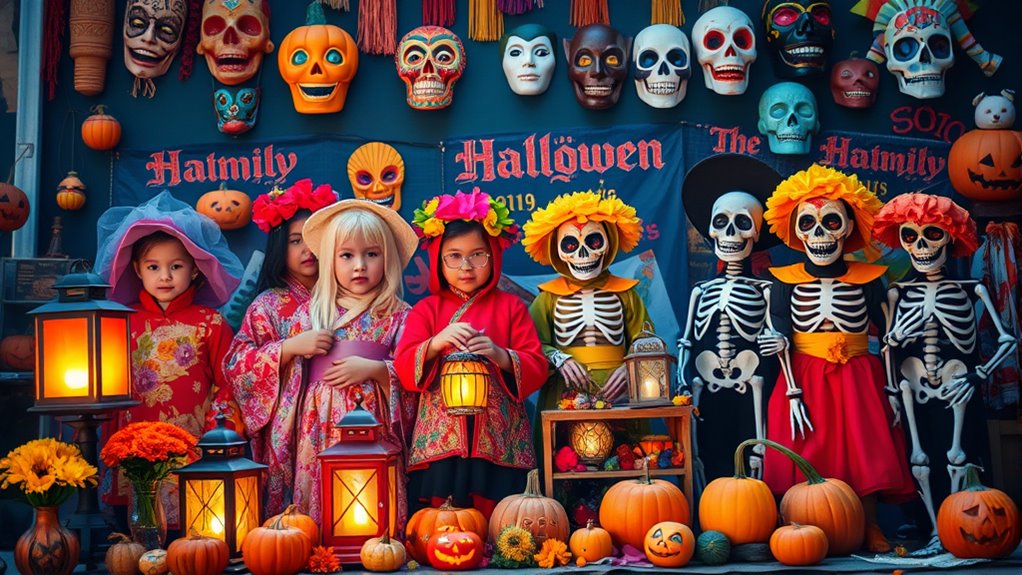
- Mexico’s Día de los Muertos involves colorful altars, parades, and honoring deceased loved ones.
- Japan celebrates with lively parades and city festivals, blending traditional and modern festivities.
- Cultural beliefs about spirits and the afterlife shape Halloween rituals, reflecting a mix of fear, remembrance, and celebration.
Have you ever wondered how Halloween is celebrated in different countries? It’s a fascinating holiday that takes many forms around the world. In some places, it’s all about lively costume parties where people dress up in spooky, funny, or creative outfits. These events let everyone showcase their imagination and enjoy a night of revelry. You might find yourself dancing at a costume party, surrounded by friends and strangers alike, all sharing the thrill of disguise. In addition to these gatherings, haunted attractions become a popular highlight. These are specially designed scare zones or haunted houses that aim to give you chills and thrills. Whether it’s a haunted forest or a spooky mansion, these attractions draw crowds looking for adrenaline-pumping experiences. They often feature elaborate sets, actors in terrifying costumes, and special effects that make each visit memorable. For many, visiting haunted attractions is a key part of Halloween’s allure, offering an immersive way to confront fears in a controlled environment. Interestingly, the popularity of haunted attractions has grown globally, reflecting a universal fascination with spooky entertainment.
Across different countries, Halloween’s traditions vary, but the love for spooky stories and eerie decorations remains universal. In the United States, costume parties and haunted attractions are staples, with many towns hosting community events that transform neighborhoods into haunted streets. In Ireland and Scotland, the roots of Halloween come from ancient Celtic festivals like Samhain, which marked the end of harvest and the beginning of winter. Here, traditions include lighting bonfires and telling ghost stories, connecting modern celebrations to their historical origins. In Mexico, Día de los Muertos (Day of the Dead) blends festive parades, colorful altars, and visits to cemeteries, emphasizing remembrance rather than fear. Still, Halloween’s focus on spirits and the afterlife echoes in many of these customs. In Japan, Halloween has become more of a costume parade and street festival, where people don elaborate costumes and participate in lively city events. Meanwhile, in countries like the Philippines, Halloween is often combined with All Souls’ Day, with families visiting cemeteries and offering prayers. Despite these differences, what unites these celebrations is the fascination with ghosts, spirits, and the supernatural. Many countries have their own unique ways of honoring the dead or celebrating the spooky season, but they all share a common theme: embracing the mysterious and the macabre. So, whether you’re attending a costume party, exploring haunted attractions, or participating in traditional rituals, Halloween’s global appeal lies in its ability to bring people together through fun, fear, and fascination with the unknown.

SOMSOC Adult Halloween Robber Costume Set Include Short Sleeves Stripe T-shirt Beanie Cap Dollar Sign Money Bag Eye Mask Half-finger Gloves for Halloween Cosplay Pirate Burglar Theme Party, X-Large
- Includes Robber Costume Accessories: Stripe T-shirt, gloves, beanie, masks, bags
- X-Large Size for Adults: Striped T-shirt, beanie, eye mask, gloves
- Variety of Money Bags: Two sizes of dollar sign bags included
As an affiliate, we earn on qualifying purchases.
As an affiliate, we earn on qualifying purchases.
Frequently Asked Questions
How Do Different Cultures Interpret Halloween’s Origins?
You see, different cultures interpret Halloween’s origins through unique lenses shaped by cultural adaptations and historical influences. Some see it as a fun, spooky celebration, while others recognize its roots in ancient Celtic or Christian traditions. You might notice how communities blend local customs with Halloween themes, making the holiday their own. These diverse interpretations demonstrate how history and culture influence the way people celebrate and understand Halloween worldwide.
Are There Unique Halloween Symbols in Various Countries?
You’ll find fascinating, foreign Halloween symbols that spark spooky spirit! In Japan, ghost festivals feature lantern-lit lanterns and paper lanterns, while in Mexico, colorful calaveras and sugar skulls symbolize spirits. In Ireland, traditional costume customs include wearing creepy cloaks and masks to ward off wandering spirits. These symbols, from spectral lanterns to skeletal skulls, uniquely evoke eerie emotions, making Halloween a hauntingly heartfelt holiday worldwide.
What Are Common Halloween Foods Worldwide?
You’ll find that common Halloween foods worldwide include pumpkin dishes like pies and soups, which celebrate the season’s harvest. Candy traditions are also widespread, with kids keenly collecting chocolates, candies, and treats door-to-door. In some countries, treats like caramel apples or popcorn balls are popular. These foods help you enjoy the festive spirit, connecting you to Halloween customs across different cultures while indulging in seasonal flavors.
How Do Children Celebrate Halloween Globally?
Did you know that over 70% of children worldwide participate in trick-or-treat customs? You’ll find kids dressing up in costumes and joining parades in many countries, like the US, UK, and Mexico. They go door-to-door, collecting candies, and enjoy themed events. In some places, children also take part in community festivals, making Halloween a fun, festive celebration that brings neighborhoods together and sparks creativity through costumes and decorations.
Are There Any Halloween Superstitions Specific to Certain Regions?
Yes, regional superstitions and folklore beliefs influence Halloween customs in many areas. For example, in Ireland, people believe that wearing masks helps hide from spirits, while in Mexico, the Day of the Dead honors ancestors with offerings. You might find that certain regions think knocking on doors invites spirits, or that black cats bring good luck or bad luck depending on local stories. These beliefs shape how communities celebrate and ward off spirits during Halloween.
Conclusion
As you explore Halloween traditions worldwide, think of yourself as a traveler crossing a vast, ancient tapestry woven with countless stories. Each culture adds its unique thread—whispered legends, vibrant costumes, sacred rituals—creating a rich mosaic of beliefs. Just like a lantern illuminating a dark night, these customs remind you that, behind the masks and festivities, we all share a universal desire to connect with spirits of the past and find light amid shadows.